Editor's Picks

While working on a list of synonyms of European White Oaks...
Roderick Cameron
|
Aug 24, 2026
Report led by The Morton Arboretum will help prioritize oak...
Website Editor
|
Aug 06, 2026
Motivation
I live in the village of Dolné Dubové...
Jozef Čapkovič
|
Jul 20, 2026
Plant Focus
The only oak species endemic to Africa is rare in cultivation. It shouldn't be.
Why are Mexico and Central America together one of the world’s two great centers of oak biodiversity? And why does there appear to be an evolutionary connection between these oaks and those of eastern North America? Mexico and Central America have seen the planet’s fastest expansion of oak diversity, and the key to that appears to be, at least in part, mountain building.
The lead authors of this highly technical paper (Althaus et al. 2026), recently published in the Proceedings of the National Academy of Sciences, are IOS members Kieran N. Althaus and Andrew L. Hipp (the other 9 authors are also members of the IOS). It’s the product of many years of collaboration between researchers from the USA (The Morton Arboretum; Harvard University; Duke University) and Mexico (Universidad Nacional Autónoma de México (UNAM), Morelia; UNAM, Ciudad de México; the Herbarium and Botanic Garden, Benemérita Universidad Autónoma de Puebla; CIIDIR, Instituto Politécnico Nacional, Durango).
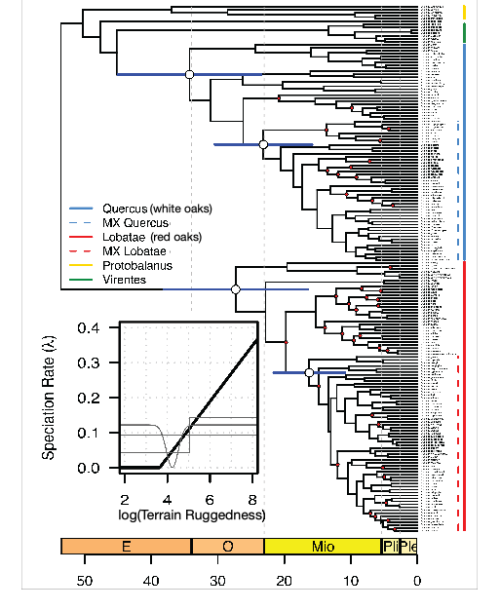
The investigators used comprehensive genomic data (RAD-seq) and fossil calibrations to produce a detailed, time-calibrated phylogeny of 322 oak species and employed biogeographic models to trace dispersal pathways and timing of oak evolution. One of the results of that collaboration has been an almost incredible phylogeny of those 322 species, which comprise 72 per cent of American oaks.
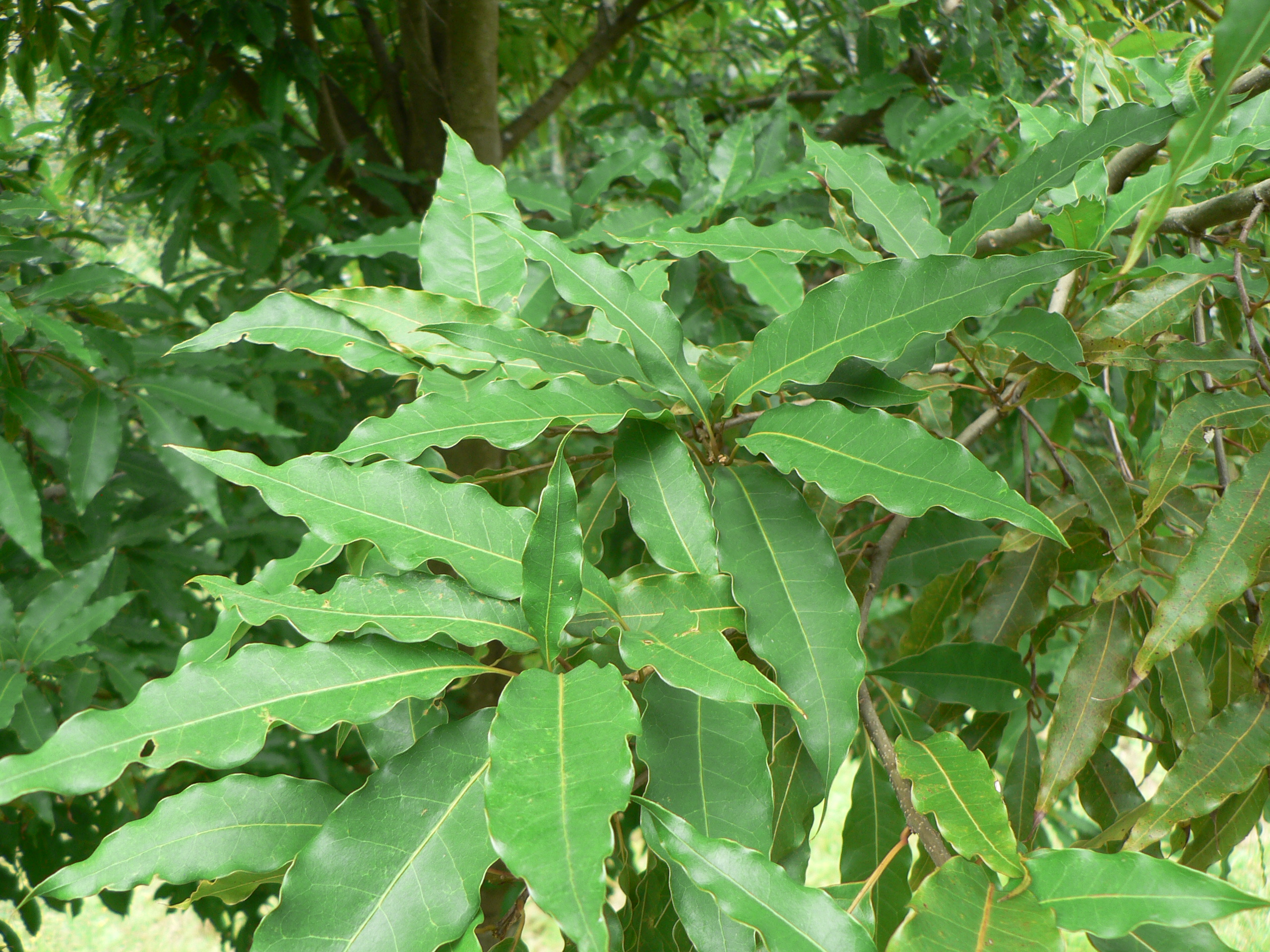
While the details of the investigation are way beyond the competence of this reviewer to describe, the story that emerges is of two separate eastern North American oak lineages—Quercus Section Lobatae, the Red Oaks, and Q. Section Quercus, the White Oaks—dispersing into Mexico in parallel radiations about 25 million years ago. Both lineages spread south through the Sierra Madre Oriental into the Trans-Mexican Volcanic Belt, thence into the Tropics and then back north to the Sierra Madre Occidental and western North America. Oak lineages diverged in climatic niches within their respective clades but converged ecologically across the two major groups, especially in temperature and precipitation tolerances.
Modelling indicated that the rate of speciation in both lineages was related to elevation and terrain ruggedness. Mountain building compresses the spatial scale of environmental gradients, facilitating divergent selection across relatively short distances. The complex landscape that results, with its discontinuous patches of suitable habitat, should create barriers to gene flow. The repeated convergent evolution of functional traits like drought tolerance and leaf morphology facilitates oak adaptation to dry, montane environments. In this way, orogenesis provides mechanisms for rapid speciation.
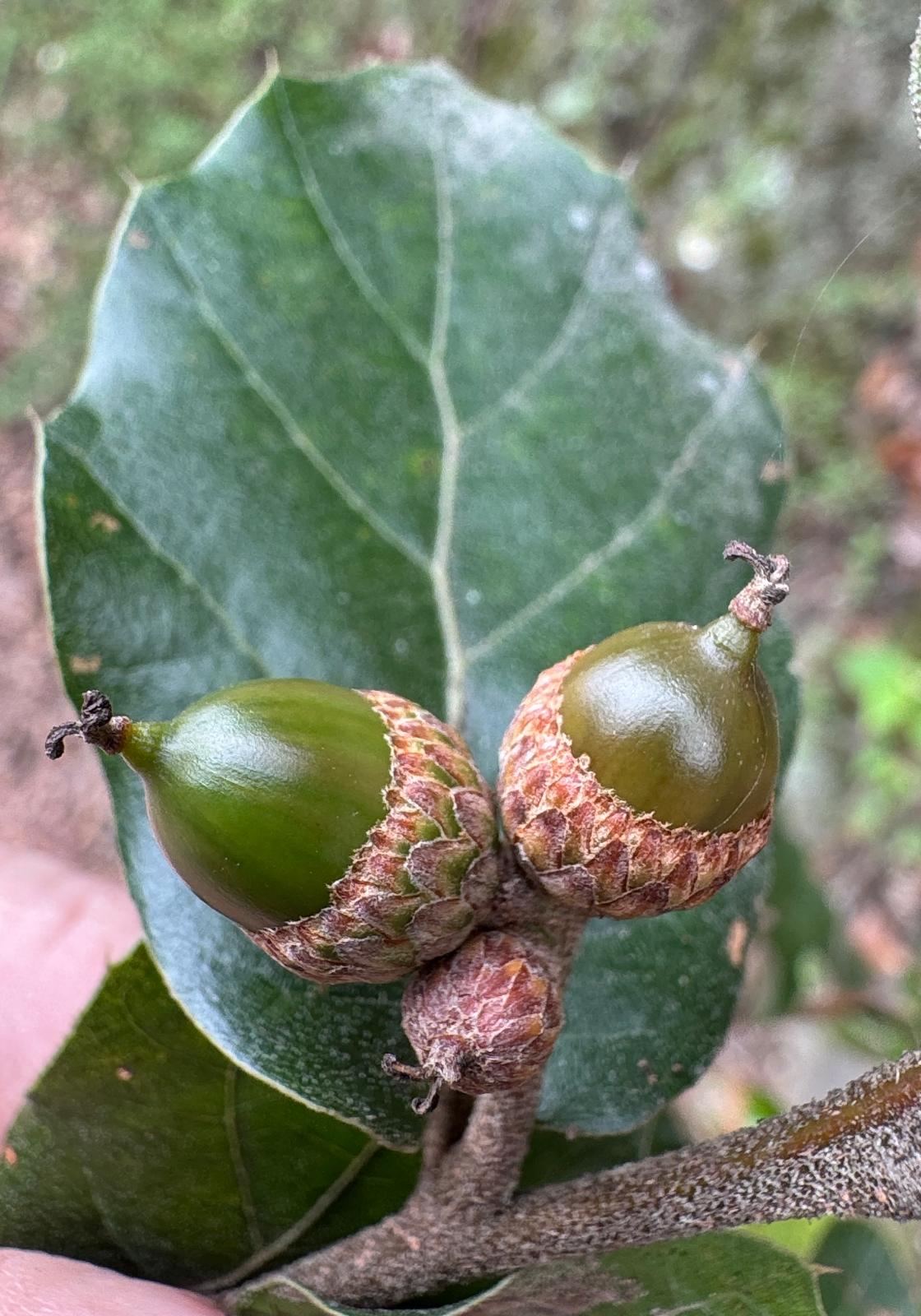
Steep elevational gradients may drive ecological divergence between closely related species: distant relatives may co-occur while close relatives tend to segregate along ecological gradients. Reproductive isolation via hybridization varies between oak sections. White oaks exhibit higher hybridization rates, while red oaks show more ecological divergence with less gene flow. Hybridization patterns are complex, with some populations exchanging genes extensively, while others remain reproductively isolated, indicating that topography can both promote and hinder gene flow depending on context.
The oaks were not the only tree genera to have spread southwards. Other temperate lineages from eastern North America, such as Acer and Fagus, also dispersed but they remain species-poor in Mexico and Central America. Oaks, however, may have benefitted from early arrival and priority effects, allowing extensive diversification, unlike other lineages that arrived later or faced competition.
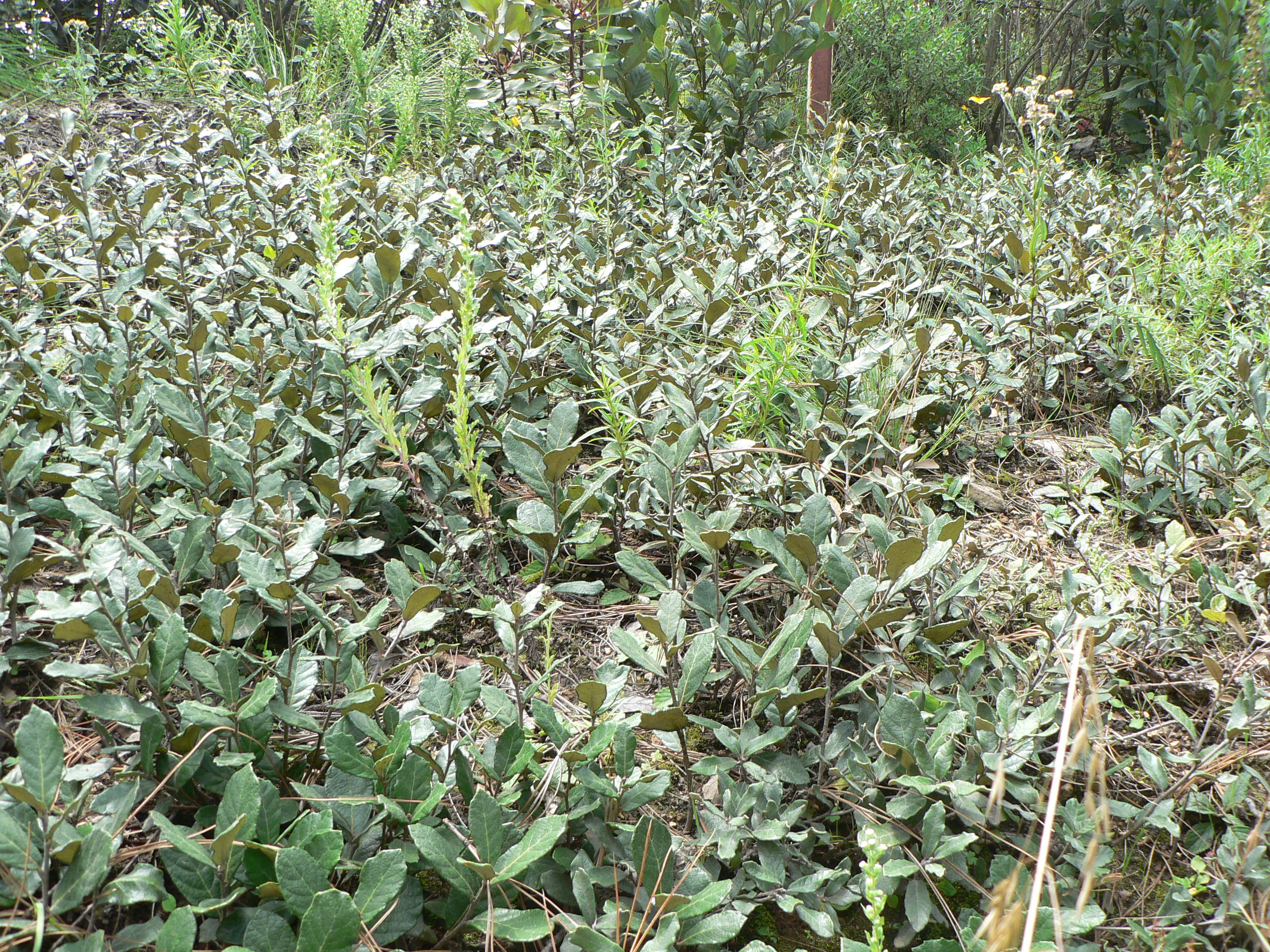
The proliferation of mountain environments since the Oligocene (c. 33.9 to 23 million years ago) provided ecological opportunities for rapid diversification. These oak radiations demonstrate how parallel migration into montane habitats, combined with ecological flexibility and niche convergence, can generate great biodiversity. The study shows how important are extrinsic environmental factors and intrinsic trait mutability in shaping the evolution of temperate tree lineages, contributing to the understanding of biodiversity hotspots and mountain ecosystems.
One noteworthy detail is that this paper is effectively the first chapter of Kieran’s PhD dissertation. I wonder how many other PhD candidates have seen part of their thesis published by the PNAS and even featured as the cover story?
Works cited
Althaus,K.N., M. Hahn, S. Alvarez-Clare, J. Cavender-Bares, A.J. Coombes, M.D.S. González-Elizondo, A. González-Rodríguez, P.S. Manos, H. Rodríguez-Correa, S. Valencia-Ávalos, and A.L. Hipp. 2026. Timing and origins of Mexican and Central American oak diversity, Proc. Natl. Acad. Sci. U.S.A. 123(19): e2537040123. [link]
Content by the Same Author
The International Oak Society acknowledges the generous support of the following institutions:
Supporting Institutional Members




Standard Institutional Members