Editor's Picks

While working on a list of synonyms of European White...
Roderick Cameron
|
Aug 24, 2026
Report led by The Morton Arboretum will help prioritize oak...
Website Editor
|
Aug 06, 2026
Motivation
I live in the village of Dolné Dubové...
Jozef Čapkovič
|
Jul 20, 2026
Plant Focus
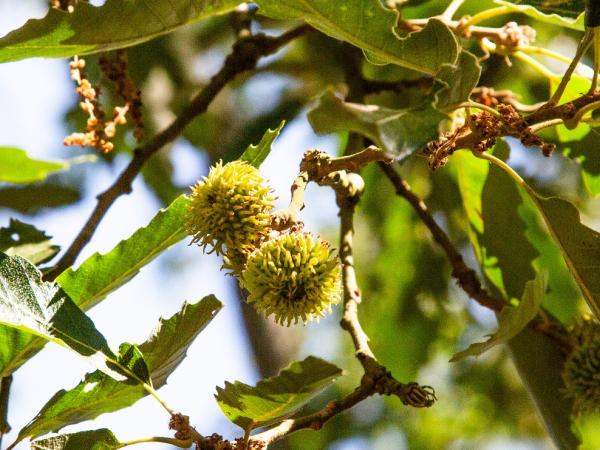
The only oak species endemic to Africa is rare in cultivation. It shouldn't be.
A new documentary by Maricela Rodríguez Acosta is now available for viewing on the IOS’s YouTube channel. Funded in part by an IOS Oak Conservation & Research Grant, it highlights the extraordinary ecological and cultural importance of Mexico’s oak flora, one of the richest in the world. Los Encinos: Columna Vertebral de México (Oaks: the Backbone of Mexico) takes viewers on a journey through landscapes where oaks are not just trees, but keystones of biodiversity and anchors of human history. Narrated by Maricela, the documentary features commentary by Dr. Susana Valencia Ávalos, who delivered the Keynote Address at the 11th IOS Conference in Oaxaca last year, and past IOS President Allen Coombes, among others.

© Maricela Rodríguez Acosta
The film unfolds in two parts. The first introduces the main features of oaks and their habitats, showing how these trees shape ecosystems, provide shelter and food for countless species, and sustain rural livelihoods. The second part focuses on the oak diversity found in one of Mexico’s finest cloud forests, located in Hidalgo and Puebla. This region harbors more than 40 oak species, 3 of which are categorized by IUCN as threatened, while several others remain poorly studied and classified as Data Deficient.
Through vivid imagery and expert narration, the documentary emphasizes how oaks maintain ecological balance in fragile environments. Cloud forests, in particular, are portrayed as biodiversity hotspots—lush, mist‑shrouded habitats where oaks coexist with myriad plants and animals. Yet these forests are also among the most vulnerable, facing pressures from climate change and human activity.

Beyond science, the film conveys a message of stewardship. Oaks are presented as a “backbone” of Mexico, integral to its natural heritage and deserving of greater recognition and protection. By weaving together ecological facts, cultural perspectives, and striking visuals, the documentary seeks to raise public awareness and inspire conservation action. Los Encinos: Columna Vertebral de México reminds us that safeguarding oak forests is essential not only for Mexico, but for global biodiversity. As Maricela narrates, “To protect oaks is also to protect ourselves.”
It is in Spanish, but you should be able to adjust settings on YouTube to view it with automatic closed captions in the language of your choice. They should allow you to follow the narrative, though the automated system may struggle with some of the scientific names! You can access the video here.
Content by the Same Author
The International Oak Society acknowledges the generous support of the following institutions:
Supporting Institutional Members




Standard Institutional Members