Editor's Picks
While working on a list of synonyms of European White Oaks...
Roderick Cameron
|
Aug 24, 2026
Report led by The Morton Arboretum will help prioritize oak...
Website Editor
|
Aug 06, 2026
Motivation
I live in the village of Dolné Dubové...
Jozef Čapkovič
|
Jul 20, 2026
Plant Focus
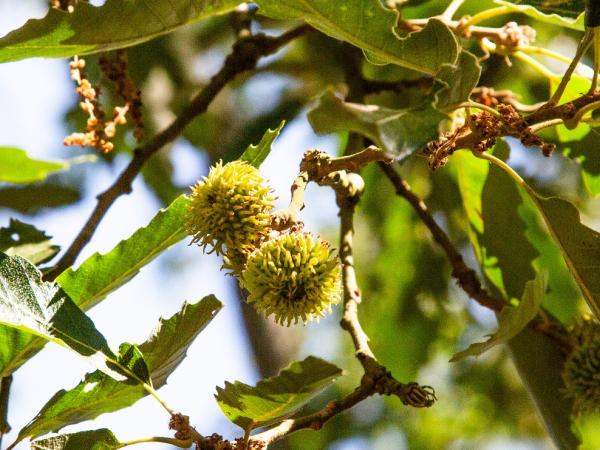
The only oak species endemic to Africa is rare in cultivation. It shouldn't be.
This new entry in our series on Oak Poetry features a poem in which Hölderlin evokes the grandeur and solemn endurance of oaks as living symbols of nature’s strength and humanity’s search for harmony with the divine. It is written in unrhymed dactylic hexameter, a Greco-Roman meter most closely associated with epic poetry. You can get a sense of the rhythm, even if you don't read German, by listening to the recording linked below.
If you would like to propose a poem for inclusion in this series, please click here.
[English translation below]
Die Eichbäume
Aus den Gärten komm' ich zu euch, ihr Söhne des Berges!
Aus den Gärten, da lebt die Natur geduldig und häuslich,
Pflegend und wieder gepflegt mit dem fleißigen Menschen zusammen.
Aber ihr, ihr Herrlichen! steht, wie ein Volk von Titanen
In der zahmeren Welt und gehört nur euch und dem Himmel,
Der euch nährt' und erzog, und der Erde, die euch geboren.
Keiner von euch ist noch in die Schule der Menschen gegangen,
Und ihr drängt euch fröhlich und frei, aus der kräftigen Wurzel,
Unter einander herauf und ergreift, wie der Adler die Beute,
Mit gewaltigem Arme den Raum, und gegen die Wolken
Ist euch heiter und groß die sonnige Krone gerichtet.
Eine Welt ist jeder von euch, wie die Sterne des Himmels
Lebt ihr, jeder ein Gott, in freiem Bunde zusammen.
Könnt' ich die Knechtschaft nur erdulden, ich neidete nimmer
Diesen Wald und schmiegte mich gern ans gesellige Leben.
Fesselte nur nicht mehr ans gesellige Leben das Herz mich,
Das von Liebe nicht läßt, wie gern würd ich unter euch wohnen!
The Oak Trees
Out of the gardens I come to you, you sons of the mountain!
From the gardens where Nature lives patiently and domestically,
nurturing and nurtured in turn, together with industrious mankind.
But you, you splendid beings, stand like a nation of Titans
In the tamer world, and belong only to yourselves and to the sky
That nourished you and raised you, and to the earth that bore you.
None of you has yet gone to a human school
And you thrust yourselves upward among one another, happy and free,
From your vigorous roots, and, as the eagle seizes its prey,
You seize space with powerful arms, and toward the clouds
Your sunny tops are pointed serenely and majestically.
Each one of you is a world; you live like the stars
In the sky, each one a god, together with a free association.
If only I could endure servitude, I would never envy
This forest and would gladly adapt myself to the life of society.
If only my heart did not chain me to the life of society any longer,
My heart that will not leave off loving, how gladly would I dwell among you!
English translation by Stanley Appelbaum, from Great German Poems of the Romantic Era (1995) - Source: Internet Archive
You can hear a reading of the poem by Alexander Khoun here.
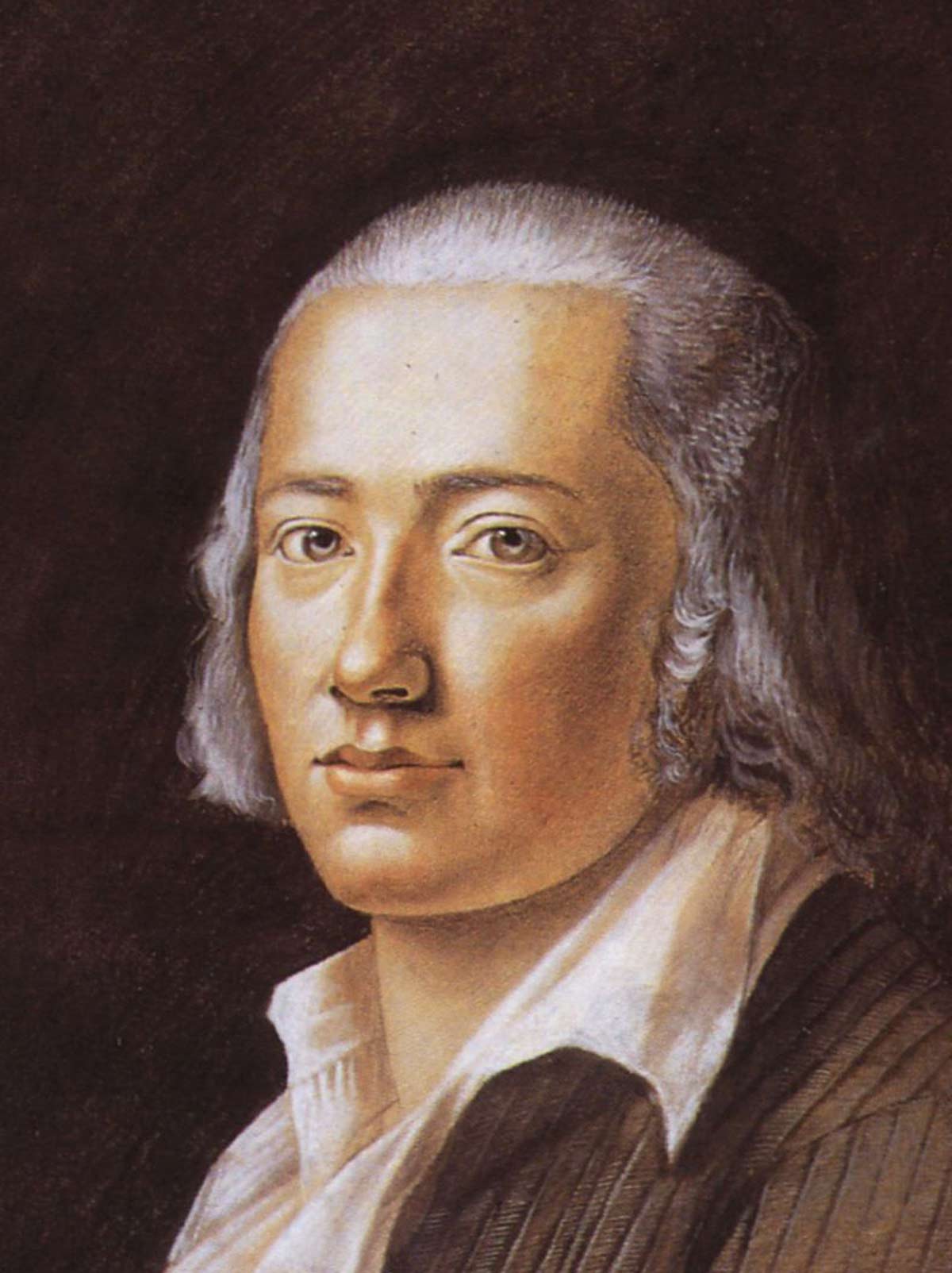
Friedrich Hölderlin was born on 20 March 1770 in Lauffen am Neckar, Württemberg. Educated at the Tübinger Stift, he studied alongside Hegel and Schelling, sharing in the intellectual ferment that shaped German Idealism. Though originally intended for the Lutheran ministry, Hölderlin turned to poetry, inspired by Greek mythology and the classical tradition.
His major works include the epistolary novel Hyperion (1797–99), the unfinished tragedy The Death of Empedocles, and a body of odes, elegies, and translations that brought the forms of ancient Greek verse into German literature. His poetry often blends Christian and Hellenic themes, lamenting the loss of an idealized classical world while seeking harmony between nature, spirit, and humanity.
Hölderlin’s life was marked by hardship. He struggled to establish himself as a poet, suffered from mental illness, and in 1806 was declared incurable. He spent the last 36 years of his life in the home of a carpenter, Ernst Zimmer, in Tübingen, where he continued to write in fragments until his death on 7 June 1843.
Rediscovered in the 20th century, Hölderlin’s work profoundly influenced philosophers such as Martin Heidegger, who called him “our greatest poet.” Today, he is celebrated as a central figure of German Romanticism, admired for his visionary lyricism and his attempt to reconcile the ancient and modern worlds.
Content by the Same Author
The International Oak Society acknowledges the generous support of the following institutions:
Supporting Institutional Members




Standard Institutional Members