Editor's Picks

While working on a list of synonyms of European White Oaks...
Roderick Cameron
|
Aug 24, 2026
Report led by The Morton Arboretum will help prioritize oak...
Website Editor
|
Aug 06, 2026
Motivation
I live in the village of Dolné Dubové...
Jozef Čapkovič
|
Jul 20, 2026
Plant Focus
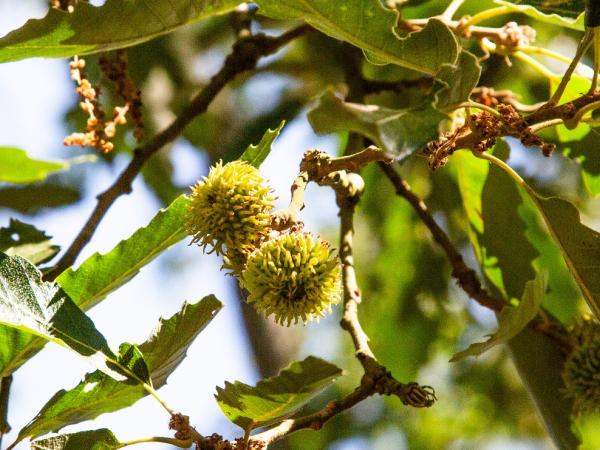
The only oak species endemic to Africa is rare in cultivation. It shouldn't be.
Grants grouped by theme (latest round of grants in bold)
► Habitat restoration: The practice of renewing or restoring degraded habitats and ecosystems to support oak regeneration through interventions such as canopy thinning, removing invasive plant species, excluding non-native herbivores, and modifying fire regimens.
- Building Local Capacity to Monitor and Conserve Oaks in Woodlands Managed for Charcoal (2020)
- Roots of Resilience: Strengthening the Future of Quercus insignis in Monteverde Through Conservation, Reforestation, and Community Engagement (2025)
- Targeted Removal of an Invasive, Weedy Vine (Cryptostegia grandiflora) from Critical Habitat of Quercus brandegeei, an Endangered Mexican Oak (2025)
► Ex-situ conservation: Protecting a species outside of its natural habitat and/or range by maintaining genetically diverse and representative collections, either in botanic garden and arboretum living collections, in cryopreservation, or in tissue culture. Since oaks are “exceptional species” their acorns cannot be seed banked through conventional methods, so these other types of ex-situ collections are critically important conservation tools.
- Advancing the Ex-Situ Conservation of Oaks Using Cryopreservation (2020)
- The Global Oak Pollen Bank (2023)
- Restoration Nursery for Four Oak Species of Rancho Encinalito and UCAS (2025)
- Epigenetics as a Potential Mechanism of Rapid Response to Climate Change in the Endangered Oak Quercus hinckleyi (2025)
- Identification of Somatic Variation in Cryopreserved Oak Species (2025)
- Resolution of Priorities in Taxonomy, Ecology, and Conservation of Quercus austrina (2025)
► Field survey and population monitoring: Conducting observational studies in the wild to correctly identify species and to determine if a species is present or absent in its historic or predicted range; evaluating size, health, growth, phenology, hybridization, seed production, age-class distribution, and other characteristics of populations; identifying threats to populations.
- Ex-situ Conservation of Quercus marlipoensis, an Extremely Endangered Oak of Southwest Yunnan, China (2023)
- Conservation of Quercus macdougallii Martinez, a Microendemic Species of Sierra Norte, Oaxaca, México (2023)
- Quercus rubramenta in Guerrero State, a Giant Understudied Tree (2023)
- Protection and Conservation Actions through the Extinction Risk Assessment Method for Five Endemic Mexican Oak Species (2023)
- Conserving Quercus steenisii, a Narrow Endemic and Endangered Oak in Sumatra Island, Indonesia (2023)
- Scouting and Safeguarding Alabama’s Rarest Oak, Quercus boyntonii (2023)
- Preserving the Future of the Vulnerable Endemic Species Quercus arkansana (2025)
- Oak Conservation in North Vietnam (2025)
- Distribution and Conservation of Quercus nixoniana in Guerrero, Mexico (2025)
- Resolving the Taxonomic Identity and Conservation Status of Data Deficient Chinese Oak Species: An Integrated Approach (2025)
- Priority Oaks at the Confluence Between Nuevo León and Tamaulipas, Mexico (2025)
- Securing the Future of Indian Oaks Through IUCN Red List Updates (2025)
► Education: Providing training, teaching, outreach, and public engagement to raise awareness of the importance of oaks and solutions to the threatening factors that are driving them to extinction.
- Your Neighbors the Oaks (2023)
- Oaks: the Backbone of Mexico (2025)
- Conservation of Two Threatened Oak Species in Western Mexico Through Local Production and Environmental Education (2025)
- Oak Education and Stewardship Through Cultural Fire: Engaging Indigenous Youth and Building Climate Change Resilience in California Mixed Oak Woodlands (2025)
► Population reintroduction and reinforcement: The purposeful, strategic, and scientifically informed planting of threatened species into the wild in their historic or future predicted range to maintain or increase genetic diversity and ensure future resiliency and adaptive capacity of the species.
The International Oak Society acknowledges the generous support of the following institutions:
Supporting Institutional Members




Standard Institutional Members