Editor's Picks

While working on a list of synonyms of European White Oaks...
Roderick Cameron
|
Aug 24, 2026
Report led by The Morton Arboretum will help prioritize oak...
Website Editor
|
Aug 06, 2026
Motivation
I live in the village of Dolné Dubové...
Jozef Čapkovič
|
Jul 20, 2026
Plant Focus
The only oak species endemic to Africa is rare in cultivation. It shouldn't be.
Mexican Oaks: Current State of Knowledge about Quercus and its Conservation
Within the XXIII Mexican Botanical Congress
Universidad Juárez Autónoma de Tabasco
Villahermosa, Tabasco 2025
Maricela Rodriguez-Acosta1 & Susana Valencia A.2
1GCCO Mex. & Cen. Am. Coordinator, 2 Faculty of Sciences Herbarium, UNAM
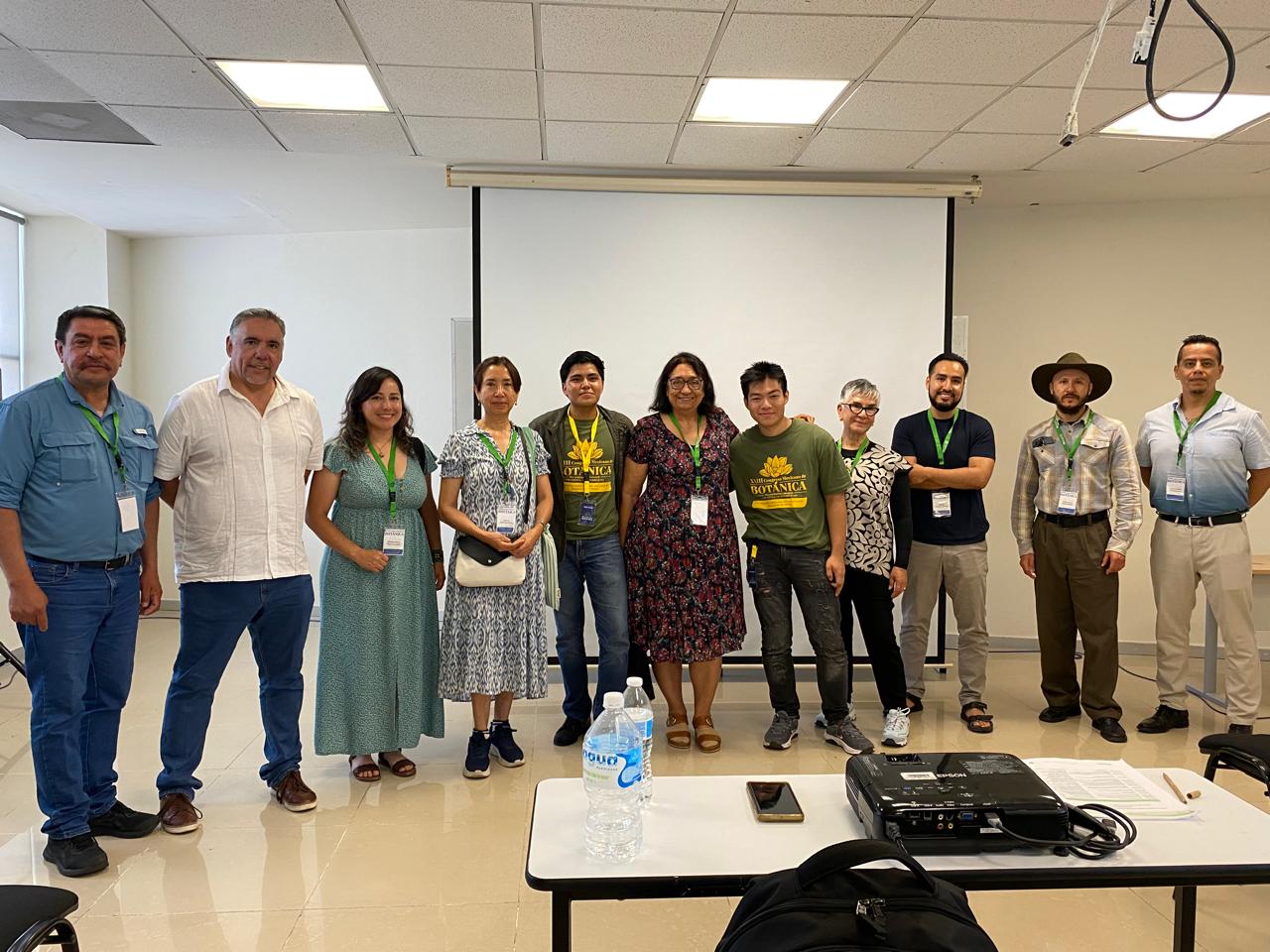
The Symposium "Mexican Oaks: Current State of Knowledge about Quercus and its Conservation" was held on September 1, 2025. It was led by Dr. Maricela Rodríguez Acosta, Coordinator of the Global Consortium for the Conservation for Oak (GCCO), Mexican and Central American region, and Dr. Susana Valencia Ávalos, researcher at the Herbarium of the Faculty of Sciences at Universidad Nacional Autónoma de México (UNAM). This Symposium was held within the framework of the XXIII Botanical Congress (CMB 2025), held by the Botanical Society of Mexico and sponsored by the University of Tabasco (Universidad Juárez Autónoma de Tabasco), in the city of Villahermosa.
The high species diversity of oaks in Mexico is marked by the intricate physiography, climate diversity, and soil diversity of Mexico, which have been the setting for the evolution of oaks of the subgenus Quercus. This has resulted in the highest species diversity of oaks worldwide and the presence of four of the genus's eight sections growing in the Mexican mountains. The characteristics of the genus Quercus have led it to be considered a key element in the ecosystem and a model clade for the study of evolutionary processes. This is of great relevance to the plant kingdom.
This Symposium represented a great opportunity to gain an overview of the current state of knowledge about Quercus in the country and a great platform to identify guidelines to follow and achieve an appreciation of this important genus of trees, as well as the forests of which it is a part, and to acquire sufficient knowledge to manage and conserve the oak species and oak forests that are so widely distributed in Mexico. A deeper understanding of oak biology, taxonomy, ecology, genetics, and cultural uses is imperative to establish an integrated foundation for managing and conserving not only the species but also the oak forests.
The introduction to this Symposium was presented by Dr. Maricela Rodríguez Acosta, followed by 10 presentations. The discussion opened with the role of flowers in species recognition, a feature often underestimated. It then addressed the taxonomic challenges within the genus, focusing on species that are particularly difficult to identify, and emphasized the value of collaborative efforts and integrative approaches to resolve these issues. A case study of the Quercus laeta complex followed, illustrating how integrative taxonomy has been applied to delimit the species involved. This work has clarified aspects of the complex’s structure, though further research is still needed. The session concluded with insights from genetic studies, which have illuminated parts of the evolutionary history of Quercus and underscored the relevance of such traits for taxonomy, biogeography, population structure, adaptation, and conservation. A particularly engaging presentation examined the distribution of 155 oak species in Mexico, revealing centers of greatest richness and endemism. Researchers hope to identify historical patterns that may explain the emergence of these centers. The program then turned to the work of the GCCO on oak conservation in Mexico and Central America. Notable initiatives included the Training Program for guardians of oak species, designed to unify current knowledge of the genus, and conservation efforts targeting threatened species listed on the IUCN Red List of Oaks. Toward the close of the meeting, talks highlighted the remarkable diversity of oak species in the Baja California Peninsula, the Sierra Madre Oriental, and the Sierra Madre Occidental, each accompanied by regional species lists. Attendance ranged between 45 and 50 participants, and the Symposium concluded with a synthesis of contributions from both speakers and audience members.
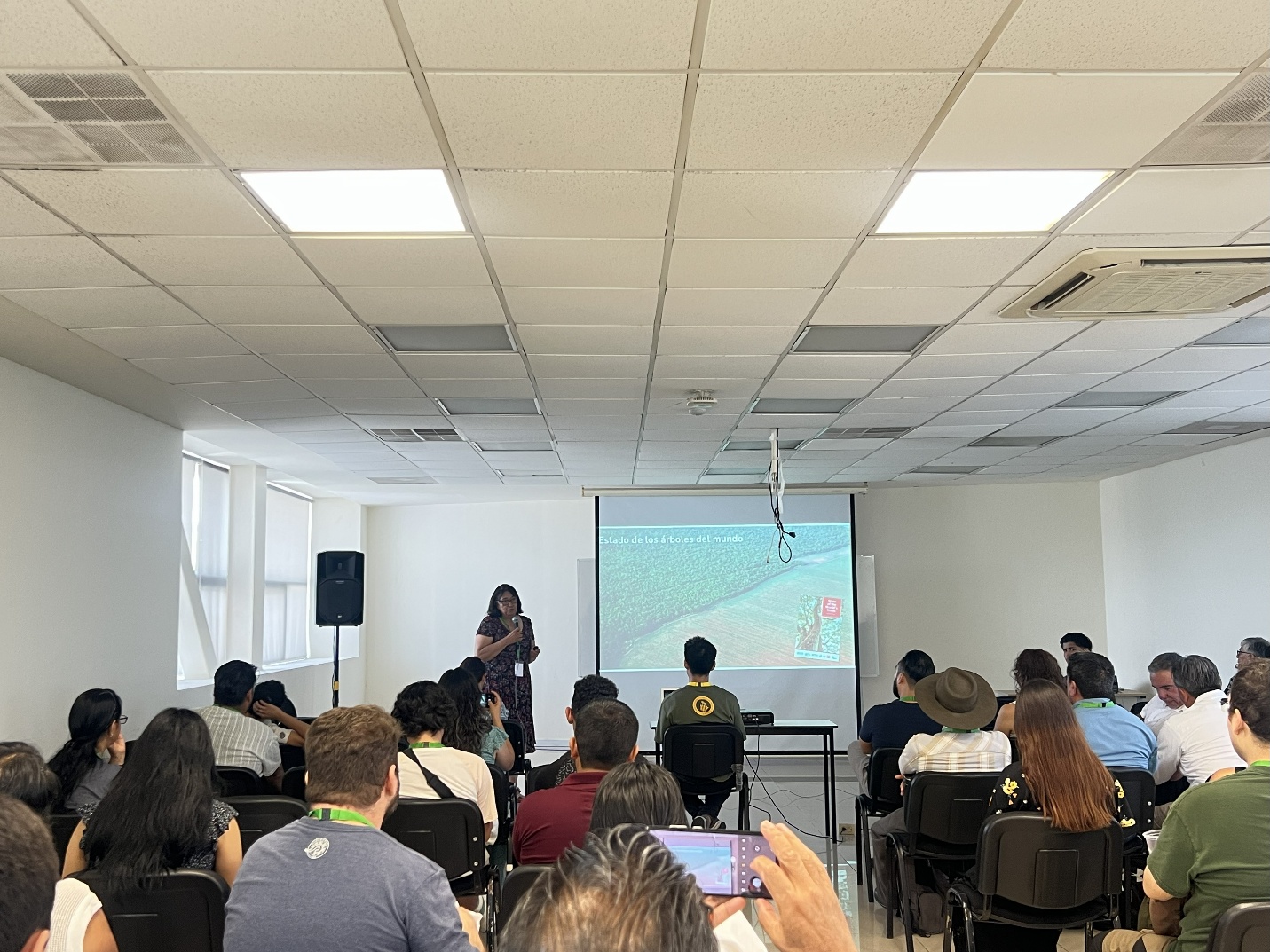
Some attendees emphasized that “it is important to extend knowledge about oaks and the conservation efforts they require beyond the classroom and beyond the circle of researchers. This knowledge must be shared with local communities, making them feel part of the process, since conservation can also emerge from their own lands.” They also highlighted the need to complement our understanding of oak diversity: “It is very important to know the conditions in which these species exist, so that we can implement effective actions. Often, when attempting restoration or other conservation work, we ask ourselves: ‘How should I do it?’ or ‘How can I benefit the ecosystem of this or that species?’ Without prior information about the state of the ecosystem, many actions remain very limited.” As one example, they pointed to reforestation campaigns: “Many times, trees are planted on a convenient hillside simply because it is easy to access. Yet we may not know whether that site is truly a key point of diversity or whether repopulation is actually needed there.” In this sense, participants stressed the importance of assessing the conditions in which our species of interest are found, as well as the contexts of the work groups focusing on them.
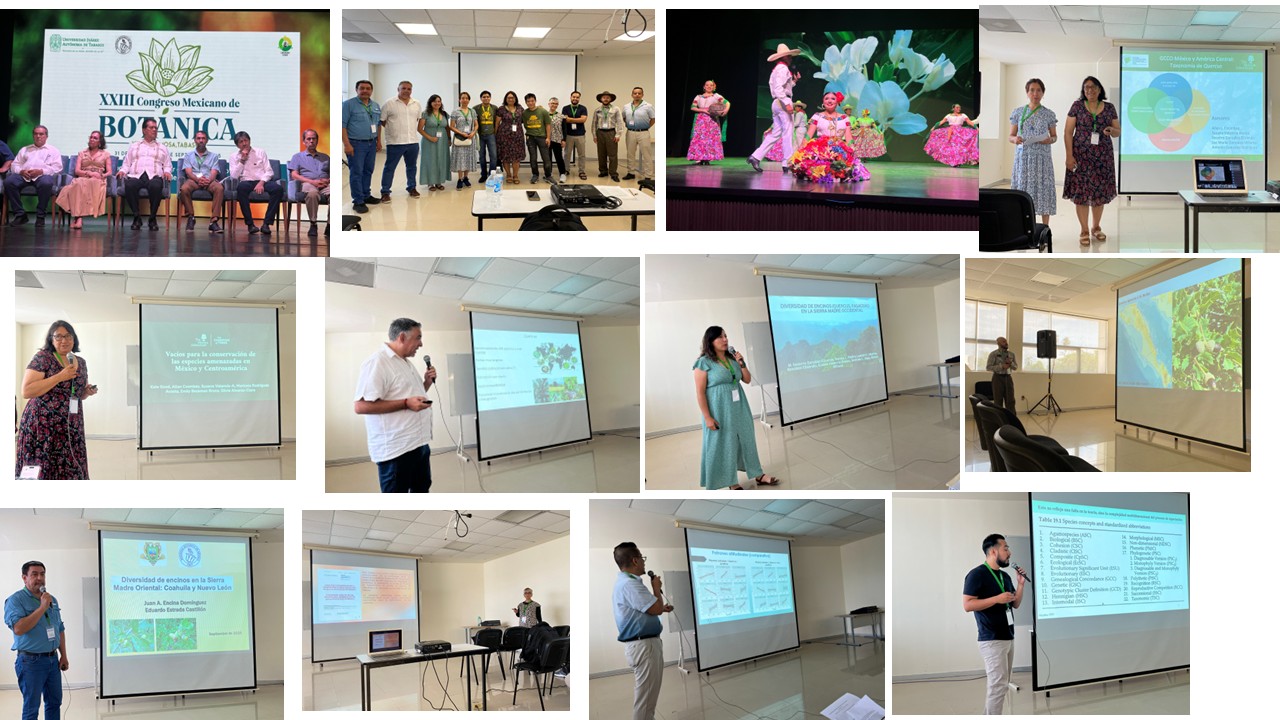
The conclusions of the Symposium were as follows:
❖ The results of the collective work have helped improve knowledge about the world's oaks. It is important to continue working as a team, especially on the priority topics identified over the years.
❖ The group of oak researchers must continue to strengthen itself with these types of meetings to further promote the study of oaks and thereby seek support for botanical explorations.
❖ Taxonomy remains fundamental and is the basis for all other studies.
❖ It is a priority to work on the search for traits to gain greater clarity regarding the taxonomic limits of the species. Therefore, it is necessary to form a network for the study of oak flowers.
❖ The gap analysis was successful due to the contribution of regional species experts. Working with species guardians who are familiar with the species is key. There has been significant progress in oak conservation due to the strong network we have developed. But the research also identifies significant gaps and new questions.
❖ The oak Symposium during the XXIII CMB 2025 was an excellent opportunity to learn about the progress made in knowledge of the genus Quercus in Mexico. It was possible to learn about the research being conducted on different ecological aspects and what is being addressed using different methodologies and concepts from the perspective of species complexes or groups from different regions of the country.
❖ It has definitely been very opportune to interact with colleagues from different institutions and with the leading representative of the GCCO from Mexico and Central America, to recognize information gaps at the level of priority species and regions, and to learn how to address and resolve them through continued participation as a research group. The event was important because, in addition to establishing agreements, it defined perspectives and motivated the participation of students and other researchers.
This was the program:
Oaks of Mexico: Current State of Knowledge of Quercus and Its Conservation
Coordinators: Maricela Rodríguez Acosta, Susana Valencia Ávalos
08:00–08:10 Introduction to the Symposium. Maricela Rodríguez Acosta
08:10–08:30 Floral morphology of Quercus (Fagaceae). Silvia Romero Rangel
08:30–08:50 Taxonomic knowledge of the genus Quercus. Susana Valencia Ávalos
08:50–09:10 Problems with species complexes: the case of Quercus laeta.
Saddan Morales Saldaña, Antonio González Rodríguez, Susana Valencia Ávalos, Andrew L. Hipp
09:10–09:30 The genetics of oaks: advances and challenges. Antonio González Rodríguez
09:30–09:50 Gap analysis of Mesoamerican oaks: establishing conservation priorities.
Kate Good, Allen Coombes, Susana Valencia Ávalos, Maricela Rodríguez Acosta, Emily Beckman Bruns, Silvia Alvarez-Clare
09:50–10:10 Conservation macroecology for Mexican oaks: a proposal under construction.
Andrés Torres Miranda, Reyna Maya García
10:10–10:30 GCCO collaborative efforts between Mexico and Central America for knowledge of the genus Quercus.
Maricela Rodríguez Acosta, Amy Byrne, Silvia Alvarez-Clare
10:30–10:50 Character sets and habitat of oaks in the Baja California Peninsula.
José Luciano Sabás Rosales, Oscar Javier Soto Arellano
10:50–11:10 Diversity of oaks (Quercus, Fagaceae) in the Sierra Madre Occidental.
M. Socorro González Elizondo, Norma L. Piedra Leandro, Martha González Elizondo, Susana Valencia Ávalos, Andrew L. Hipp, Kieran Althaus
11:10–11:30 Diversity of oaks in the Sierra Madre Oriental: states of Coahuila and Nuevo León, Mexico.
Juan Antonio Encina Domínguez, Eduardo Estrada Castillón
11:30–11:40 Conclusions. Coordinators
Content by the Same Author
The International Oak Society acknowledges the generous support of the following institutions:
Supporting Institutional Members




Standard Institutional Members