Editor's Picks

While working on a list of synonyms of European White...
Roderick Cameron
|
Aug 24, 2026
Report led by The Morton Arboretum will help prioritize oak...
Website Editor
|
Aug 06, 2026
Motivation
I live in the village of Dolné Dubové...
Jozef Čapkovič
|
Jul 20, 2026
Plant Focus
The only oak species endemic to Africa is rare in cultivation. It shouldn't be.
On the morning of April 27th, I landed in Buenos Aires on my first trip to Argentina, ready to meet a motley crew of IOS aficionados and visit oak collections across the Province of Buenos Aires. After quickly passing through customs, I had my first impression of this vast metropolis, and to my surprise, it felt almost like being somewhere in Europe: people speaking Spanish with an Italian‑like accent, French‑style buildings, and a general air of familiarity. Shortly afterwards, the Pedró brothers (Claudio and Guillermo) picked me up, and we began the 240-km drive south toward the city of 25 de Mayo to visit their oak collection in their family farm.
It was the first of many long car journeys, and the places we visited are pretty far apart, with legs as long as 450 km. Main roads are in very good condition, but speed is usually limited to 110 km.
The resemblance to southern Europe did not fade. In fact, the original pampa grasslands have largely been replaced by crops (maize, soybeans, forage) and cattle (mainly Aberdeen Angus and Hereford). Many trees common in southern Europe have been planted as windbreaks: Eucalyptus (E. camaldulensis, E. cinerea, E. viminalis, E. globulus), Populus (P. nigra f. italica and hybrids), Fraxinus (F. pennsylvanica, F. excelsior, F. angustifolia), Acacia melanoxylon, and Pinus (P. pinaster, P. elliottii, P. radiata). Altogether, they create a landscape that feels surprisingly Mediterranean, though still very green at the end of a long summer. However, the immense sky, endless horizon, absence of buildings, and the very different birdlife make the place unmistakably Argentine.
After two hours of driving, we stopped to visit a nursery (Vivero de Lobos) in Lobos, 133 km northwest of 25 de Mayo. This very modern and well‑maintained nursery covers the entire production process, including seedling propagation. The quality of the trees was excellent, comparable to what you can find in Pistoia, Italy, one of Europe’s major nursery centers. Alongside the usual globally produced plants (Photinia, Robinia, etc.), there was a good selection of native Argentine species, including large specimens of Ceiba chodatii and Butia sp., which are often extracted from the wild and exported to USA and Europe. These specimens looked familiar, and indeed the owner, who drove us around in a golf cart, told me that many large ones had been exported to Italy and sold there, just like ones I saw near Anzio in September 2024.
After this stop, we reached 25 de Mayo in about 1 hour and 40 minutes. Before visiting the estancia, we had a light lunch near the town square, where I admired two enormous camphor trees (Cinnamomum camphora) covering half the plaza, along with two very tall Ceiba chodatii in full bloom.
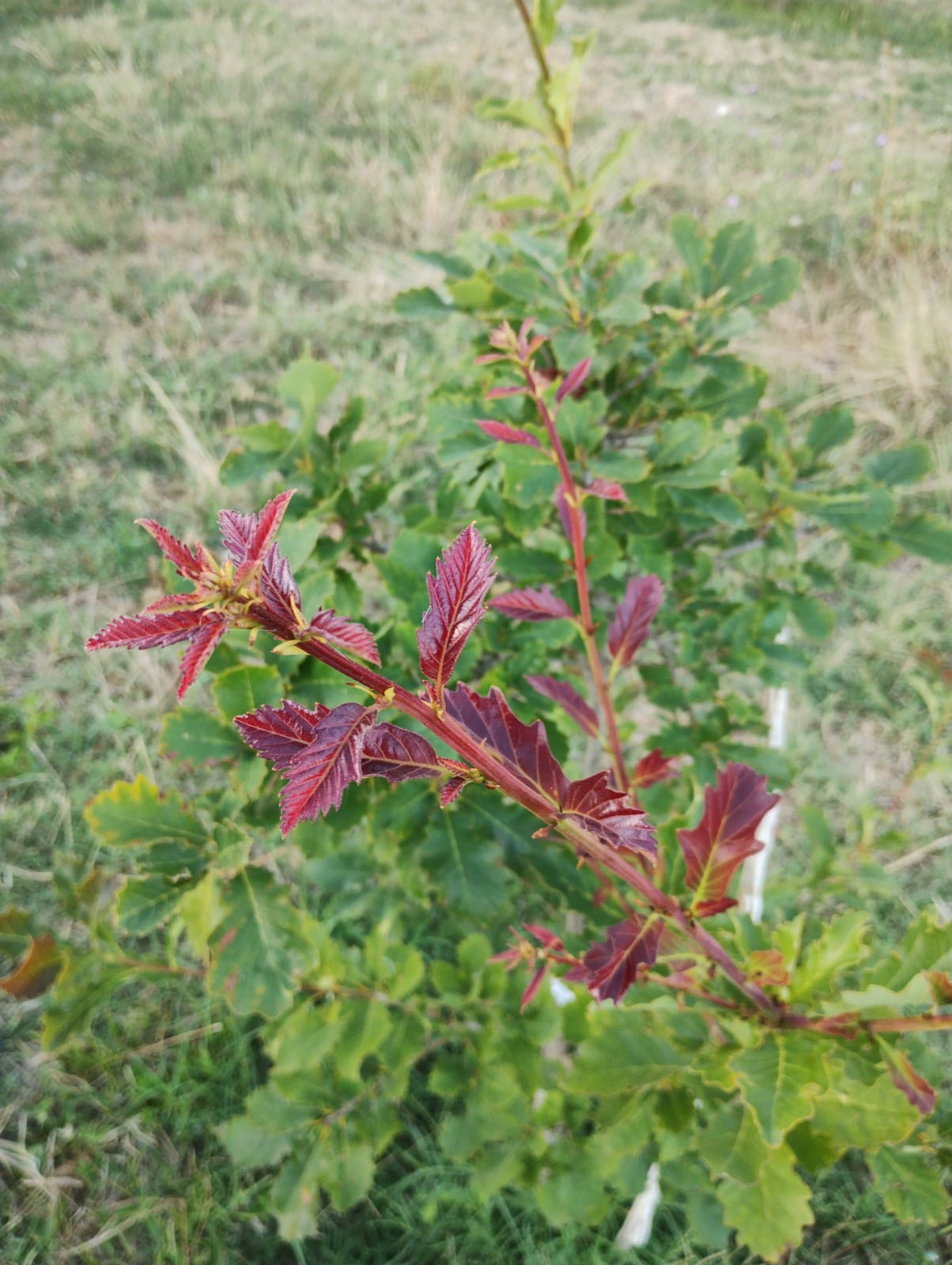
© Claudio Pedró
Finally, Claudio showed us his growing oak collection (Guillermo is primarily a palm collector). I immediately noticed some features of oaks in Argentina that proved consistent across all the collections I visited:
-
Oaks grow extremely fast compared to Europe — a one‑year seedling can reach two meters by the end of the season, and a 50‑year‑old cork oak looks bicentennial. This is thanks to:
- Leaves remaining spotless and free of pests even late in the season
- Rich, black, loamy soil with low pH that favors root growth
- Abundant water, allowing irrigation whenever needed
- A very long growing season
- Summer rains (though less so this year)
Claudio mainly grows oaks from seed, either collected himself or received through exchanges. He began experimenting with acorn germination as a child, and as a teenager, when he discovered specialized books, he realized how many oak species did not exist in Argentina at the time, and that discovery captivated him.
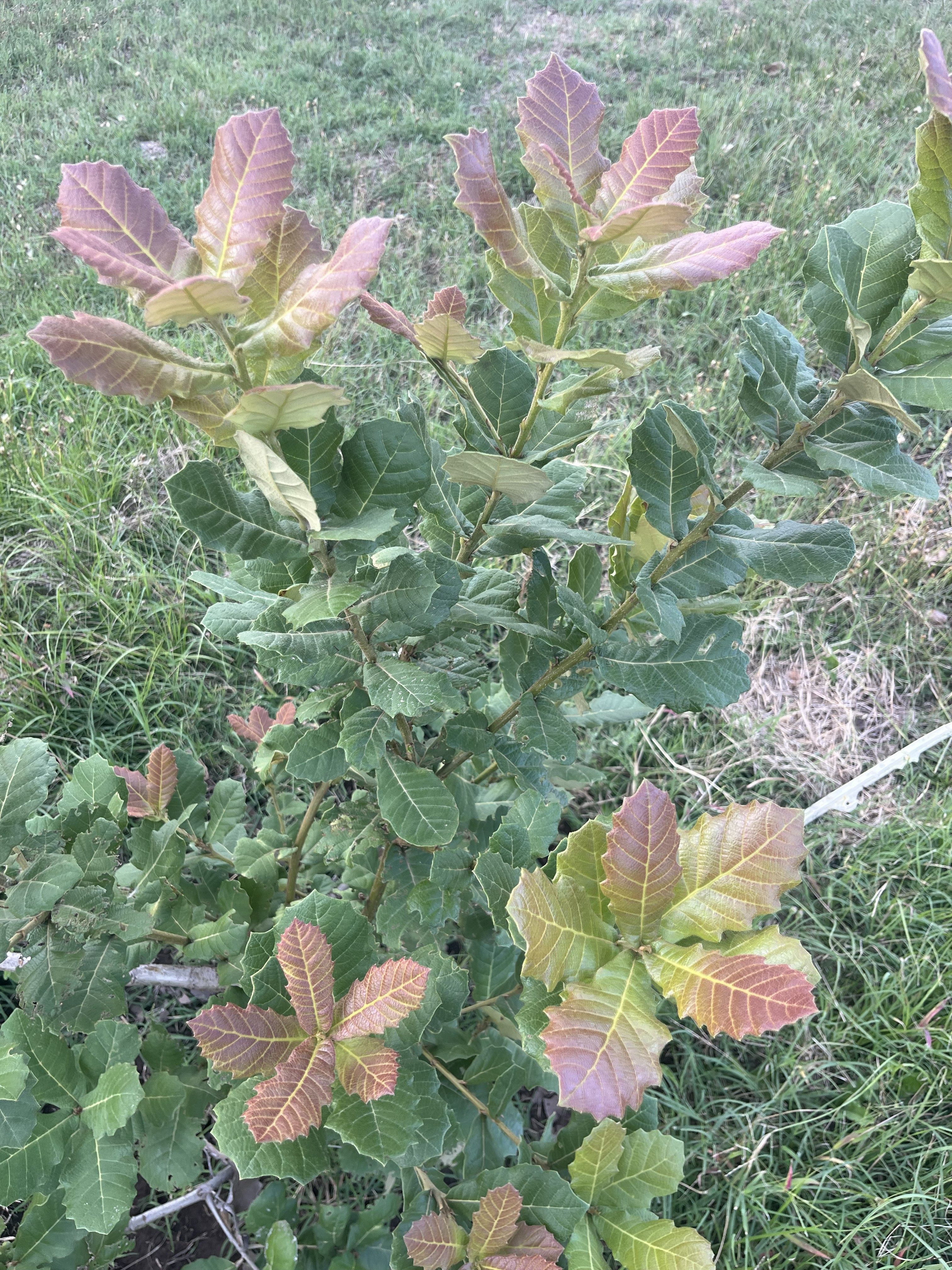
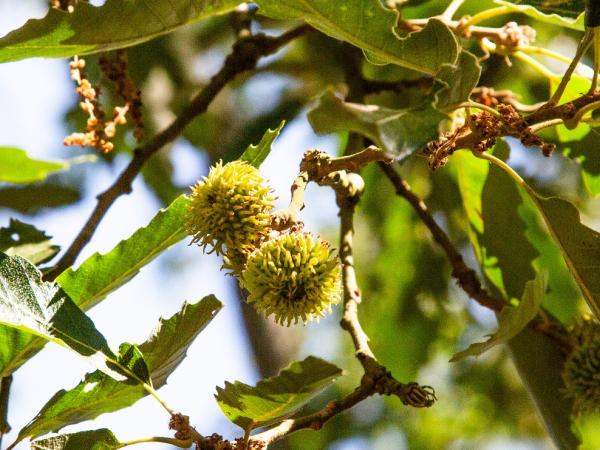
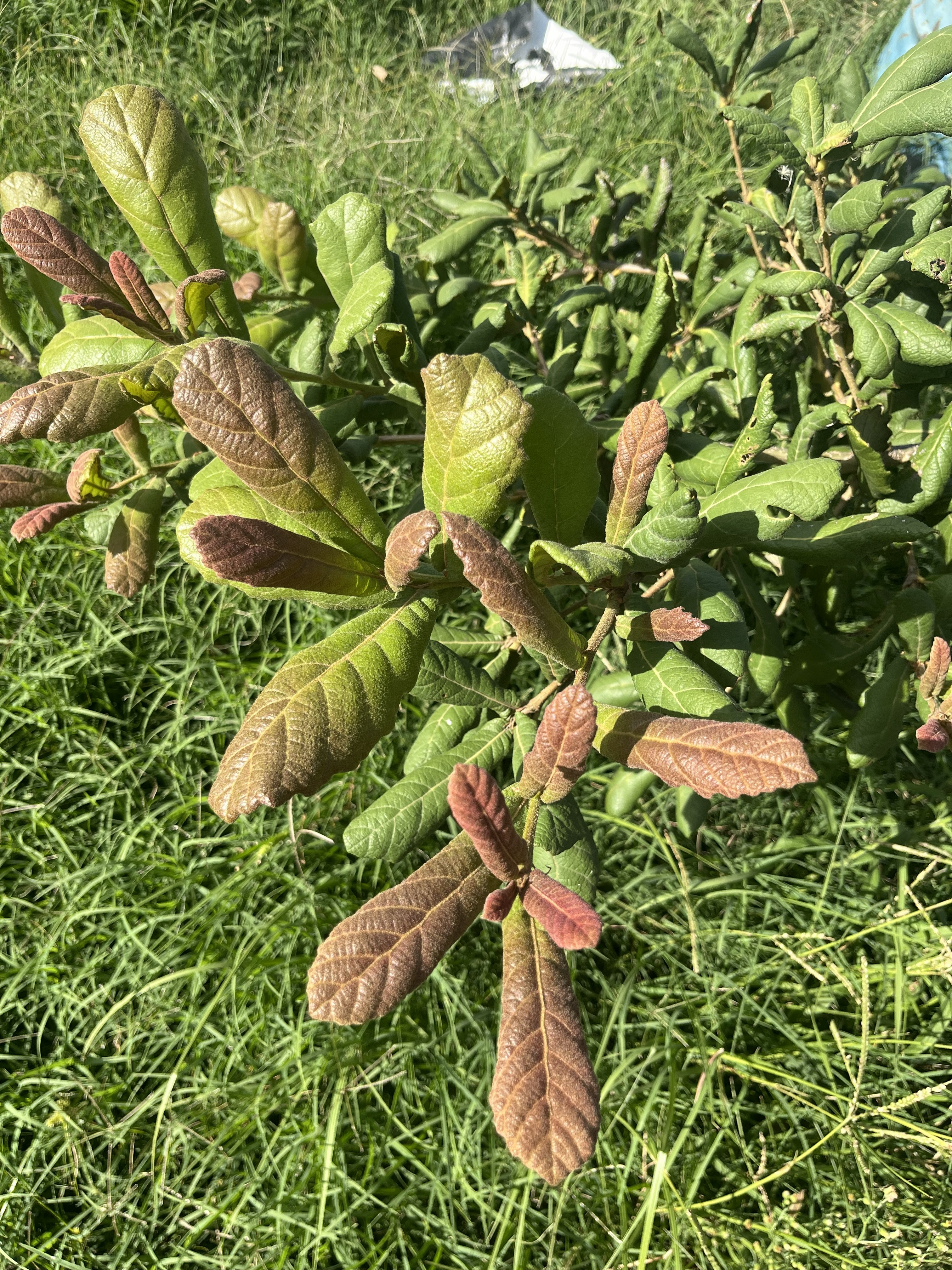
Among the many oaks, the ones I liked most were a small grove of Quercus geminata with their peculiar Siamese‑twin acorns, a young and vigorous Q. obtusata, and a very healthy Q. douglasii. Among the older plantings, a 20‑year‑old Q. robur, already the size of a 50‑year‑old tree planted by my father in Modena, Italy, and a magnificent group of Q. alba, showing brilliant red autumn color in April.
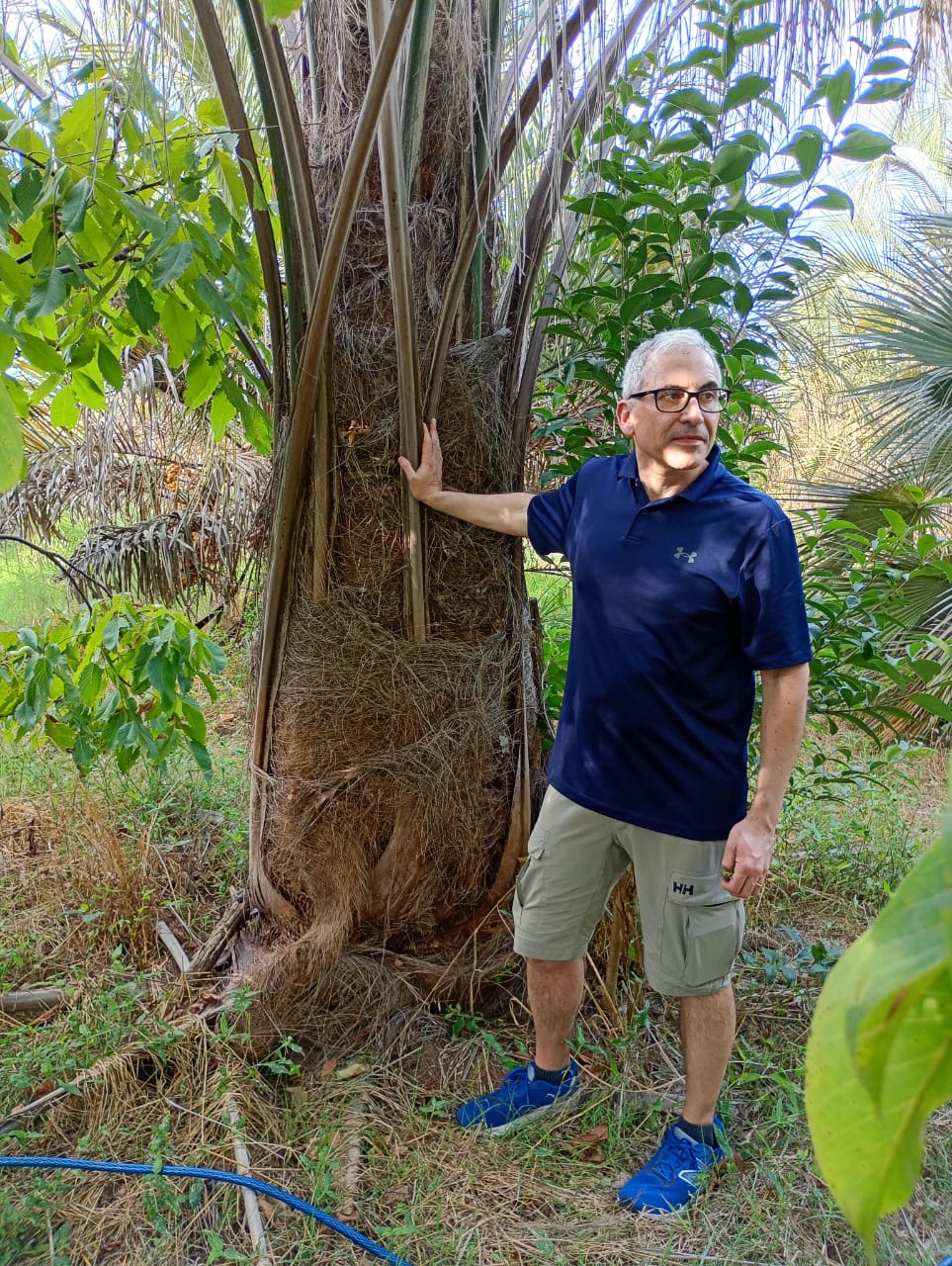
Guillermo also showed me the palms he planted, mainly Butia (his main collection is farther north, in a warmer region), all remarkably large, especially a Parajubaea torallyi, enormous for its age.
We had dinner in a local restaurant with an excellent local red wine (Malbec from Mendoza), and after a pleasant late‑summer evening stroll, we went to bed early at a local hotel,1 since the next day we had a 400 km drive south to Coronel Pringles to visit the famous oak collection of longtime IOS member Peter Laharrague (also Vice President for South America of the International Dendrology Society).
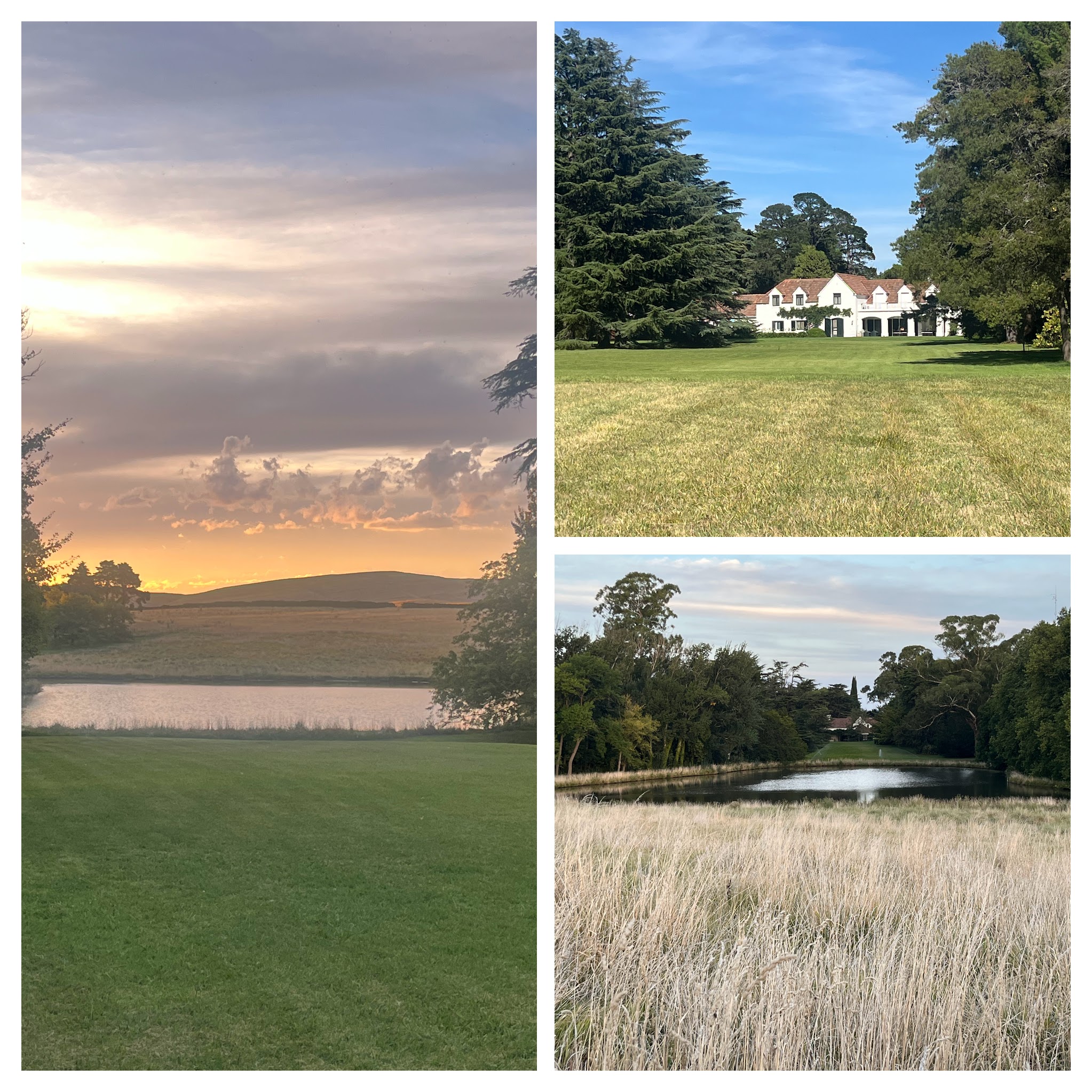
The hospitality of the Laharrague family was extraordinary, and we were pampered for three days while exploring Peter’s vast arboretum, which he inherited from his father but which he has planted mostly himself. Peter is a wonderful storyteller and keeps meticulous records of everything planted on his property, so he can always provide details about any specimen, along with plenty of anecdotes. He also enjoys fishing, and photographs of memorable catches and embalmed trophies adorn his office. (Read more about Peter and his arboretum in his Member Profile here.)

The arboretum spans 100 hectares, and Peter drove us around in his UAZ-469, a classic Soviet off-road military light utility vehicle, to visit the seven querceta or sections of his oak collection, ranging from the oldest plantings to those only a few years old (his conifer collection is also outstanding).
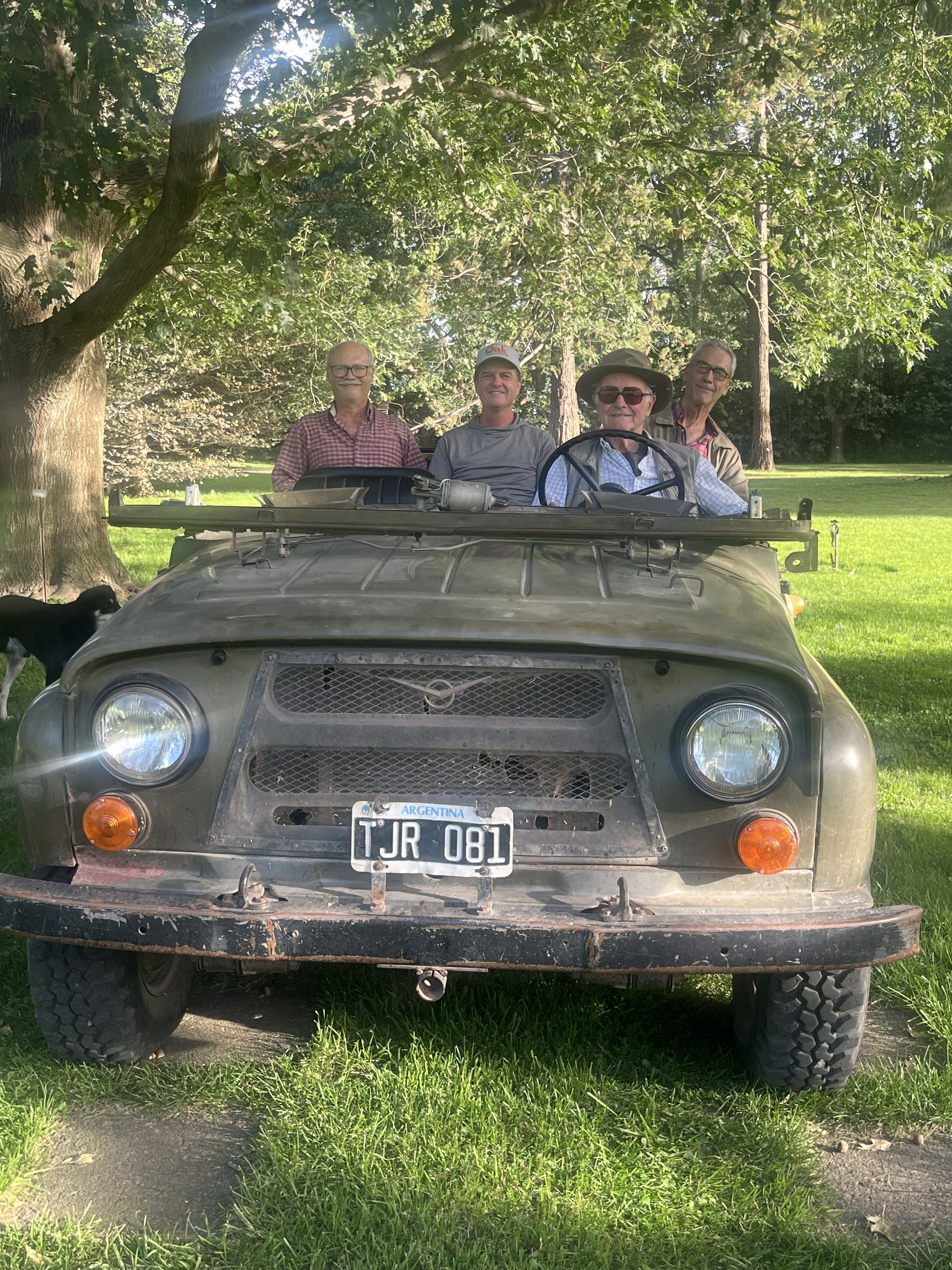
The climate here brings long, dry summers and harsher winters; Peter has recorded temperatures as low as –15°C (we were at 38.22° S, 58° W). One particularly cold winter pushed the hardiness limits of many species, yet adult specimens of Acacia melanoxylon, Q. suber, Eucalyptus sideroxylon, Araucaria angustifolia, A. bidwillii, Podocarpus parlatorei, Pinus canariensis, and P. roxburghii survived.
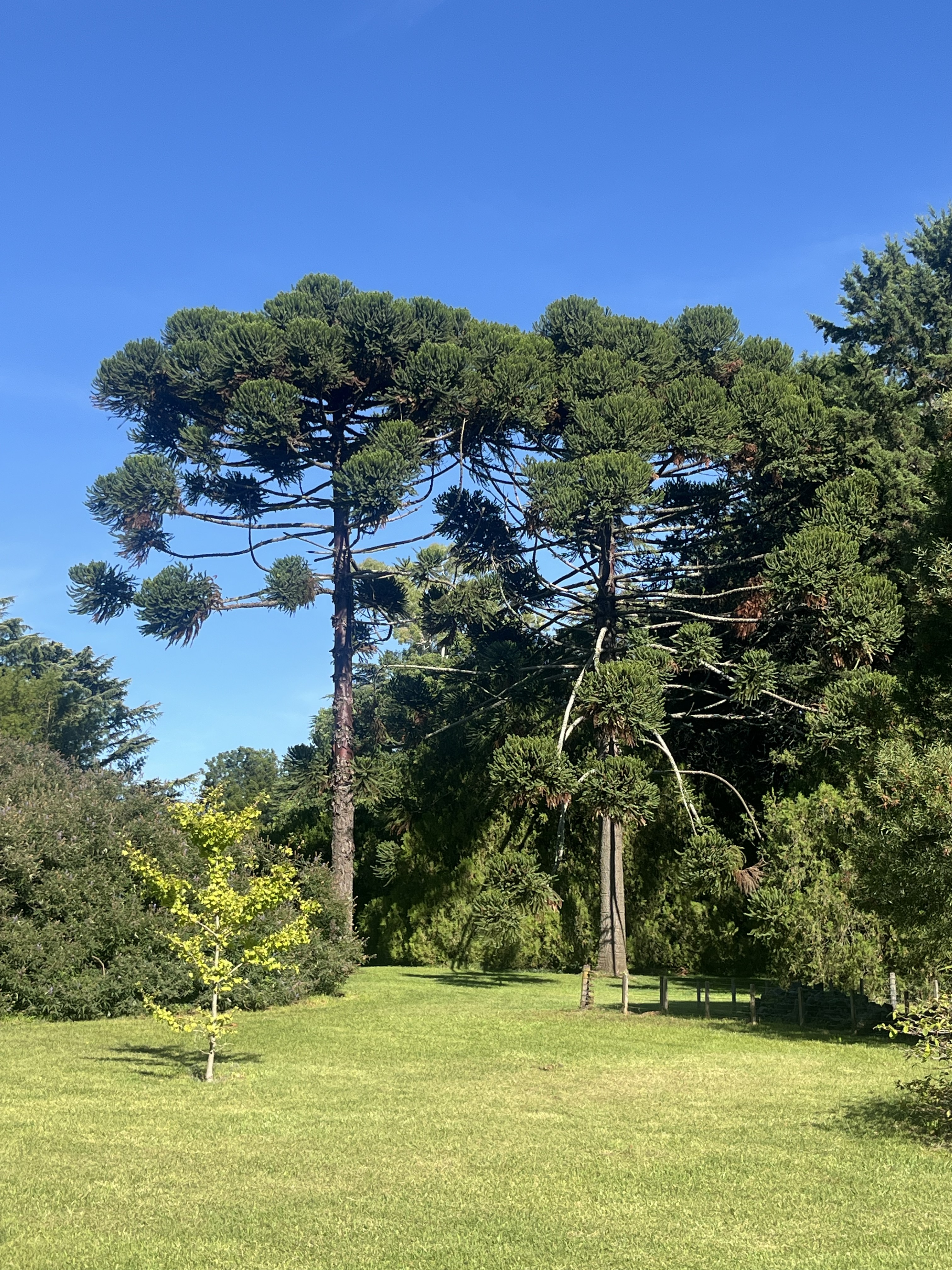
The oak collection is extensive, with many conspecific trees planted in groves. They produce abundant acorns, and countless seedlings sprout beneath them.
Among the many highlights, the ones that impressed me most were:
-
Quercus robur planted in the 1950s by Peter’s father; by European standards, it looks not 70 years old but at least 150

Top: IOS members with Quercus hypoleucoides, grown from acorns collected from street trees planted by Sean Hogan in Portland, Oregon. From left: Roderick Cameron, Guillermo Pedró, Morgan Santini, Claudio Pedró, Peter Laharrague. Bottom left: the striking undersides of the foliage; right: Claudio and Morgan "paying homage"
© Roderick Cameron -
Quercus hypoleucoides, the best specimen I have ever seen, full of leaves and in perfect condition
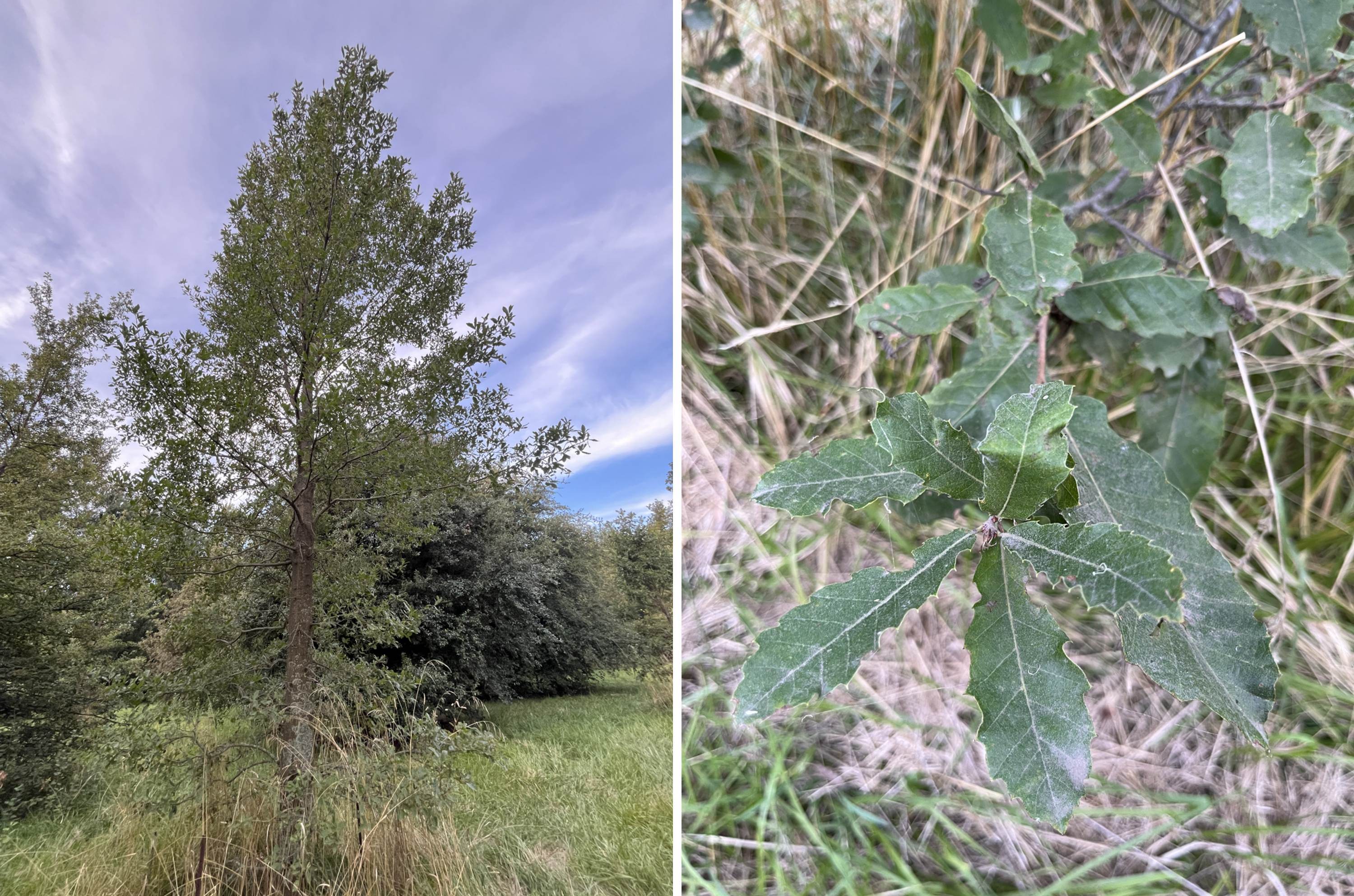
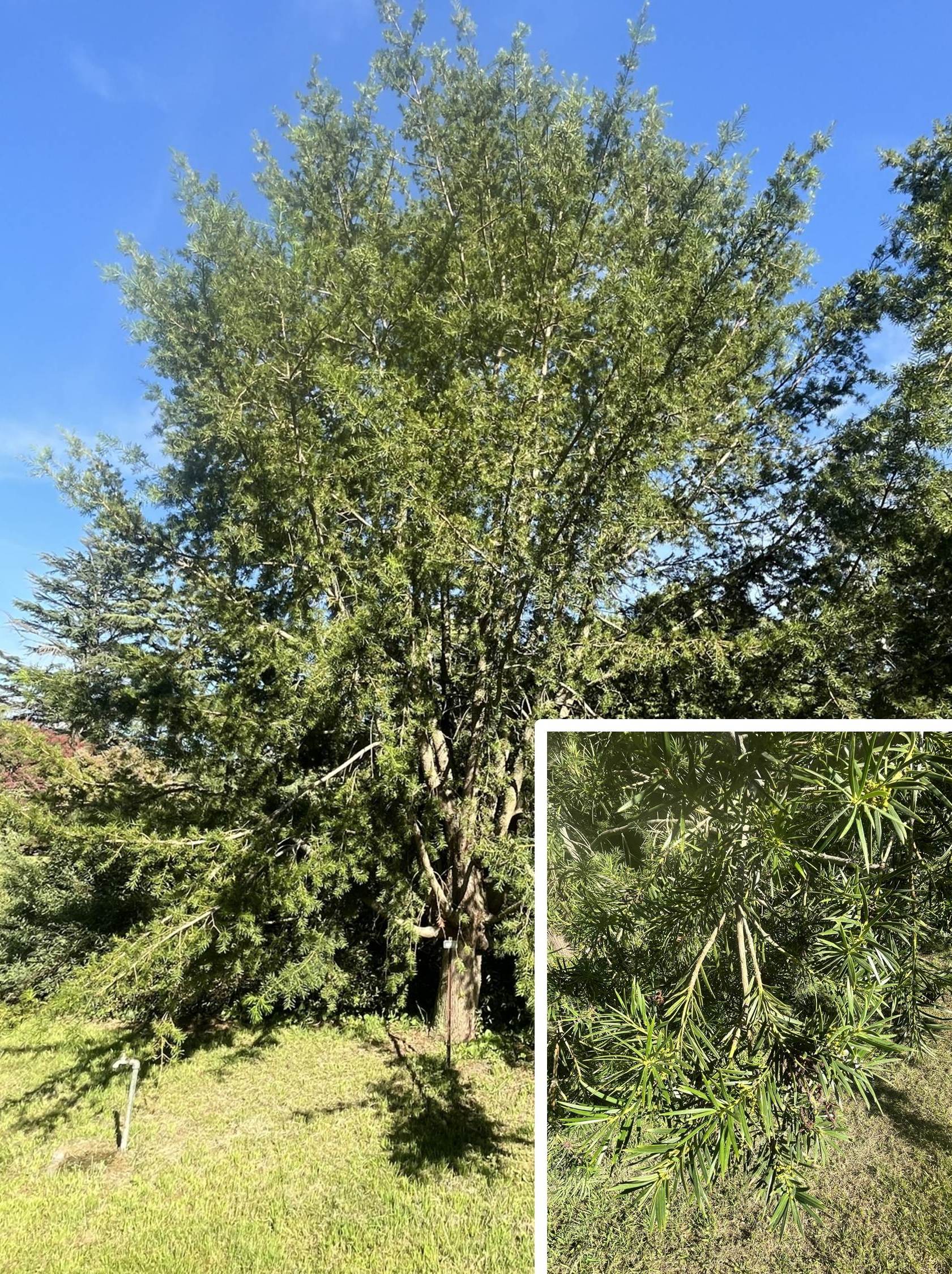
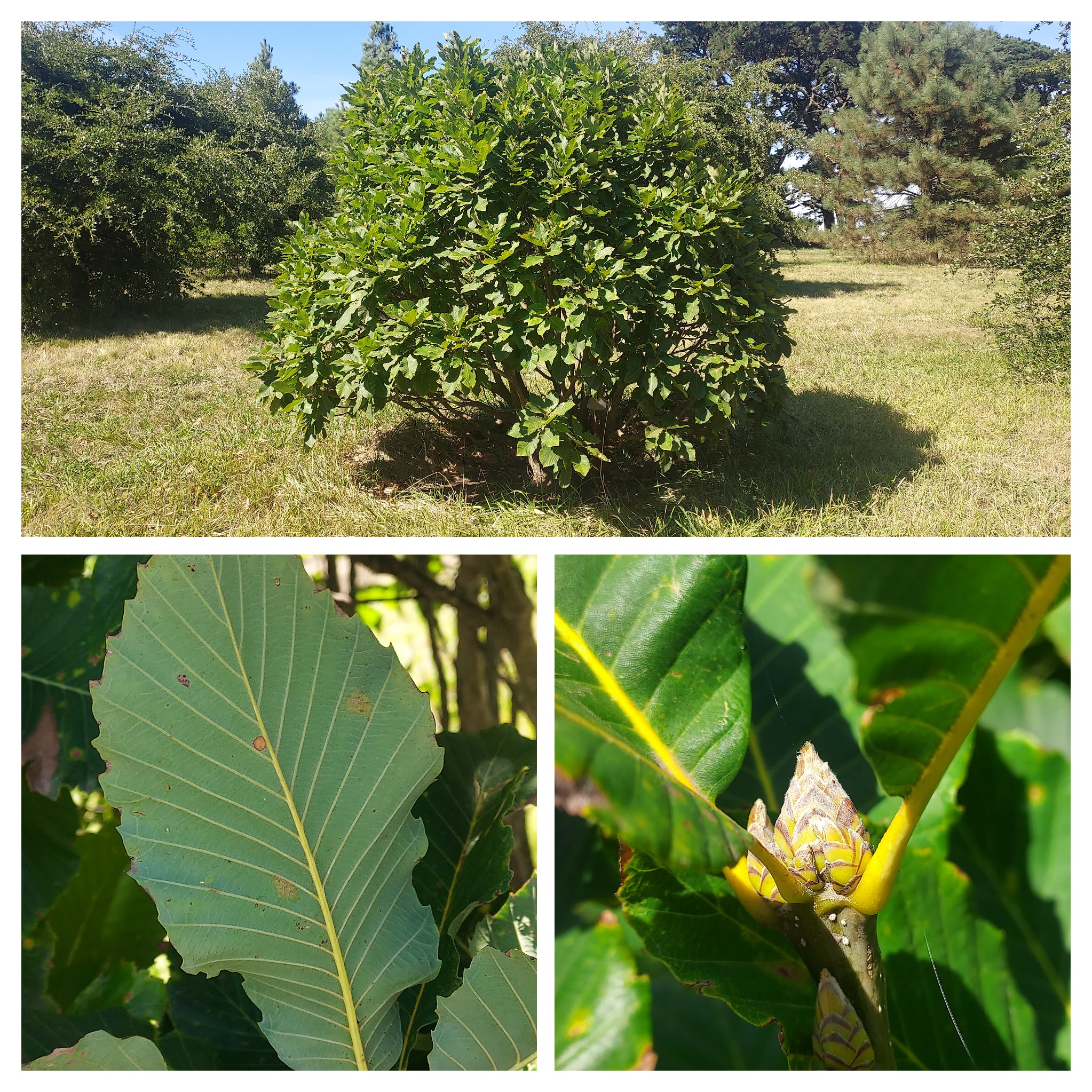
Quercus afares, the only oak species endemic to Africa; it grows about 1,000 km from where I live in Italy, but I had to travel to Argentina to see it for the first time! -
Quercus afares, a young, very healthy tree
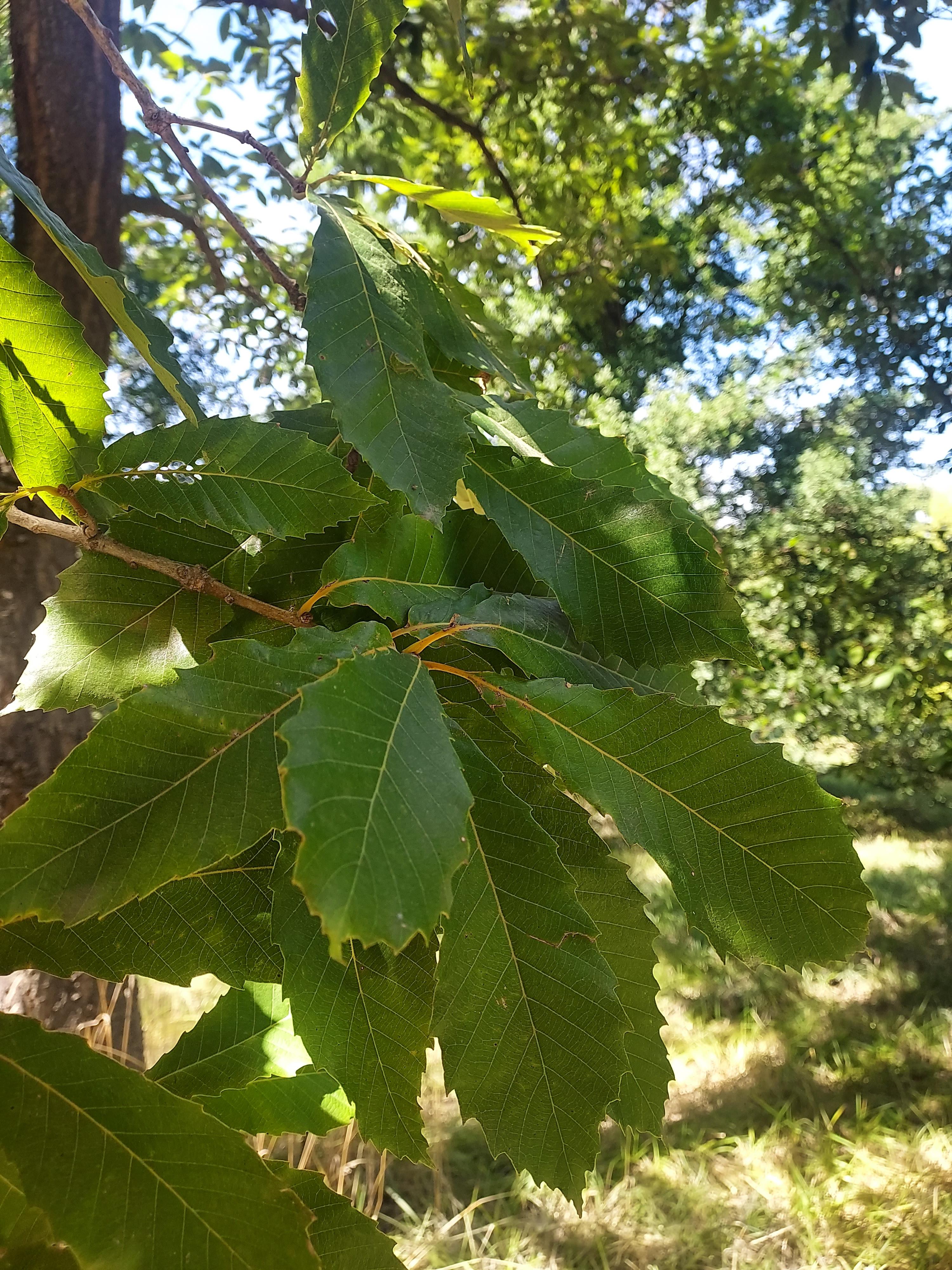
Quercus fabri at San Miguel Arboretum
© Roderick Cameron - Quercus fabri
- The new‑to‑me Quercus robur subsp. slavonica (considered to be a synonym of Q. robur)
- Quercus arizonica, full of acorns
-
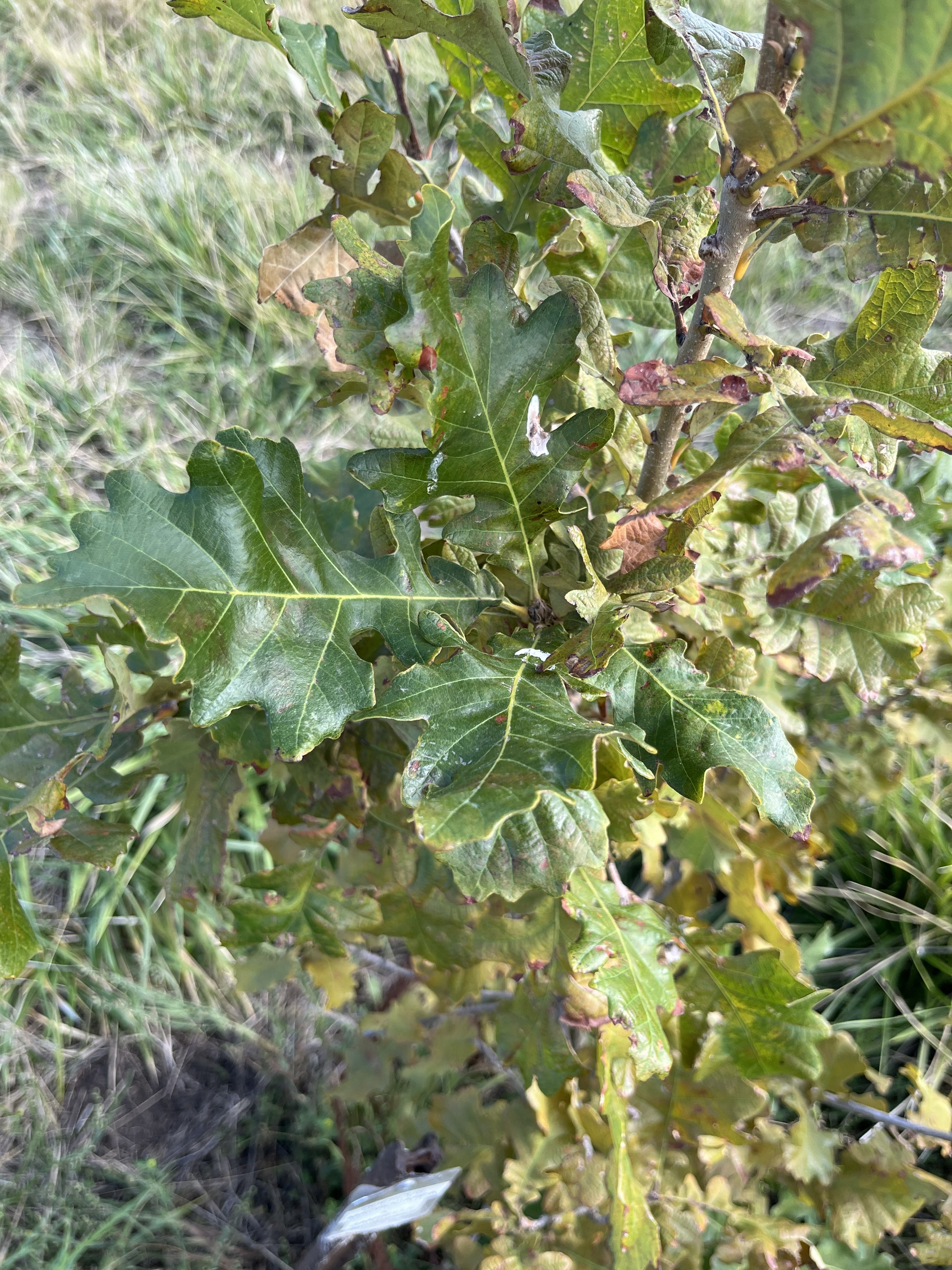
Quercus ×mazei foliage showing influence of both parents - Quercus gambelii × macrocarpa (i.e., Q. ×mazei, the hybrid name soon to be validated following a presentation at the IOS Conference in Oaxaca last year)
- Quercus ellipsoidalis, thriving here thanks to acorns received from Grigadale Arboretum (see below); Peter is propagating them, and some seedlings are returning to Grigadale, where it has been lost. Anyone lucky enough to grow this species knows what a great plant it is: fast‑growing, drought‑tolerant, and with astonishing red fall color every year.
© Roderick Cameron
However, for me the highlight of the garden was a grove of Q. pubescens on the highest point of the property, over karstic limestone bedrock. The trees looked extraordinarily healthy, and if not for an armadillo crossing the path and a hummingbird slicing the air in front of me, I would have thought I was in Chianti. It is the only place I have visited outside Europe where Q. pubescens reaches its full potential. Peter collects acorns from these trees for black‑truffle producers nearby.
On March 2nd, we drove to Lobería District to visit Grigadale Arboretum, originally planted by Duncan Cameron (father of former IOS President Roderick Cameron), and the source of many seeds for collections across Argentina and Uruguay, including Peter’s. At the neighboring property, Los Nogales, we were received by Roderick’s brother Sean and treated to a magnificent lunch by his wife Jennifer, including a delicious baba ghanoush and then cheesecake for dessert (according to Claudio, the best he had ever tasted!).
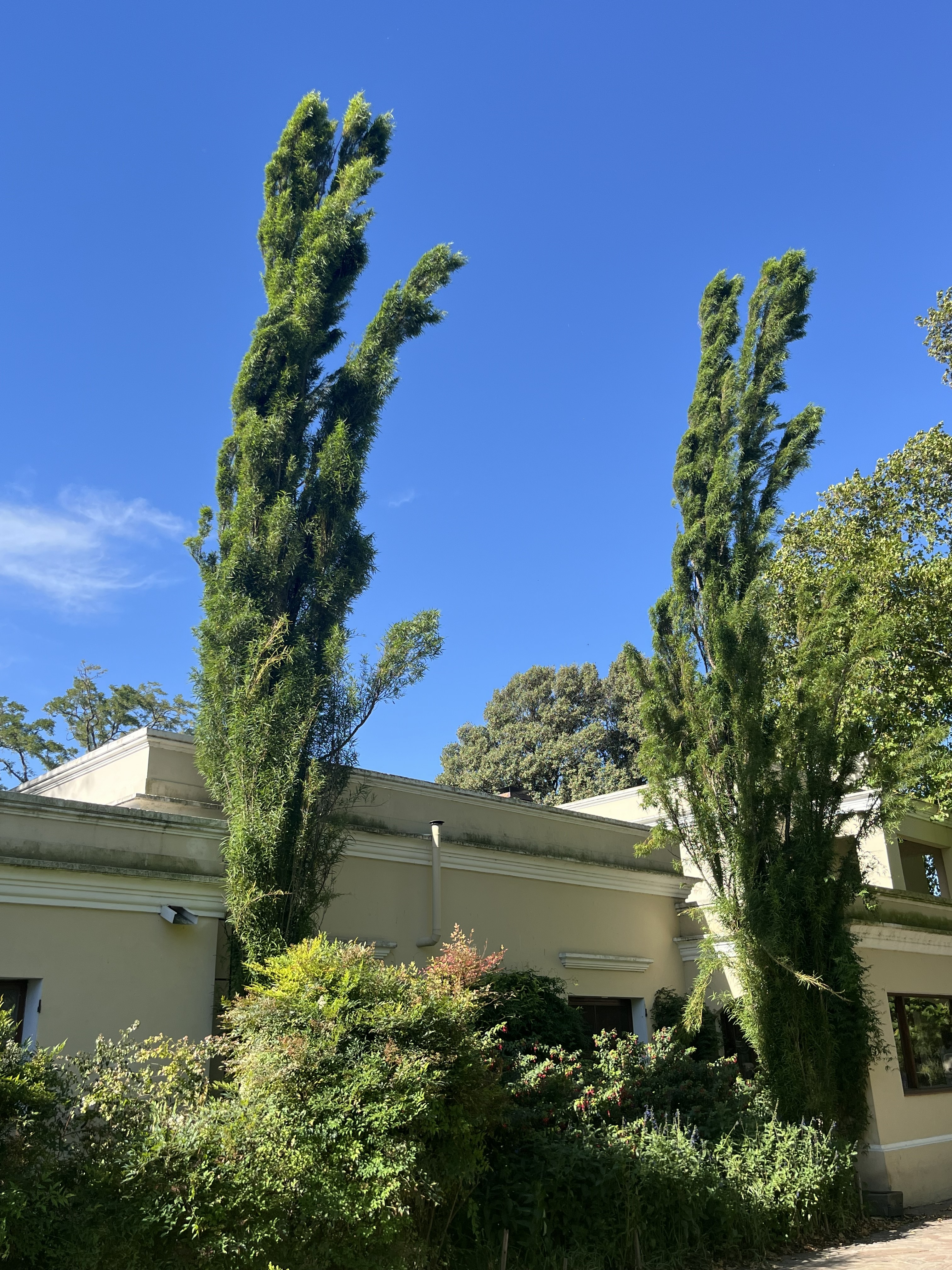
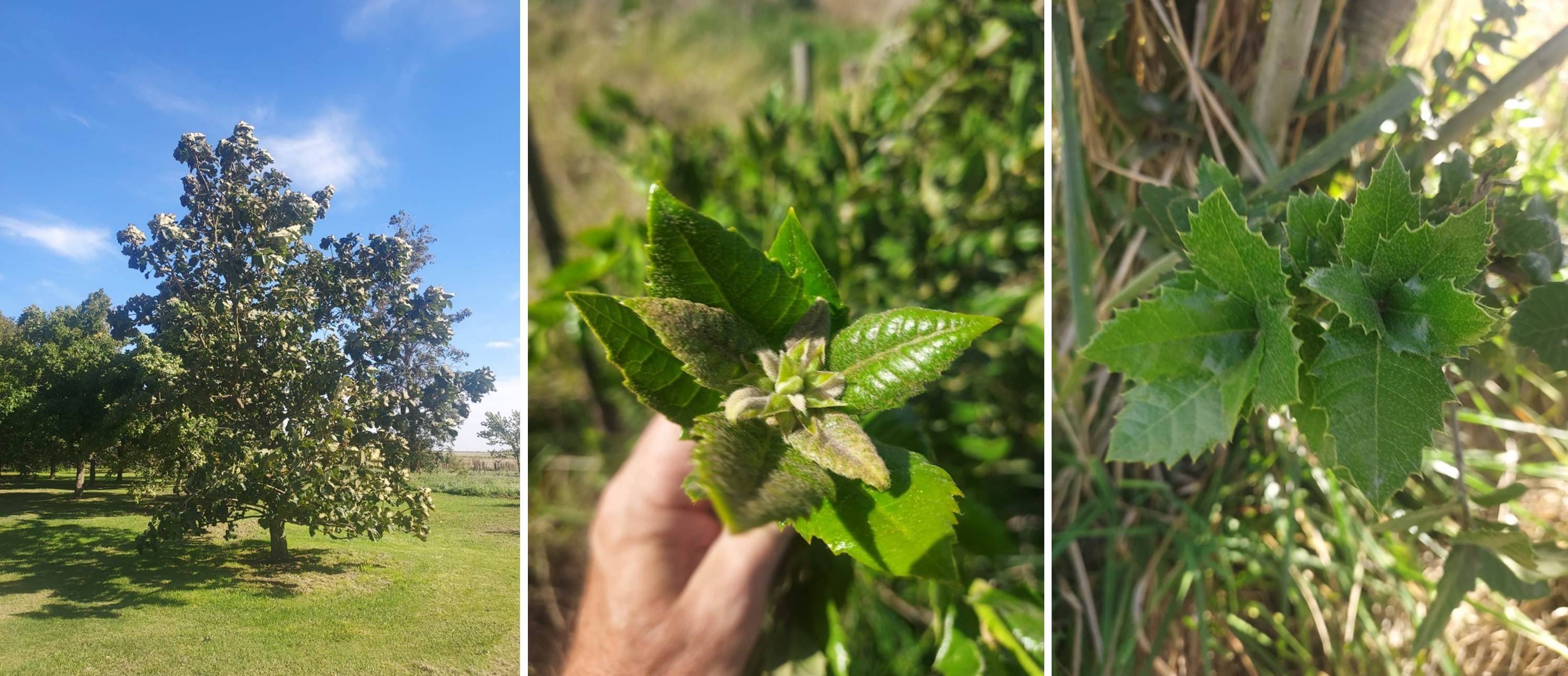
Following lunch, we toured their park, which includes some remarkable old trees (lunch was in the shade of a large Lagunaria patersonia), as well as younger plantings (Araucaria araucana, Populus deltoides, Casuarina cunninghamia, Platanus ×hispanica, Fraxinus angustifolia ‘Raywood’) and many oaks, both from seed from the collection at Grigadale as well as young trees transplanted from there. Standouts included the rare Q. tomentella from the Channel Islands off California, and an impressive Q. dentata (possibly a hybrid, as it was grown from seed collected off a cultivated tree at Grigadale, but in appearance true to the species).
Grigadale has the highest ratio of different specimens per hectare I have seen in Argentina, all carefully planted by the Camerons. All the oaks looked extremely healthy, benefitting from the favorable conditions described above, though a few trees were affected by the borer Hylotrupes bajulus, a cause of concern. The collection had seen some neglect during a transitional period, which, to me, added a certain Old World charm, but signs of renewed maintenance were evident.
My favorites:
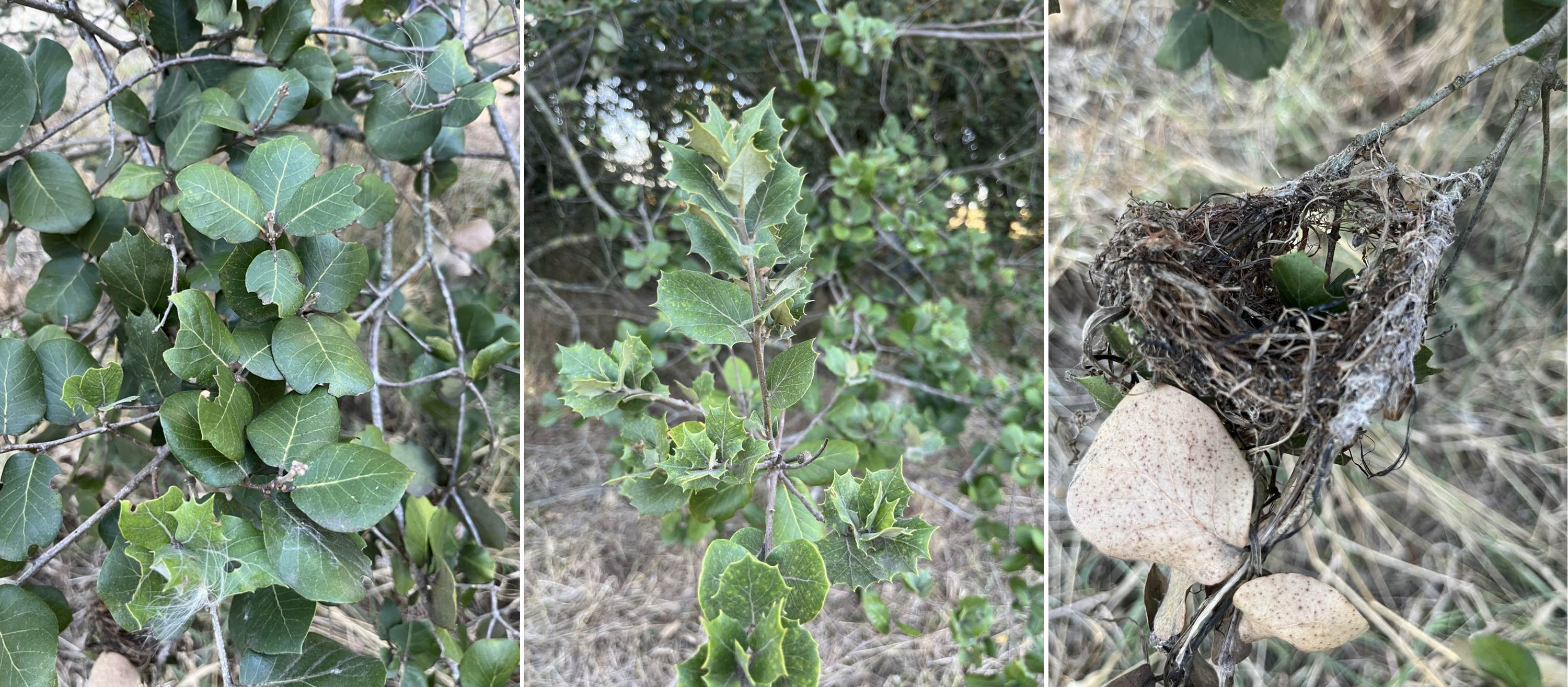
- Quercus baloot, a full‑sized specimen at least 8 meters tall, with pristine leaves and a hummingbird nest; grown from seed collected by Shaun Haddock in Pakistan, this is considered to be the ex-situ champion tree.
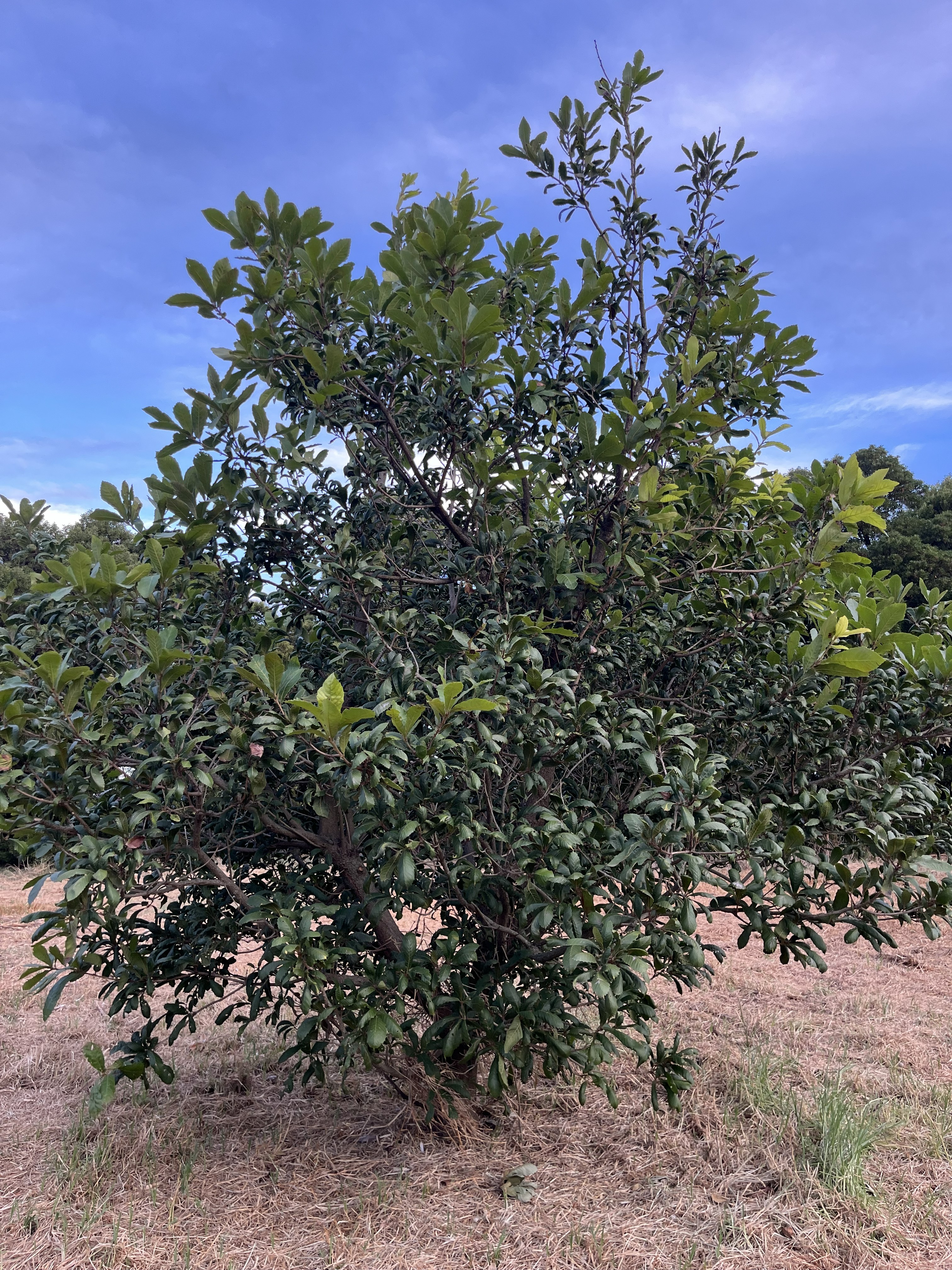
-
Quercus insignis and Q. calophylla, both growing steadily
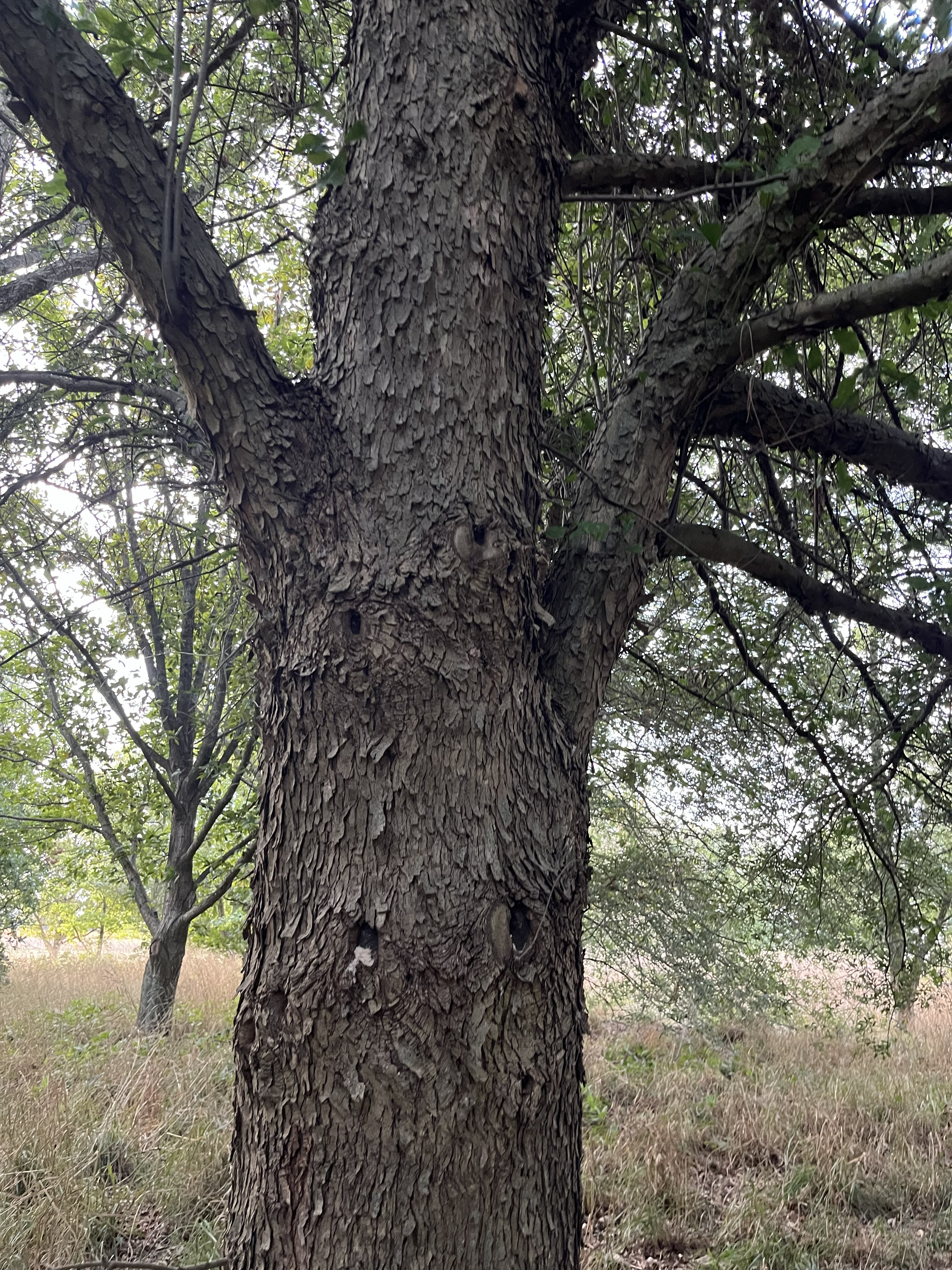
The shaggy bark of Quercus austrina; though received as this species, according to Ron Lance, this may be Q. durandii (syn Q. sinuata) -
Quercus austrina, so large I couldn’t capture it in a single photo, and only 26 years old; the biggest I’ve seen outside the USA
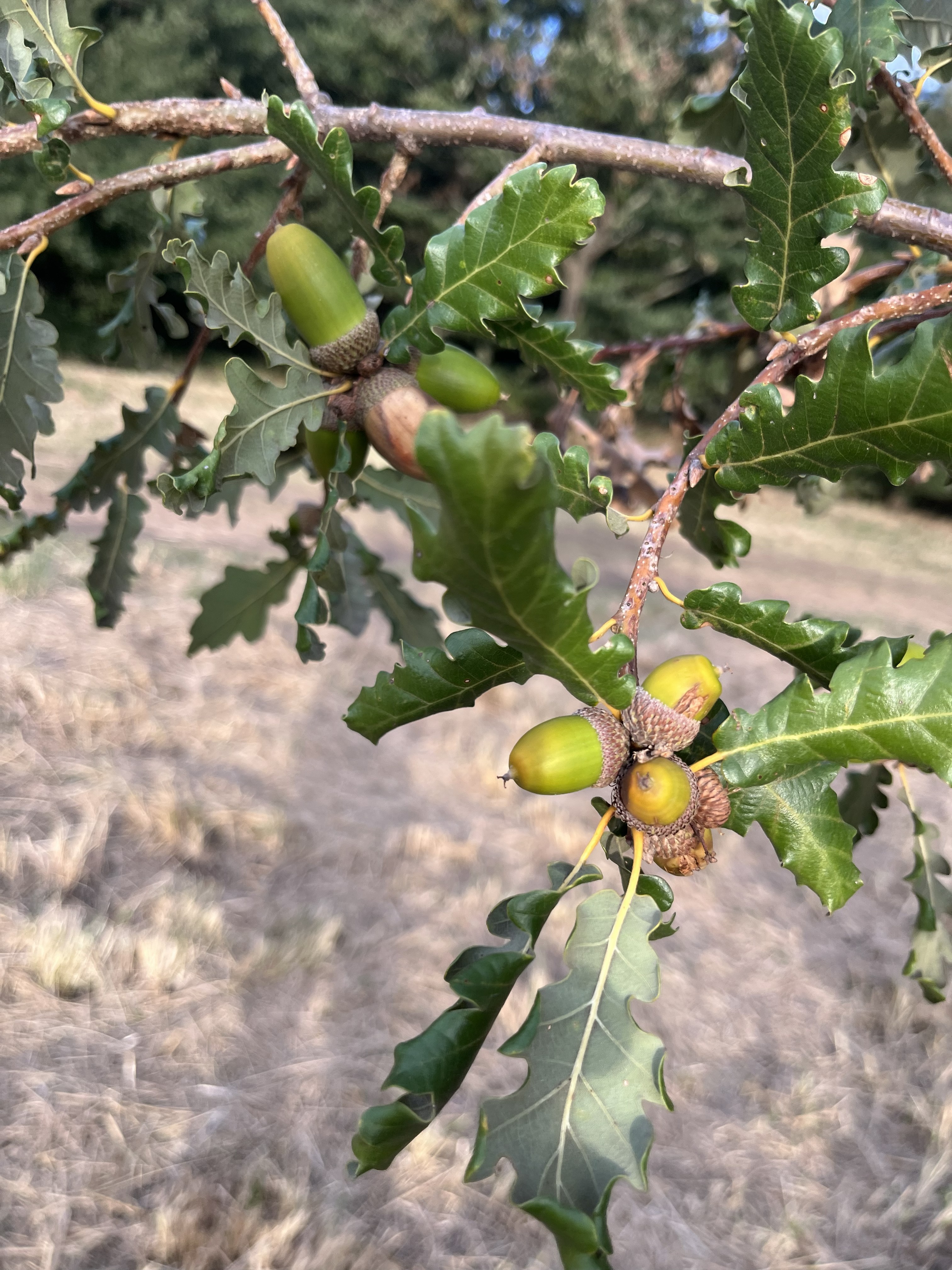
Quercus ×haynaldiana, sourced from Pavia Nursery, Belgium -
Quercus ×haynaldiana (Q. frainetto × Q. robur) and Q. ×andegavensis (Q. pyrenaica × Q. robur)
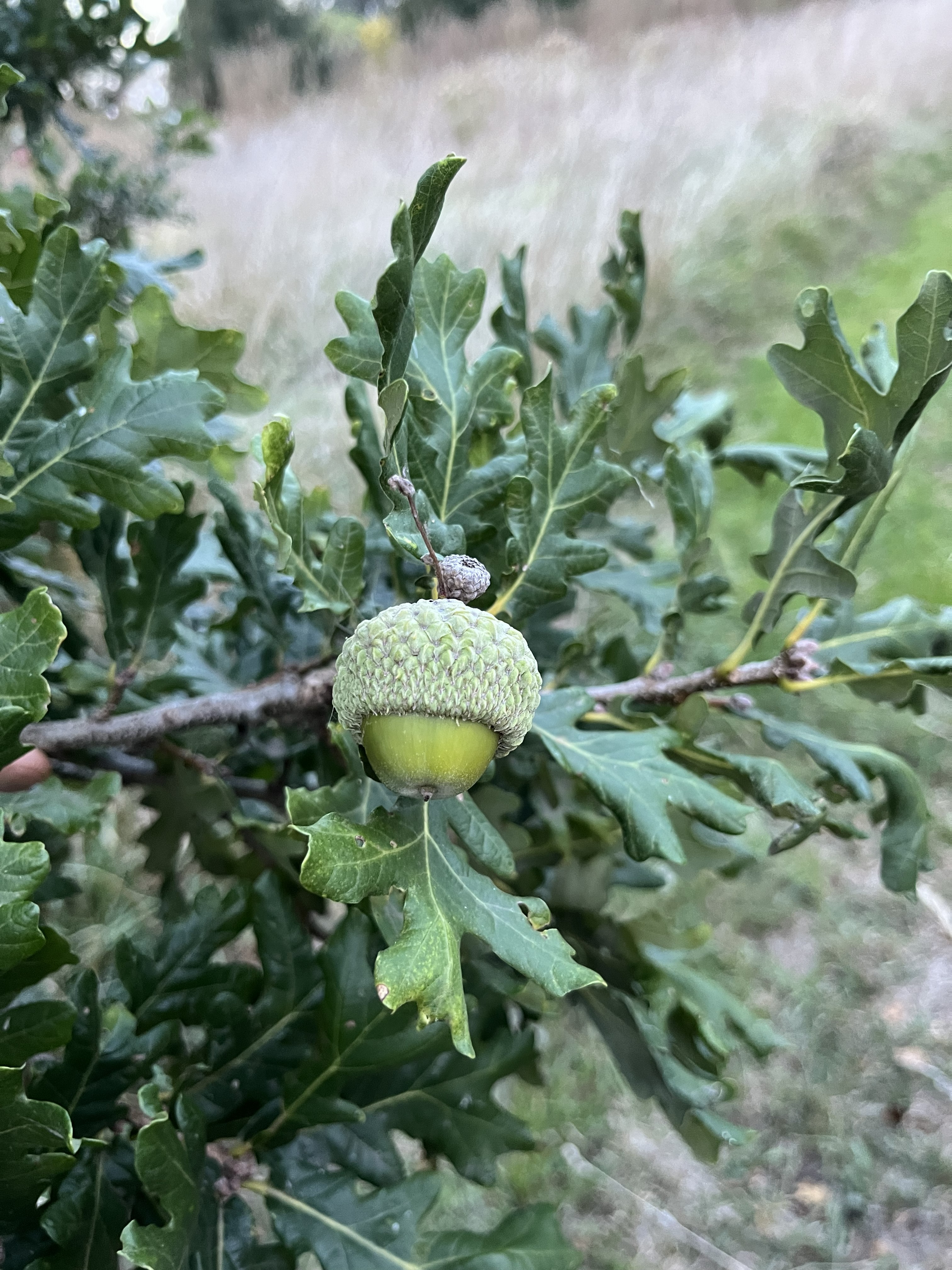
Quercus ×andegavensis
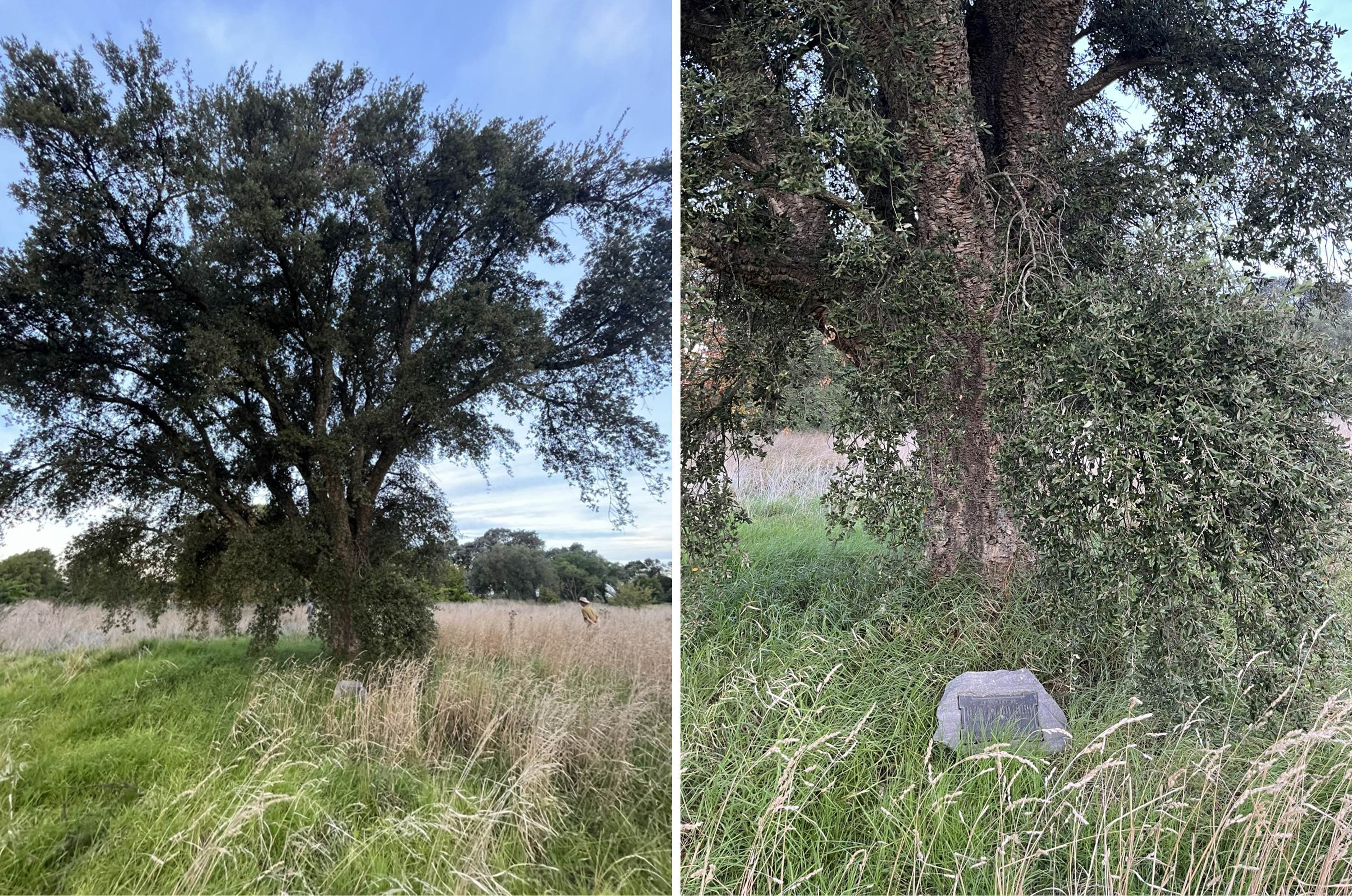
But the surprises weren’t over. Near the house stood a huge cork oak (Q. suber). Its size made me think it was a century old, far older than the house it stands next to, but Roderick told me it was only 33 years old. Here, you could establish a working cork plantation and see it become profitable within your lifetime!
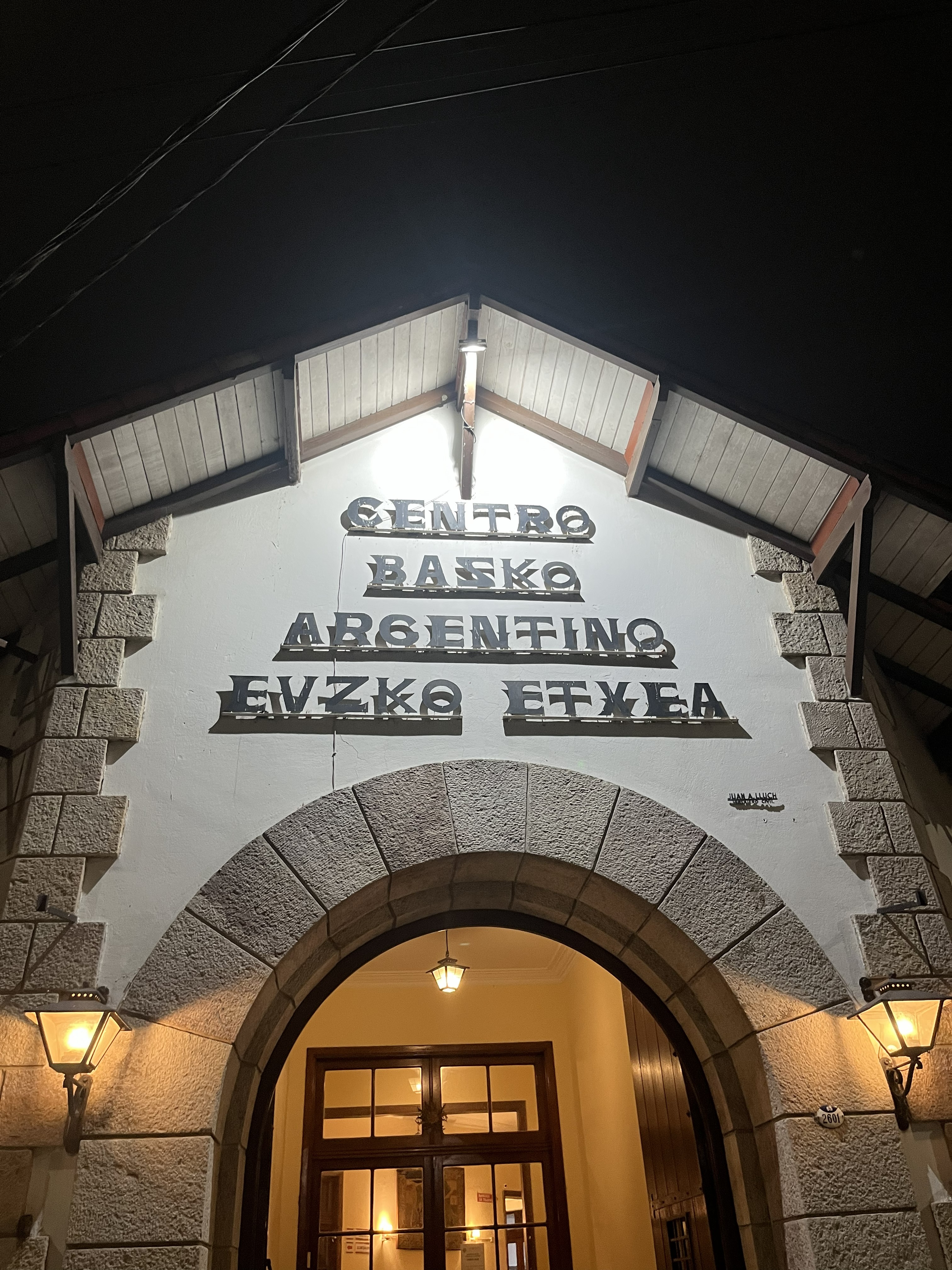
At sunset, we drove toward the coast and spent the night in Necochea, a city originally founded by Basques. We enjoyed an excellent fish dinner at the Basque Center.
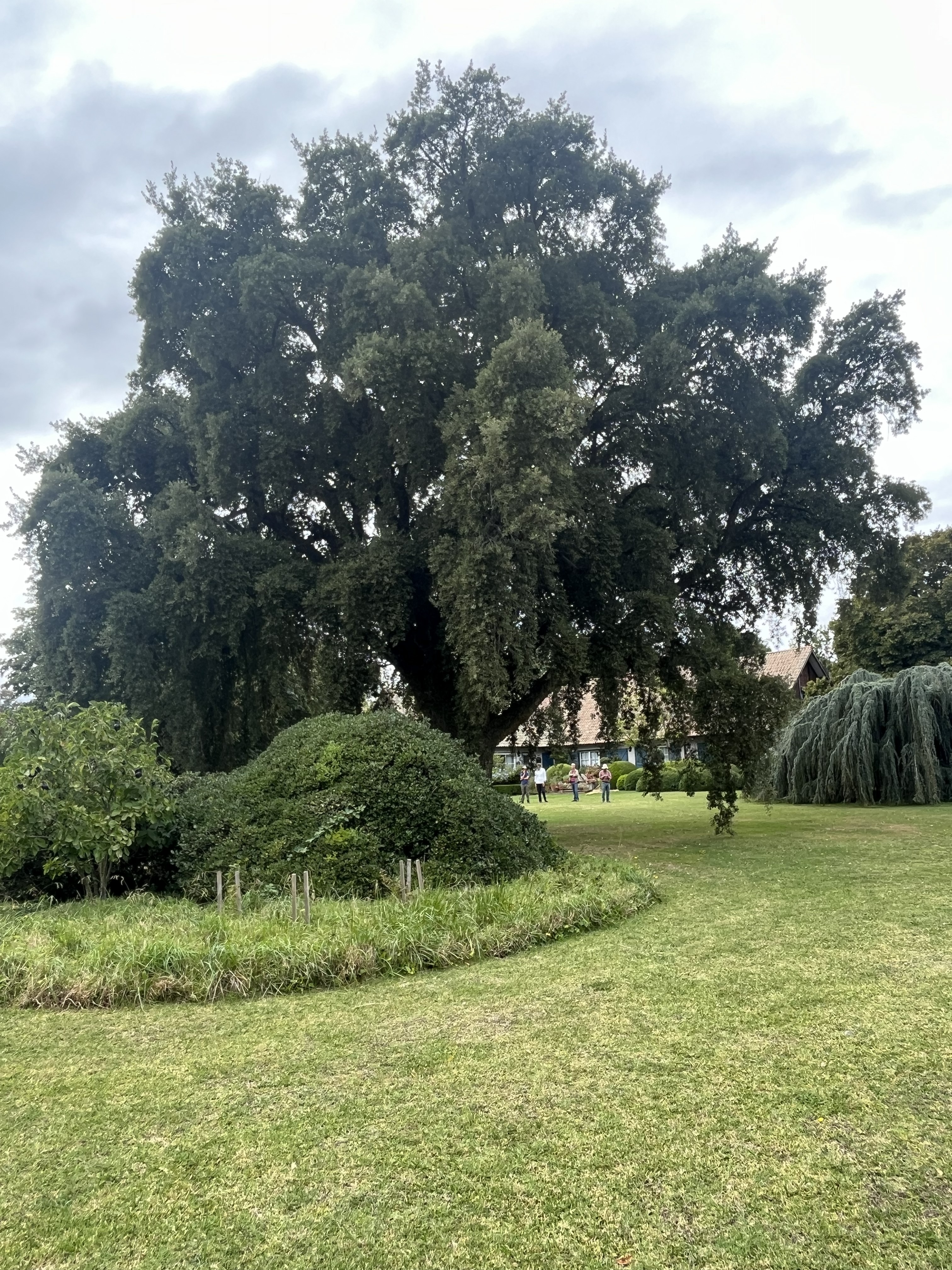
The next morning, we began our journey back to Buenos Aires, stopping in the outskirts of Mar del Plata at a local nursery founded by the Van Heden family (originally from Belgium), where temperate and subtropical trees grow together in a beautifully maintained park. Once again, the highlight was a Q. suber, and once again, its size suggested a century‑old tree, though it was only 70 years old.
We then drove along the waterfront of the beautiful coastal city of Mar del Plata, though we couldn’t stop, and reached Buenos Aires in the evening, closing our dendrological tour.
Photos © Morgan Santini unless specified.
1 In my experience, Argentina is the only country outside Italy and France (and to some extent Spain) where all hotels have a bidet, but they come with two faucets, so be careful to use the correct one!
Content by the Same Author
The International Oak Society acknowledges the generous support of the following institutions:
Supporting Institutional Members




Standard Institutional Members