Editor's Picks

While working on a list of synonyms of European White Oaks...
Roderick Cameron
|
Aug 24, 2026
Report led by The Morton Arboretum will help prioritize oak...
Website Editor
|
Aug 06, 2026
Motivation
I live in the village of Dolné Dubové...
Jozef Čapkovič
|
Jul 20, 2026
Plant Focus
The only oak species endemic to Africa is rare in cultivation. It shouldn't be.
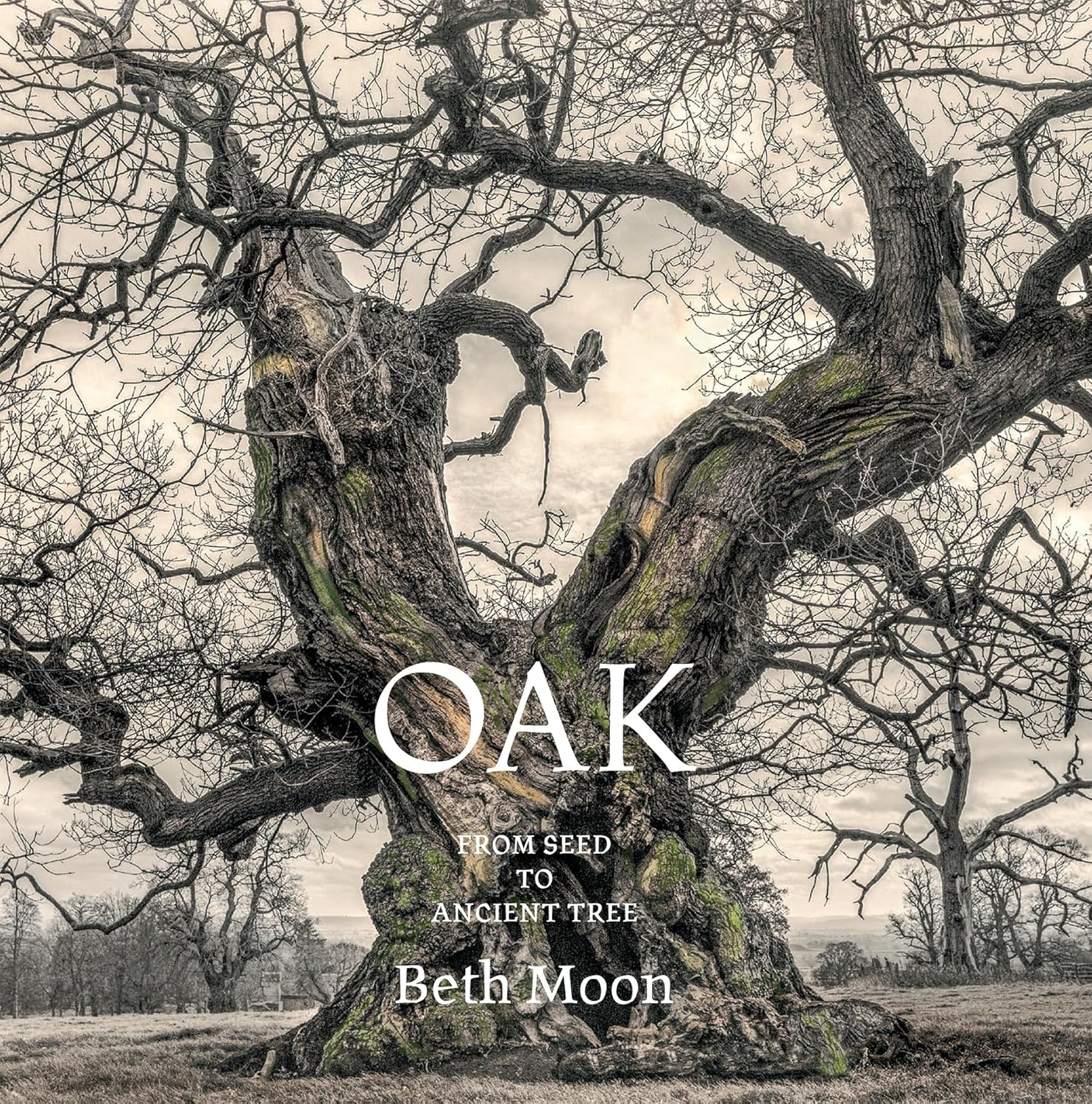
OAK
FROM SEED TO ANCIENT TREE
Beth Moon
Abbeville Press, 2025
ISBN 9780789215185
It was tempting to make this the shortest ever book review: “If you love oaks, and you clearly do, you need this book”.
Some members may be familiar with Beth’s work, which was featured here ten years ago. To say that she is a photographer would be rather like saying that J.M.W. Turner did a bit of painting: Beth is a consummate artist, using the medium of black and white photography. But, again, that description doesn’t do her work justice. As the processes she employs are key to the quality of her prints, some description of them is appropriate.
There is, of course, a whole area of research, of establishing ownerships and negotiating access, that we are not privy to. Then there will be the meticulous establishment of viewpoints and of framing and lighting, before the first shot can be taken. Beth has worked with a range of cameras and formats, both digital and roll film, but with the common aim of producing a black and white negative, to be scanned and then printed onto transparent material at the same size as the proposed finished image.

The next stage has as its beginning a paper made by the French company Arches®, which still operates from the mill that it established in 1492. Arches® Platine is made from 100% cotton and is formed on a cylinder mold, which produces deckle edges and ensures a random distribution of fibers, with a resulting high wet strength. The paper is acid free, it has no alkaline reserve (which could interfere with the print-making process), and no optical brightening agents. These properties ensure that the paper is of archival quality and will last for centuries.
To make one of her prints, Beth first humidifies a sheet of this paper and then hand brushes a solution of platinum and palladium onto the surface. The very fine crystals become embedded into the paper, giving the final print a three-dimensional quality, along with the warmth, tonal range, and luminosity that is a hallmark of this process. The impregnated paper is dried and then placed in contact with the negative in a vacuum frame and exposed to UV light. The image appears for the first time when the paper is flooded with developer, and then there are three clearing baths and a final wash to create an archival-quality print. You can see part of this process below.
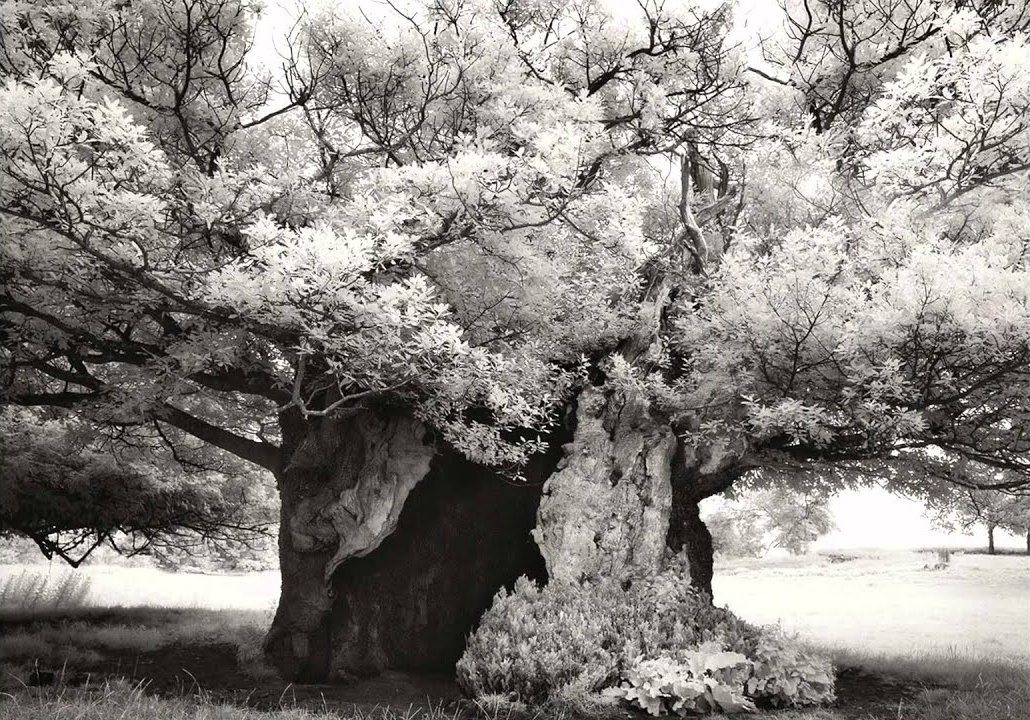
For the images in Oak, this is not the end of the process. What really brings the trees to life is Beth’s incredibly skilled and subtle painting by hand. As she puts it, “A mix of yellow ochre and quinacridone gold, painted on the few remaining leaves, speaks of the last days of summer. Raw umber accentuates a trunk long lived. A blend of cadmium yellow and cerulean blue creates an olive green so perfect that I can recall the earthy smell of the forest and the soft touch of moss covering low oak branches after the rain.”

There are three main parts to the book, featuring ancient oaks of Britain and Europe, the southern live oak allées of the south eastern USA, and portraits of germinating acorns.
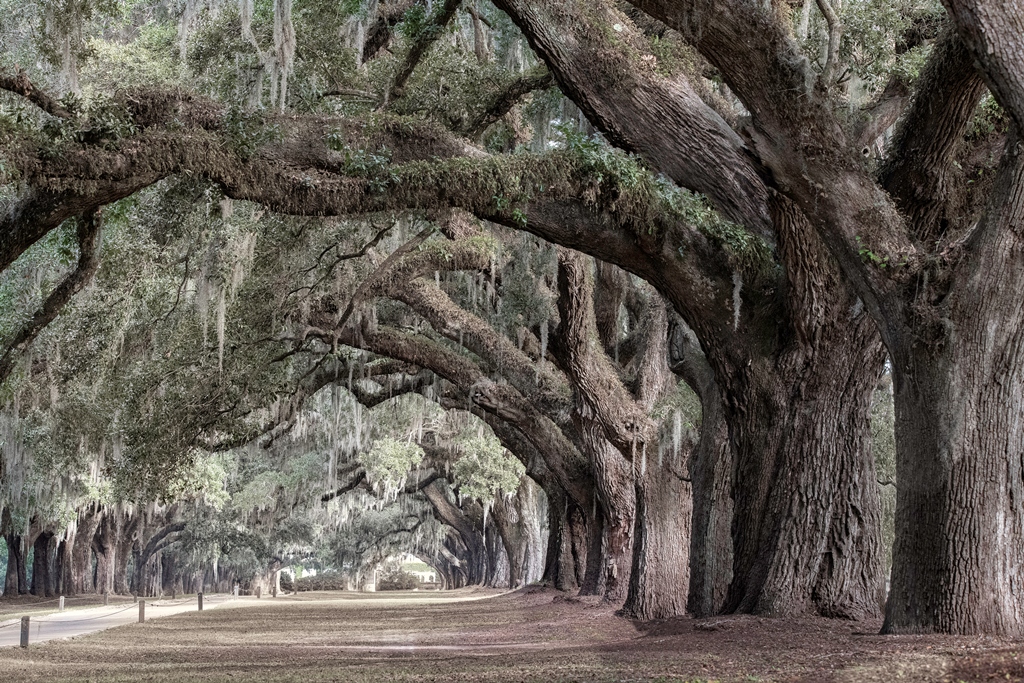
The images reproduced here can’t possibly do justice to the sublime originals. These oaks are firmly rooted in time and space, yet their images have a timeless, otherworldly quality that transcends photography. There is no ego in Beth’s art: every step along the path to creating a print shows her devotion to celebrating the lives of these oaks, and the final results, which will endure for centuries, are fitting memorials to those that we will inevitably lose. It’s poignant that one of her subjects was the Major Oak of Sherwood Forest, a tree whose days are sadly numbered: see here.
Writing of a fallen baobab, Beth has written that:
“Memory is the force behind taking a photograph, an act of defiance that ensures we don’t forget. Documenting each tree is a way of remembering. The repetition can feel like a ritual. In the presence of old trees, I am reminded there is still grace and beauty in the world. By honoring the trees that remain, we celebrate the joy and splendor of the earth.”
So, if you love oaks, and you clearly do, you need this book. It is published by Abbeville Press.
A collector’s edition is also available, and her prints can be purchased from Photo-Eye Gallery and other outlets in the USA and from A-Galerie in France, or Salamon Fine Art in Italy.

Content by the Same Author
The International Oak Society acknowledges the generous support of the following institutions:
Supporting Institutional Members




Standard Institutional Members