Editor's Picks

While working on a list of synonyms of European White Oaks...
Roderick Cameron
|
Aug 24, 2026
Report led by The Morton Arboretum will help prioritize oak...
Website Editor
|
Aug 06, 2026
Motivation
I live in the village of Dolné Dubové...
Jozef Čapkovič
|
Jul 20, 2026
Plant Focus
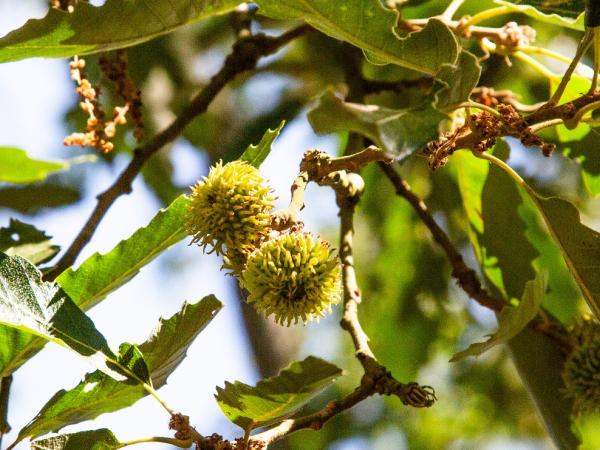
The only oak species endemic to Africa is rare in cultivation. It shouldn't be.
“Of all the trees, which are known to the naturalist, there is probably none, which appeals so strongly to the imagination, as the oak. It is so woven into our history and national life, that apart from its practical uses, it has earned a sentimental value, which is neither shared nor approached by any other tree” (Rolfe 1905). “This noble tree, the monarch of the woods, the boast and bulwark of the British nation” (Boutcher 1775). “Heart of oak are our ships, heart of oak are our men; We always are ready, steady, boys, steady! We'll fight and we'll conquer again and again” (Garrick 1759). We Brits do like our oaks, to the point of a certain patriotic soppiness, even though we only have two species and most of us can’t tell them apart.

Sadly, our sentimental regard for these trees doesn’t insulate us from the fact that they are, potentially, in trouble. This is the context for State of the UK’s Oaks 2026 from Action Oak, a consortium which “work[s] with partners on our mission to lead the vital work and research needed to protect the UK’s native oak trees and safeguard their future.” This, the latest in a series of reports, was presented at a webinar, a recording of which can be viewed on the report webpage here, in March of this year. I won’t attempt to summarize the report in detail because a summary analysis is available on the webpage. Instead, these are a few personal thoughts about some of the findings that I found most interesting or important.
One of the first things that struck me, in Section 1.2 Native oak species and their genetic diversity was the acknowledgement of the importance of gene flow, both within and between our two species, thus: “Our two native oaks have an ability to hybridize with each other, forming intermediates, but still maintain distinct species populations. It is thought that the hybrids may help facilitate Q. petraea moving into a new area, after the better pioneer species, Q. robur, has colonised it.” It has to be said that a recent project to sequence whole genomic DNA of 418 individuals from 60 British natural oak populations (Gathercole et al. 2026), has cast doubt on the “invasion through hybridization” or “resurrection” hypothesis (Petit et al. 2003), but it doesn’t dispute the near-ubiquity of hybrids in parts of western and northern Britain and their adaptive potential. The report acknowledges high rates of gene flow between woodlands, because of the dispersal ability of pollen, so that woods that are geographically isolated are not necessarily genetically so. This must be to our oaks’ advantage, given the various stressors to which they are subject, and surely should be encouraged. It’s noted that “[p]revious trials havefocused on yield traits, but traits for adaptation for both climate change and disease resilience are now arguably just as important,” which strikes me as an understatement.
Given all this, the following section informs us that “[t]here are currently 327 seed stands registered with the Forestry Commission’s National Register of Approved Basic Materials for oak in Britain,” of which 153 are of Q. robur and 174 of Q. petraea. Surely, it’s time to acknowledge that we need all of the genetic variation that’s potentially available to us, and that includes seed from stands of Q. ×rosacea plus trees?
The management issues raised by masting are discussed. The forestry industry needs a regular supply of oak planting stock, but the periodic scarcity of acorns militates against this and leads to the importing of stock from Europe, a practice that has resulted in the poor performance of maladapted trees in the past. British forestry is, to all intents and purposes, plantation forestry and when it comes to establishing trees and woodlands we Brits default to planting, without always considering alternatives. But natural regeneration of oaks does occur, quite frequently, and even continuous cover silviculture of oak has been shown to be possible (Pohl et al. 2025). Aren’t we missing a trick here?
Woodland managers have long been aware of a problem of missing generations of oak trees. The anecdotal evidence has now been supported by a quantitative survey, which has disclosed that, in addition to a lack of regeneration during the 19th and early 20th centuries, there has also been a regeneration failure more recently. It has been shown that 40 per cent of our woodlands exhibit “unfavorable” levels of herbivory, with the main culprits being deer, whose numbers have exploded in recent years, but with rabbits, hares and sheep being implicated in some parts of the country. My own experience, gained through exclusion experiments, has been that mice can effectively remove the entire acorn crop in some years, possibly facilitated by the extirpation of predators by gamekeepers.
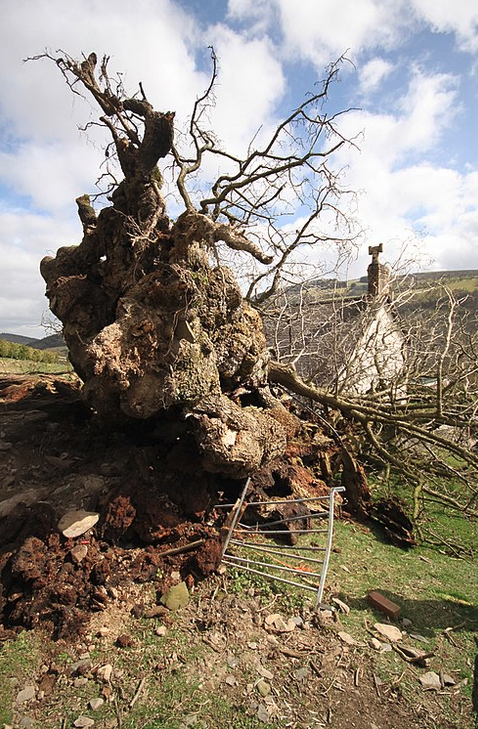
As well as being a general problem for oak woodland conservation, the historic regeneration failures are having an impact on one particular cohort: our ancient oaks. Britain has more of these than any other European country as a result of historic patterns of land tenure, and they are a particularly important genetic resource, as long term survivors of changing environmental conditions, but all is not well with them. As recent reports have indicated—for example, the parlous state of the Major Oak in Sherwood Forest and the deaths of the Chaceley Oak in Gloucestershire and the Pontfadog Oak in Powys, Wales—we are losing them. In the case of the three trees mentioned here, that is partly as a result, respectively, of soil compaction by visitor numbers, by an increase in flooding, and by severe gales. The sobering issue is that there is not a generation of aging oaks to replace them, so when they are lost they are gone forever.
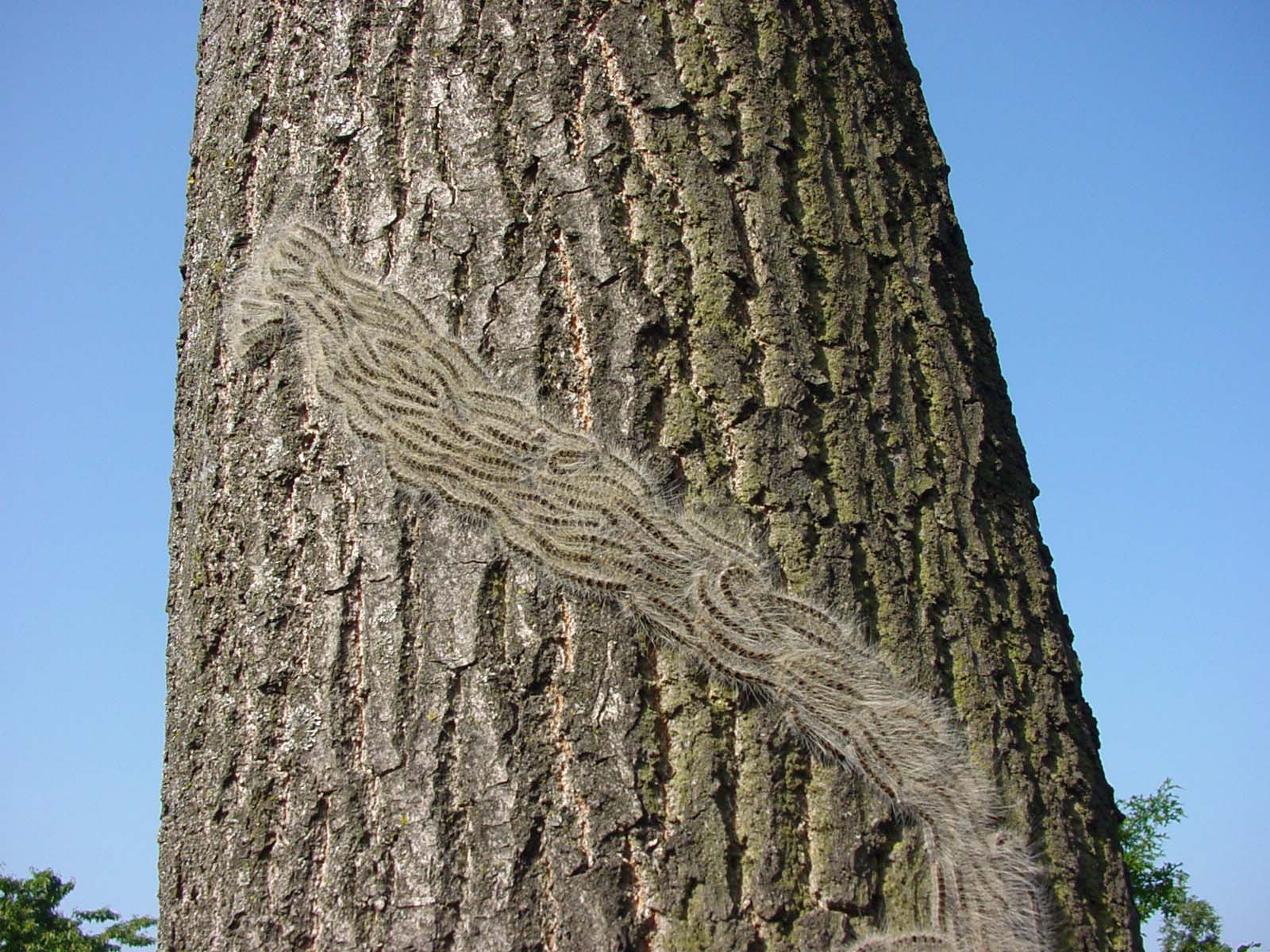
Space restrictions prevent consideration of other threats to our oaks, including Acute Oak Decline, oak processionary moth and several potential pests and pathogens that are not yet present in the UK but which would be a threat if introduced. And of course, all of this is compounded by the problems to be caused by a changing climate.
This is an excellent report on the state of the UK’s oaks, which should provide a sound basis for the direction of future research. There are a few issues that could be improved, such as instances of missing text, misattribution of text figures, incorrect references, and a rather outdated claim that the world has about 600 oak species. Any one of these errors would be trivial by itself, but taken together they serve to undermine the authority of this publication, which is a great pity.
References
Boutcher, W. 1775. A Treatise on Forest-Trees. Edinburgh: R. Fleming. [link]
Garrick, D. 1759. “Heart of Oak.” Lyrics for pantomime Harlequin’s Invasion, William Boyce, composer. Later adopted as March of the Royal Navy.
Gathercole, L., R. Carleial, N. Brown, S. Denman, E. Wu, R. Nichols, R. Buggs. 2026. Preprint, not peer-reviewed. Genomic diversity of British native oaks: species differentiation, hybridisation and triploidy. bioRxiv 2026.03.05.708962. doi: 10.64898/2026.03.05.708962
Petit, R., C. Bodénès, A. Ducousso, G. Roussel, and A. Kremer. (2003). Hybridisation as a mechanism of invasion in oaks. New Phytologist 161: 151–164. doi: 10.1046/j.1469-8137.2003.00944.x
Pohl, N.S., P.-O. Hedwall, J. Aldea, A.M. Felton, E.S. Gardiner, L. Muraro, B. Nordén, M. Löf. 2025. Effects of stand structural attributes on oak recruitment in mixed temperate forests. Forest Ecology and Management 586: 122721. doi: 10.1016/j.foreco.2025.122721
Rolfe, R.G. 1905. ‘The Oak’. The Country-Side Vol. 1: 255. [link]
Content by the Same Author
The International Oak Society acknowledges the generous support of the following institutions:
Supporting Institutional Members



Standard Institutional Members