Below are some brief summaries of research reports carried out in partnership with the UK Forestry Commission’s research arm, Forest Research.
How insects and bacteria team up in acute oak decline
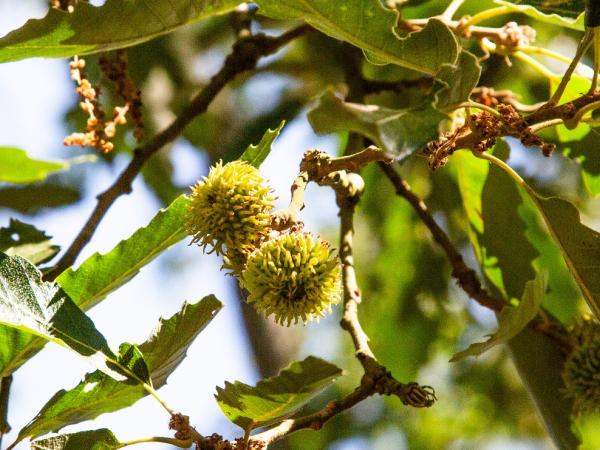
Oak trees across Europe are increasingly under threat from acute oak decline (AOD). The visual part of the disease is stem weeping, which is caused by bacterial mediated damage to the inner bark of oaks. In the UK mostly Quercus robur and Q. petraea (pedunculate and sessile oak) are affected, but elsewhere in Europe other oak species are also affected.
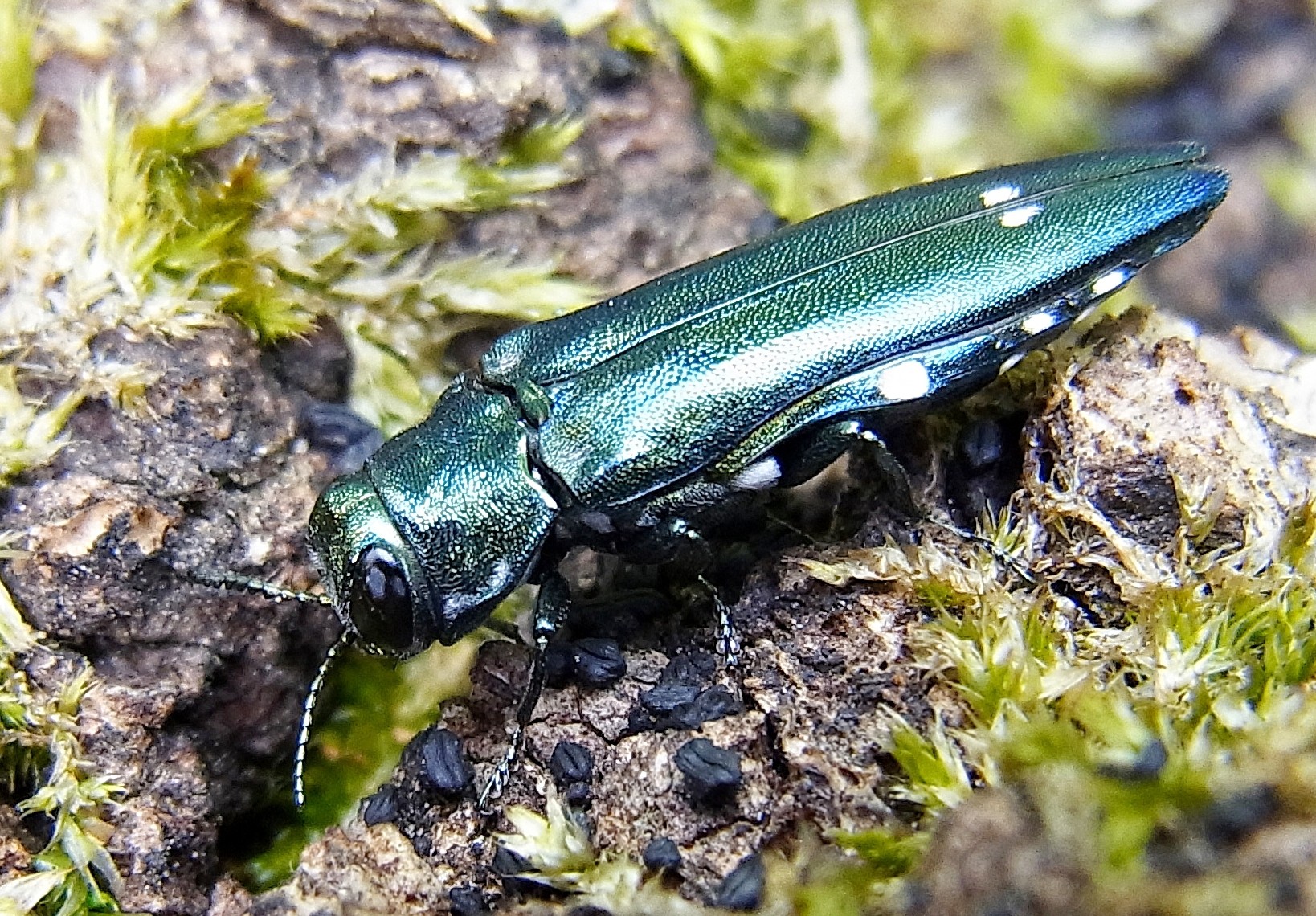
We have long known that both insects and bacteria are involved in this disease. In particular, the larvae of the oak jewel beetle Agrilus biguttatus burrow into the live inner bark of trees, creating galleries where bacteria such as Brenneria goodwinii may exist in a benign form. But exactly how these insects and bacteria interact has remained unclear.
In this study, we discovered that in laboratory conditions chemicals produced by the beetle larvae can actually make Brenneria goodwinii grow faster and become aggressive by triggering pathogenicity genes. When exposed to these insect-derived compounds, the bacteria switched on hundreds of genes linked to infection, including those that help them attack the tree’s tissues.
Interestingly, this effect seems to be specific to this beetle species—similar insects did not trigger the same response in the bacteria, although further investigations are needed to confirm this more widely.
Why this matters
These findings suggest that the beetle larvae are not just damaging the tree directly—they may also be “boosting” the bacteria that cause disease. In other words, the insects and microbes may be working together in ways we didn’t fully appreciate before.
Understanding this partnership could be key to developing better ways to protect oak trees, which are such an important part of our landscapes, ecosystems, and heritage.
Dr Marine Cambon
Research Fellow in Microbial Ecology
University of Birmingham
Chemical cues from Agrilus biguttatus beetle larvae trigger proliferation and putative virulence gene expression of the tree pathogen Brenneria goodwinii
Marine C. Cambon, Gareth Thomas, John Caulfield, Michael Crampton, Katy Reed, James Doonan, Usman Hussain, Sandra Denman, Jozsef Vuts, James E. McDonald
Journal of Applied Microbiology, Volume 137, Issue 4, April 2026, lxag071 https://doi.org/10.1093/jambio/lxag071
Microbial resilience in semi-mature oak trees
Trees host vast communities of microorganisms, such as bacteria and fungi, often referred to as the “tree microbiome”. The tree microbiome plays a vital role in tree health by aiding with nutrient absorption, fighting disease, and promoting tree growth. These benefits are likely crucial in the face of increasing pressure from climate change, which is leading to more severe and prolonged periods of extreme weather (i.e., drought), and diseases such as acute oak decline (AOD), which is currently threatening UK native oak trees.
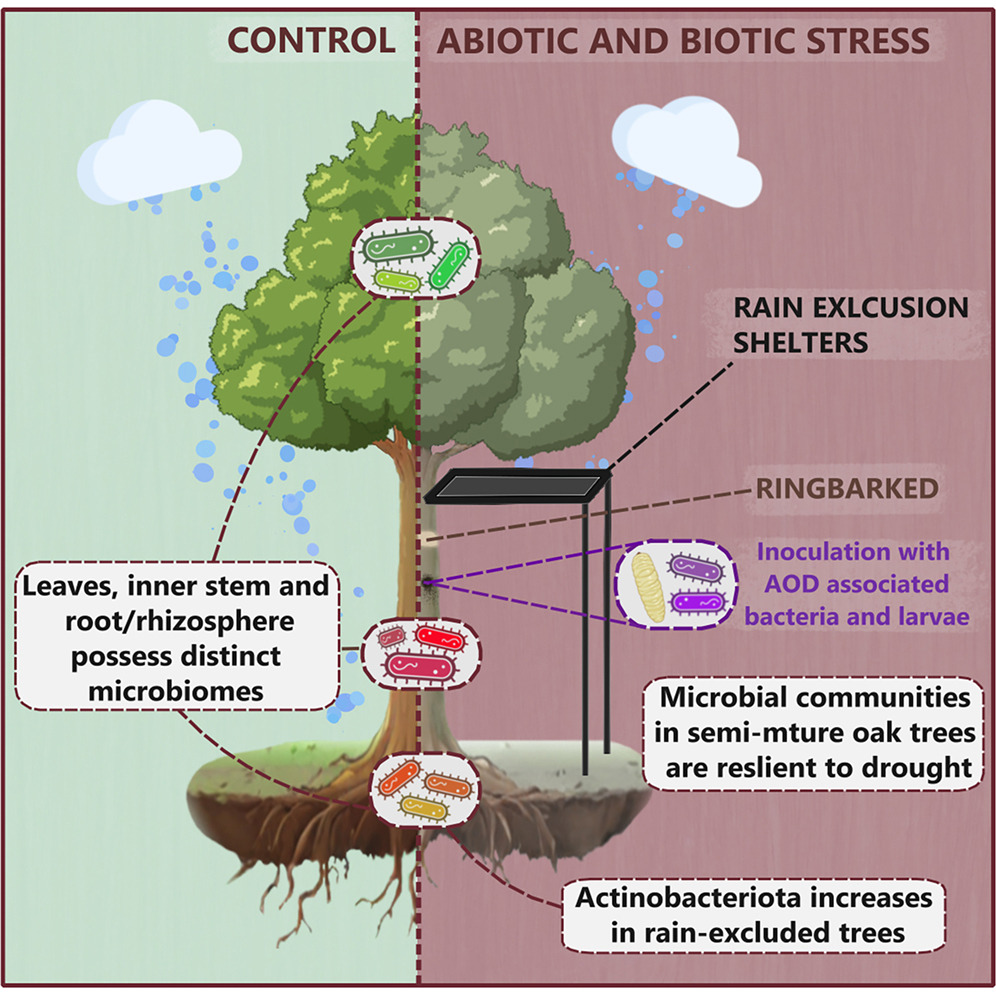
A recent study examined how the tree microbiome of semi-mature (~35-year-old) oak trees responds to drought, reduced nutrient availability, and symptoms of acute oak decline (AOD). The experiment took place in Norfolk, England, where 144 Quercus petraea were either drought-stressed using rain-exclusion shelters or nutrient-stressed by ringbarking, which disrupts nutrient flow within the tree. Some of these stressed trees were also exposed to insects and bacteria associated with acute oak decline, which promoted the development of AOD symptoms. Samples of leaves, inner bark, and roots were collected at four time points over a two-year period to monitor how the tree microbiome in these tissues responds to the applied treatments.
The results showed that the leaves, inner bark, and roots each hosted distinct communities of bacteria and fungi, likely providing unique benefits to the tree. Overall, the tree microbiome showed minimal change in response to the applied treatments, suggesting high resilience, even as the trees displayed noticeable physical and physiological responses. The root microbiome under drought conditions showed the most pronounced shift, including an increase in potentially beneficial bacteria such as Actinobacteriota (also known as Actinomycetota). This suggests that oaks may actively recruit beneficial microbes to help cope with dry conditions.
There is still much to learn about how these microbial communities function and how they might respond to more extreme or prolonged environmental stress. Even so, these findings offer encouraging news for oak lovers. They show that semi-mature oaks are supported by strong and stable microbial partners that may help them withstand the growing pressures of climate change and disease.
Usman Hussain
University of the West of England
Microbial communities in semi-mature oak trees are resilient to drought, nutrient limitation, and pathogen challenge
Usman Hussain, Marine C. Cambon, Bridget Crampton, Sunitha Subramaniam, Anparasy Kajamuhan, Alejandra Ordoñez, Jim Downie, Jasen Finch, Manfred Beckmann, Nathan Brown, Amy Elison, Carrie Brady, Elena Vanguelova, Sandra Denman, James E. McDonald Cell Host & Microbe, Volume 34, Issue 2, 2026, Pages 344-358.e5, ISSN 1931-3128 https://doi.org/10.1016/j.chom.2026.01.009
Genetics plays a role in acute oak decline and powdery mildew
The degree to which oak trees are affected by acute oak decline (AOD) and powdery mildew depends a great deal on the local conditions in which they are growing. A new study shows that both are also partly influenced by oak genetics. In a study of 1,491 oak trees in parks and woodlands, researchers from Royal Botanic Gardens, Kew and Forest Research have shown that 21% of variation in AOD symptoms and 28% of variation in mildew symptoms are due to variation in the genomes of oak trees. For AOD, many parts of the genome are involved, but for mildew, a handful of genes seem to be particularly important. This finding could pave the way for selection of oaks for greater resistance to both threats. The study is available on the preprint server BioRxiv and has not yet been peer reviewed.
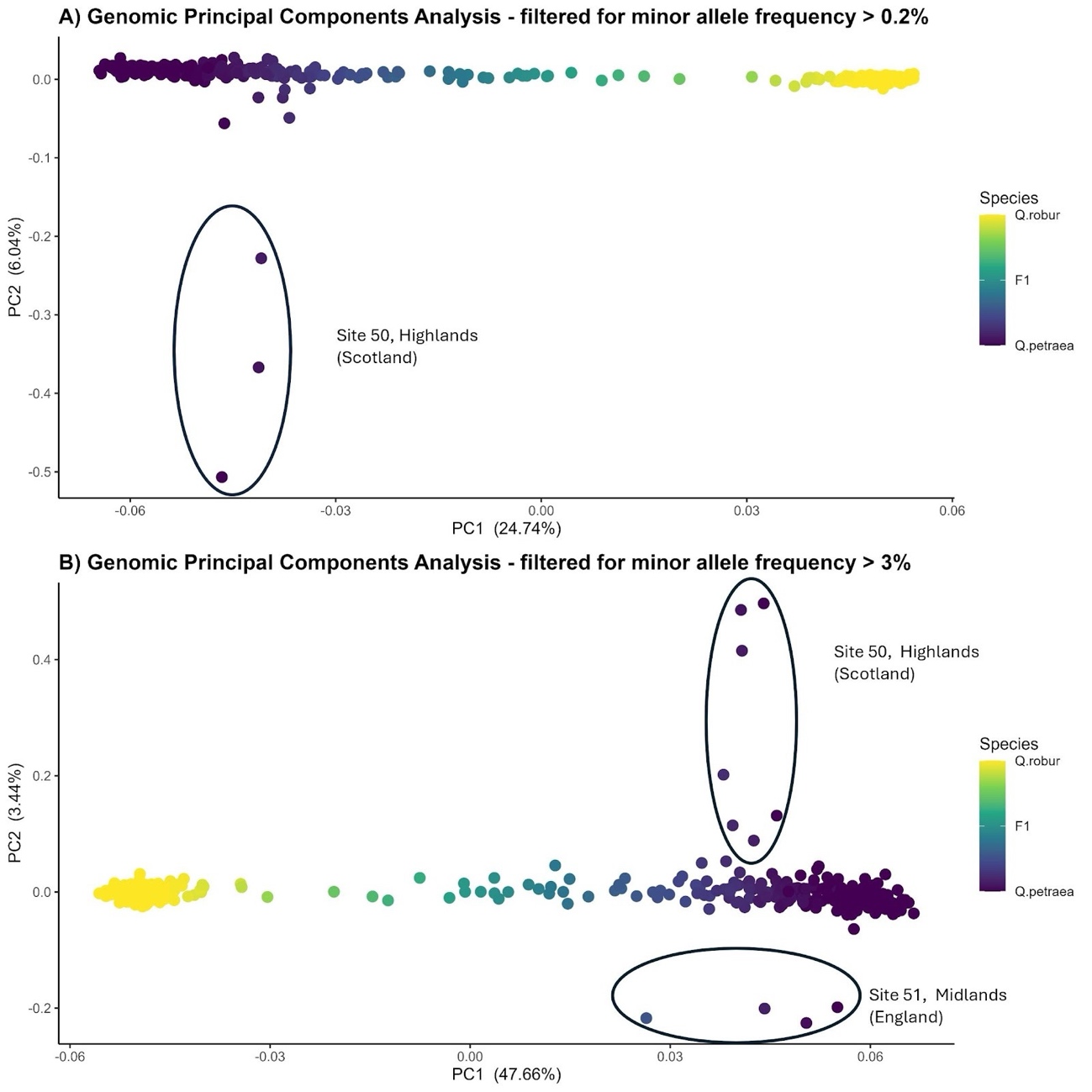
Abundant hybridization between sessile and pedunculate oak in Britain
A study of the genomes of 418 oak trees from 60 populations across Britain has revealed past and ongoing hybridization between pedunculate and sessile oak. Pedunculate oak was mainly found towards the south and east, with sessile oak and hybrids mainly found towards the north and west. Pedunculate oak prefers warmer and more thermally variable environments with alkaline soils, while sessile oak prefers rainy environments with more topographically complex terrain. Stem diameter growth from 1990 to 2019 was faster in pedunculate oak, but this was mainly due to the more favourable climate conditions in which it grows. The study also found rare triploid oaks that have faster growth rates. The study is available on the preprint server BioRxiv and has not yet been peer reviewed.