Editor's Picks

While working on a list of synonyms of European White Oaks...
Roderick Cameron
|
Aug 24, 2026
Report led by The Morton Arboretum will help prioritize oak...
Website Editor
|
Aug 06, 2026
Motivation
I live in the village of Dolné Dubové...
Jozef Čapkovič
|
Jul 20, 2026
Plant Focus
The only oak species endemic to Africa is rare in cultivation. It shouldn't be.
Epigenetics as a Potential Mechanism of Rapid Response to Climate Change in the Endangered Oak Quercus hinckleyi
Lainey Kirshberger,1 Ryan Silver,1 Phillip Schulze,2 Kelsey Wogan,3 Jacob Martin,4 Amy Byrne,5 Janet Backs,6 and Antonio R. Castilla1*
1 Department of Biology, Oklahoma State University, Stillwater, OK, USA
2 Lady Bird Johnson Wildflower Center, Austin, TX, USA
3 Sul Ross University, Alpine, TX, USA
4 Mercer Botanic Gardens and Arboretum, Houston, TX, USA
5 The Morton Arboretum, Chicago, IL, USA
6 University of Illinois Chicago, Chicago, IL, USA
* corresponding author: arcastilla@okstate.edu
What do we know about genetic variation within Quercus hinckleyi populations?
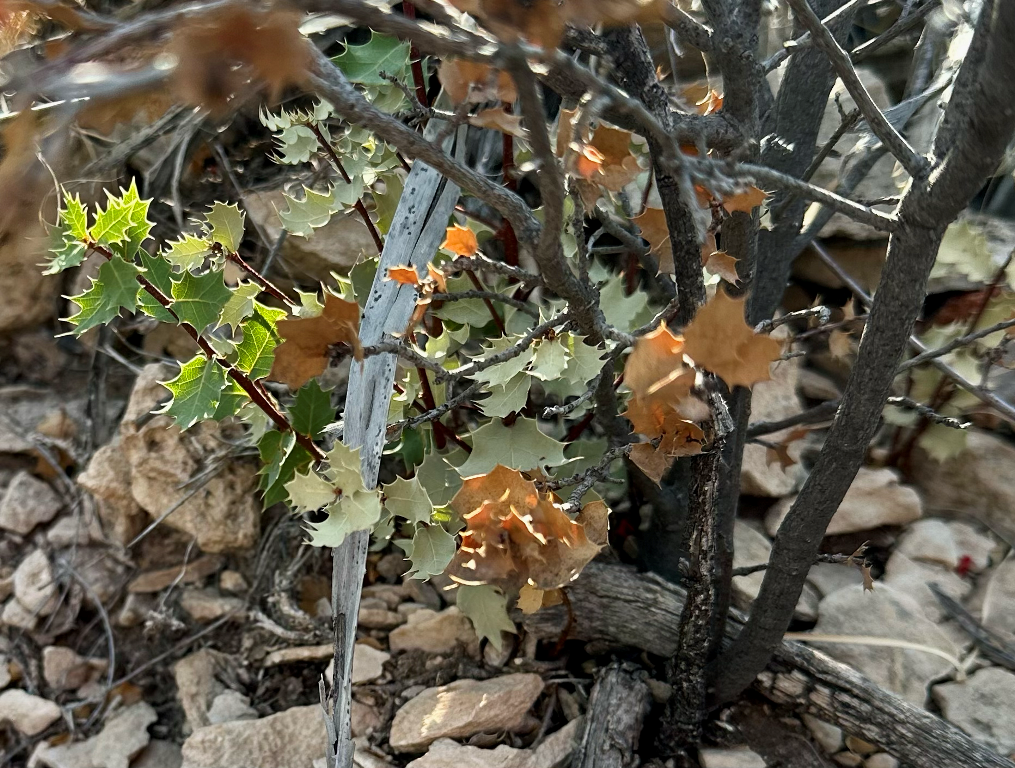
Hidden in the rocky canyons of southwestern Texas, Quercus hinckleyi—a small, shrub-like oak—stands as a remnant of a long-past era. The species was first collected in the early 20th century by naturalist Robert Hinckley, who was exploring the rugged limestone landscapes near the town of Shafter, Texas. Fascinated by its unusual holly-like leaves and low, thicket-forming growth, he sent specimens to botanist Cornelius H. Muller, a leading expert on oaks. In 1940, Muller formally described the plant as a new species, naming it in Hinckley’s honor. Well adapted to dry, harsh conditions, this resilient oak has survived major climate shifts since the last Ice Age by persisting in isolated desert refuges (Fig. 1).
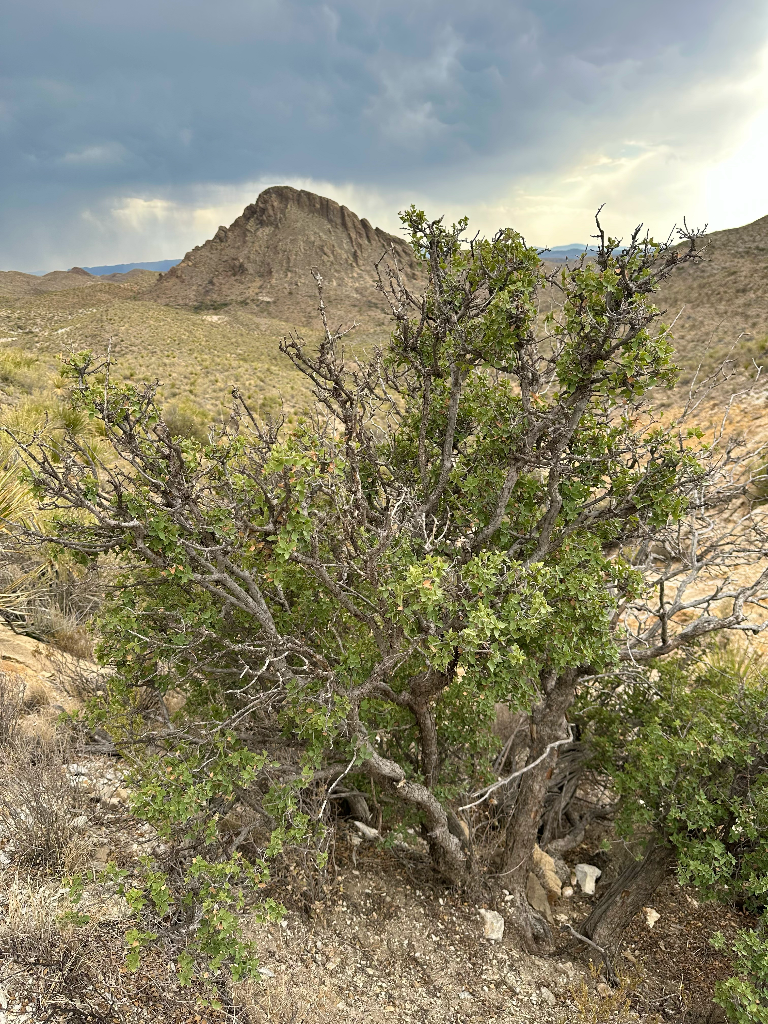
Previous studies by Janet Backs, Mary V. Ashley, and Martin Terry have shown that Quercus hinckleyi, despite its rarity and restricted range, harbors surprisingly high genetic diversity. The species reproduces both sexually and asexually, with clonal reproduction playing a dominant role. Hybridization with neighboring species such as Q. pungens and Q. vaseyana has been documented, though its extent and implications for Q. hinckleyi's adaptive potential remain uncertain. Major threats for the species include habitat degradation, grazing pressure, and limited seedling establishment (Fig. 2). Conservation efforts have prioritized the protection of wild populations and the development of ex-situ collections to safeguard its genetic diversity. In this context, a recent study by Backs, Ashley, and Sean Hoban found that the species’ ex-situ metacollection, though small, retains more than a half of the species’ overall genetic diversity present in the wild. However, the extent to which the species' epigenetic variation is preserved in protected areas and ex-situ collections remains unknown.
Why is epigenetic variation important?
Epigenetics refers to changes in gene expression that do not alter the DNA sequence but can still influence how genes are turned on or off. These changes are often regulated by chemical modifications to DNA or its associated proteins known as epigenetic marks, which act as signals controlling gene expression. Both environmental conditions—like temperature, drought, or soil conditions—and interactions with other species—such as herbivory, pathogens, or competition with other species—can trigger these epigenetic changes. Epigenetic responses can help plants adjust their growth, reproduction, and stress tolerance in real time. Epigenetic changes are sometimes reversible and can be inherited by future generations. As climate change intensifies environmental pressures, preserving both genetic and epigenetic diversity becomes crucial for helping species survive and adapt.
What is the research goal of our IOS-funded research project?
Our research project is investigating how both genetic and epigenetic diversity contribute to the adaptive potential of Quercus hinckleyi. Using next-generation methylRAD sequencing, we will assess the number of genetic and epigenetic populations within the species’ range. In addition, fine-scale spatial genetic analyses will examine whether epigenetic variation is responsive to microenvironmental conditions. The results will provide essential insights to guide the genetic and epigenetic management of ex-situ collections. As one of the first studies to evaluate epigenetic variation in endangered oak species, this research will not only inform conservation strategies for Q. hinckleyi but also serve as a model for preserving other rare species facing similar environmental challenges.
What have we done so far?
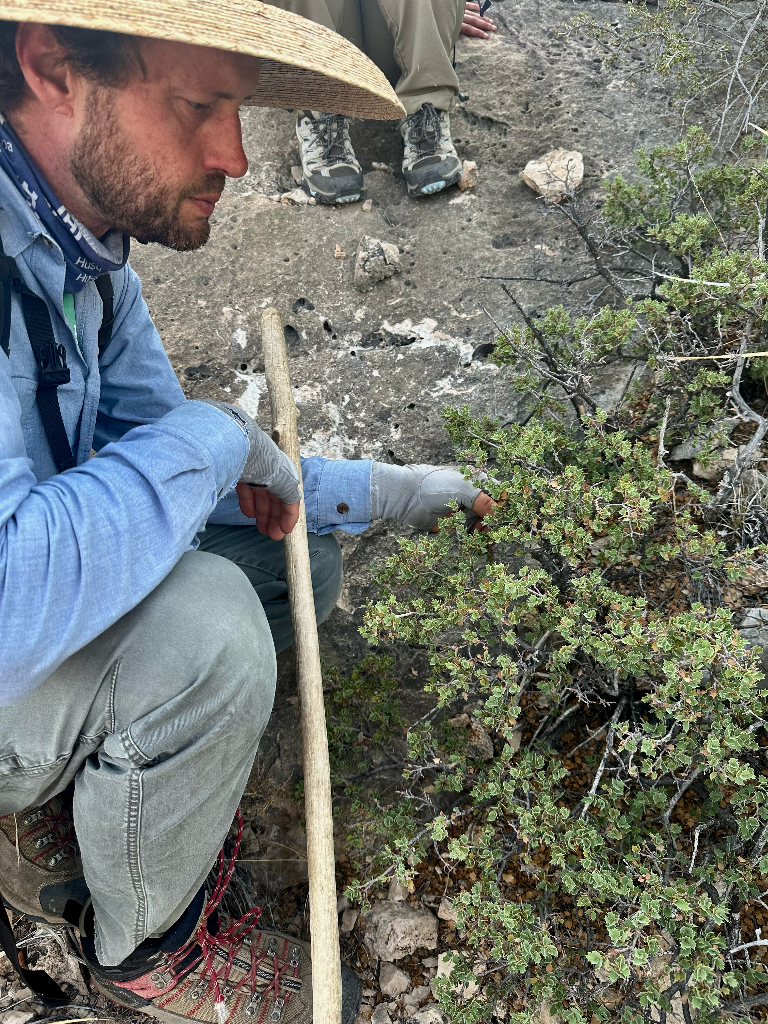
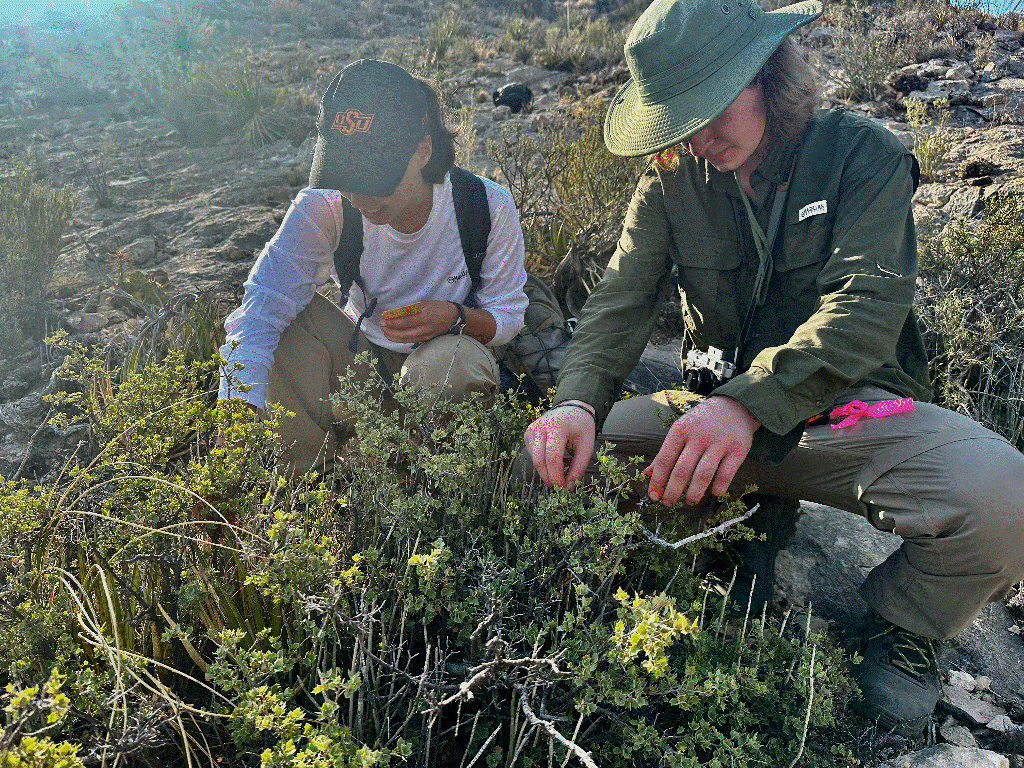
In May 2025, we conducted our fieldwork at Big Bend Ranch State Park. We collected leaf samples from three locations: the western side of the Solitario non-crater, the type locality where Q. hinckleyi was first described, and a previously unsampled patch on the eastern side of the Solitario non-crater. Although the western site and the type location are geographically close (~2.5 km), earlier studies have shown that they represent genetically distinct groups, with individuals from the type location more closely related to plants in Shafter—about 60 km away. With more powerful genomic tools, we expect to re-evaluate previous findings more accurately and refine our understanding of the genetic and epigenetic conservation units across the species’ range.
At the western site, we also conducted intensive within-population sampling to capture fine-scale variation. This will allow us to test whether epigenetic patterns are more strongly influenced by small-scale environmental variation than genetic patterns are. Applying the spatial analysis framework of Herrera et al. (2016), we aim to disentangle the contributions of genetic and epigenetic mechanisms to local adaptation. These insights will deepen our understanding of how Q. hinckleyi persists in such a fragmented and challenging environment—and how we can better protect it for the future.
What have we found?
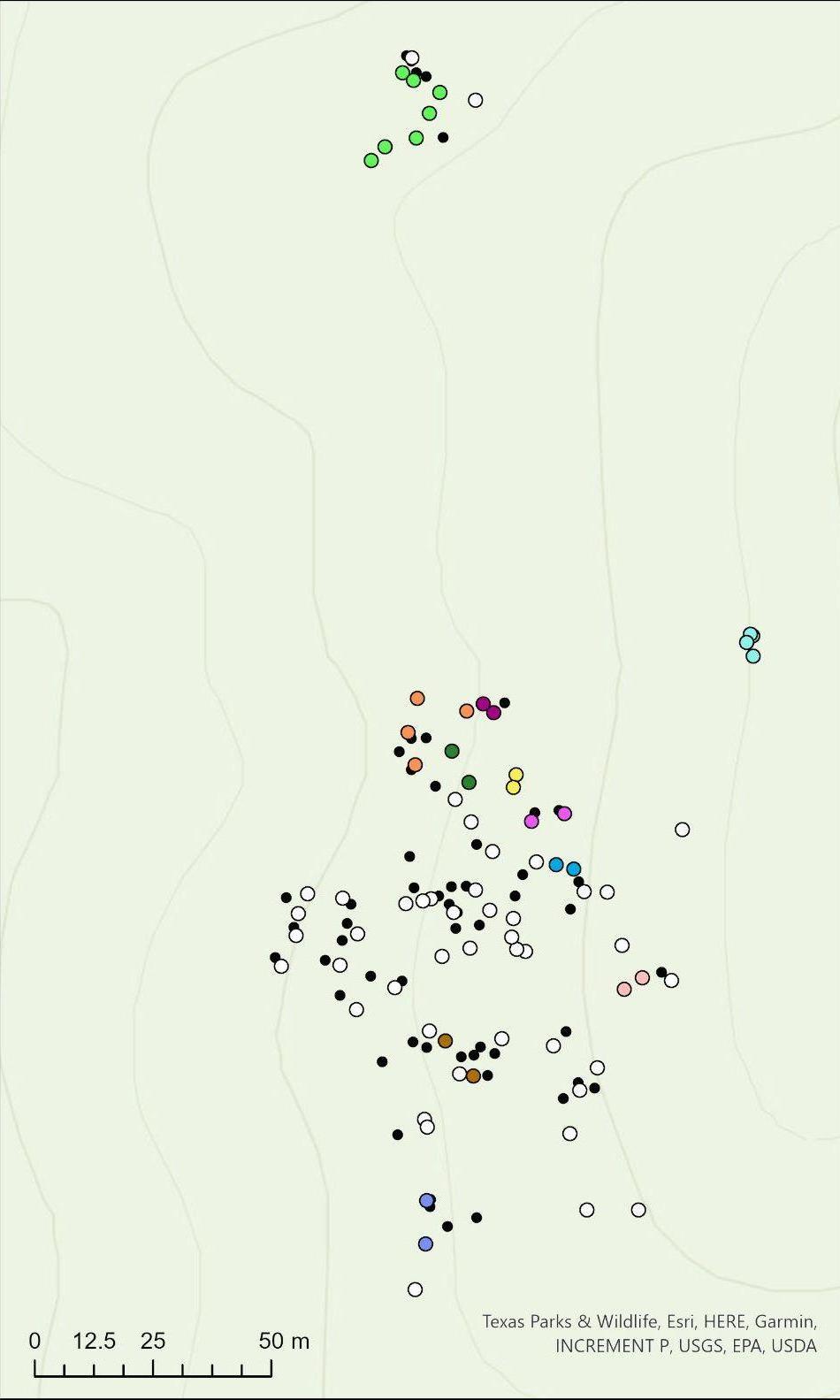
Data analysis is still ongoing, but our preliminary genetic analyses have already revealed some interesting results. Overall, our patterns are consistent with those of previous studies based on microsatellite markers (Backs et al. 2015). For example, our estimates of clonal propagation and the distances between clones match those reported by Backs (2015). Approximately 24% of all plants sampled were determined to be clones, with some patches spanning up to ~40 meters (Fig. 5). These findings highlight the importance of maintaining adequate spacing between sampled individuals during future collection efforts to better capture the species’ genetic diversity.
Our analyses also support earlier findings of strong genetic differentiation within the species. We detected the two distinct genetic groups previously identified by Backs et al. (2015) on the western side of the Solitario, with one of these groups being more genetically similar to the Shafter population than to its neighboring population. However, the inclusion of a recently discovered patch of individuals, identified by our collaborator Jacob Martin, revealed a more complex picture of genetic variation across the region. In particular, we detected a third genetic group within Big Bend Ranch State Park, underscoring the critical role of this protected area in conserving the species’ genetic variation.
Works cited
Backs, J.R., M.Terry, and M.V. Ashley. 2016. Using Genetic Analysis to Evaluate Hybridization as a Conservation Concern for the Threatened Species Quercus hinckleyi C.H. Muller (Fagaceae). International Journal of Plant Sciences 177(2): 122–131. [link]
Backs, J.R., M. Terry, M. Klein, and M.V. Ashley. 2015. Genetic analysis of a rare isolated species: A tough little West Texas oak, Quercus hinckleyi C.H. Mull. Journal of the Torrey Botanical Society 142(4): 302–313. [link]
Backs J.R., S. Hoban, and M.V. Ashley. 2021. Genetic Diversity Assessment of Ex Situ Collections of Endangered Quercus hinckleyi. International Journal of Plant Sciences 182(3): 220–228. [link]
Herrera, C.M., M. Medrano, and P. Bazaga. 2016. Comparative spatial genetics and epigenetics of plant populations: heuristic value and a proof of concept. Molecular Ecology 25(8): 1653–1664. [link]
Terry, M., and S. Scoppa. 2010. Quercus hinckleyi × Q. vaseyana, a putative hybrid from Presidio County, Texas. Phytologia 92: 400–406. [link]
Content by the Same Author
The International Oak Society acknowledges the generous support of the following institutions:
Supporting Institutional Members




Standard Institutional Members