Editor's Picks
Website Editor
|
Oct 26, 2026

We were shocked to learn that Julianne Skai Arbor, also...
Website Editor
|
Oct 26, 2026
Over the past two decades, the Zagros forests have been...
Mehdi Pourhashemi
|
Oct 10, 2026
Plant Focus
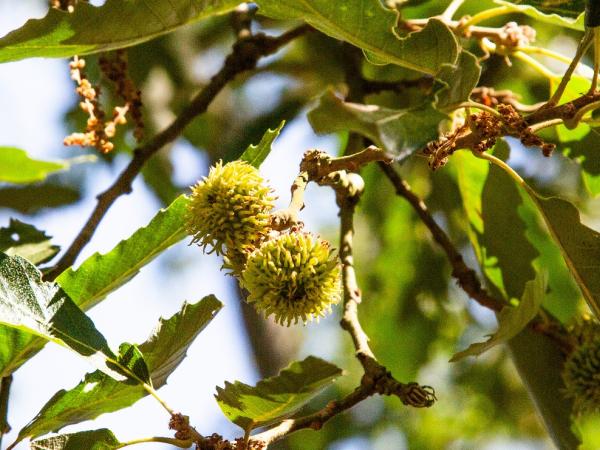
The only oak species endemic to Africa is rare in cultivation. It shouldn't be.
The first records of galls on oaks at the Royal Botanic Gardens, Kew, were gathered by the pioneering economic entomologist Eleanor Ormerod, from Q. cerris and Q. ×hispanica 'Lucombeana' in 1876. She was followed by noted orchidologist Robert A. Rolfe of the Herbarium staff, who submitted records in 1881, 1883, and 1906. There then appears to have been a long gap until Herbert Airy Shaw, also of the Herbarium staff, published the first record of sexual galls of Andricus quercusramuli in 1973. There was a further recording gap until a visit by members of the British Plant Gall Society in 2003, and another in August of 2024.
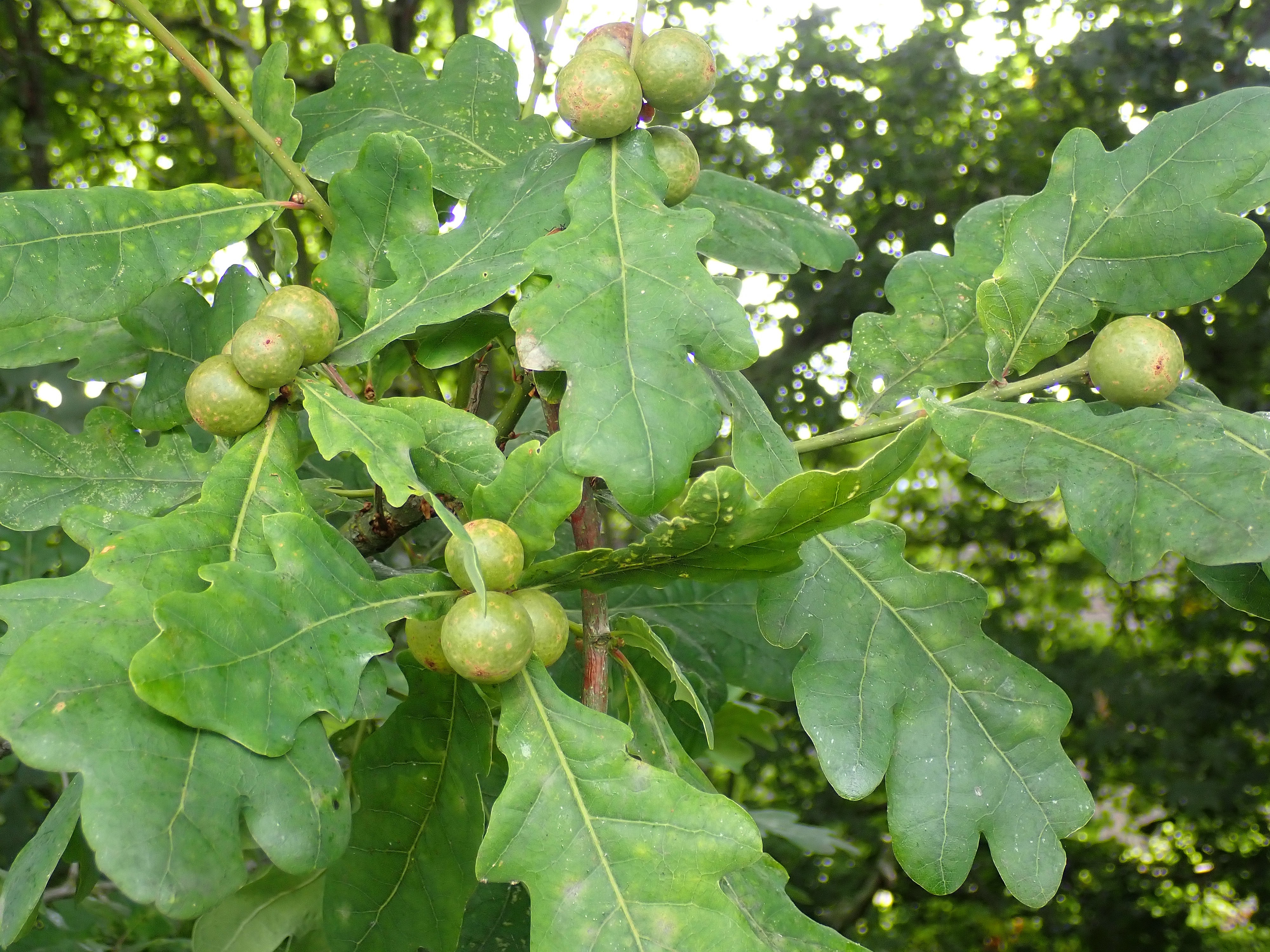
© Phil Brandon Hunter. Reproduction licensed under the Creative Commons Attribution-ShareAlike 2.0 license.
A list of all of those records can be found below. There are two points of particular interest. First and not surprisingly, the White Oaks of subgenus Quercus section Quercus are the most susceptible to galling, including as they do the two British natives. (Incidentally, any members using the most comprehensive British guide to plant galls (Redfern and Shirley 2023) can breathe an enormous sigh of relief that the report of a hybrid between Q. robur and Q. cerris (page 237) is erroneous. The fourth edition of Stace (2019) corrects an impression given in the second edition, which is cited in Redfern and Shirley, explaining that “Records of Q. cerris × Q. robur appear to be errors for 1 or other parent with unusual leaf-shapes.” Were those two species able to hybridize, that would probably mark the beginning of the end of the British oak timber industry.)
Second, Turner’s oak, Q. ×turneri, supports 10 recorded gall causers, which might seem surprising, given that it’s an intersectional (and intersubgeneric) hybrid. However, Maria Fremlin (pers. comm.) has pointed out that the consensus among British cecidologists is that in the case of such hybrids the galls are associated with just one parent. This seems to be borne out by this list: all 10 gall causers on Q. ×turneri are strongly associated with Q. robur and only one of them (Andricus kollari) also with Q. cerris.
With that cynipid wasp in mind, note the success of Andricus kollari, recorded from nine oak species, seven of which are exotic. This wasp is not a British native: it was believed to have been introduced to Devon around 1830, via the marble galls that it forms, because those galls were valued for their high tannin concentrations and were crushed for ink-making and for dyeing cloth (Darlington 1974).1 This is clearly a wasp with ambitions.
The list that follows is a compilation of all of those records that can be ascribed with confidence to named oak species, including hybrids and cultivars, with many thanks to BPGS members Maria Fremlin and Brian Spooner for the provision of information and very helpful advice. I’m also indebted to Jerry Bowdrey, an authority on galls of oaks, for comments on an earlier draft of this article. Where those comments have cast doubt on some historic records, I have indicated this by way of endnotes.
Unless indicated otherwise, all gall causers in this list are cynipid wasps of the order Hymenoptera.
Quercus subg. Quercus sect. Lobatae
-
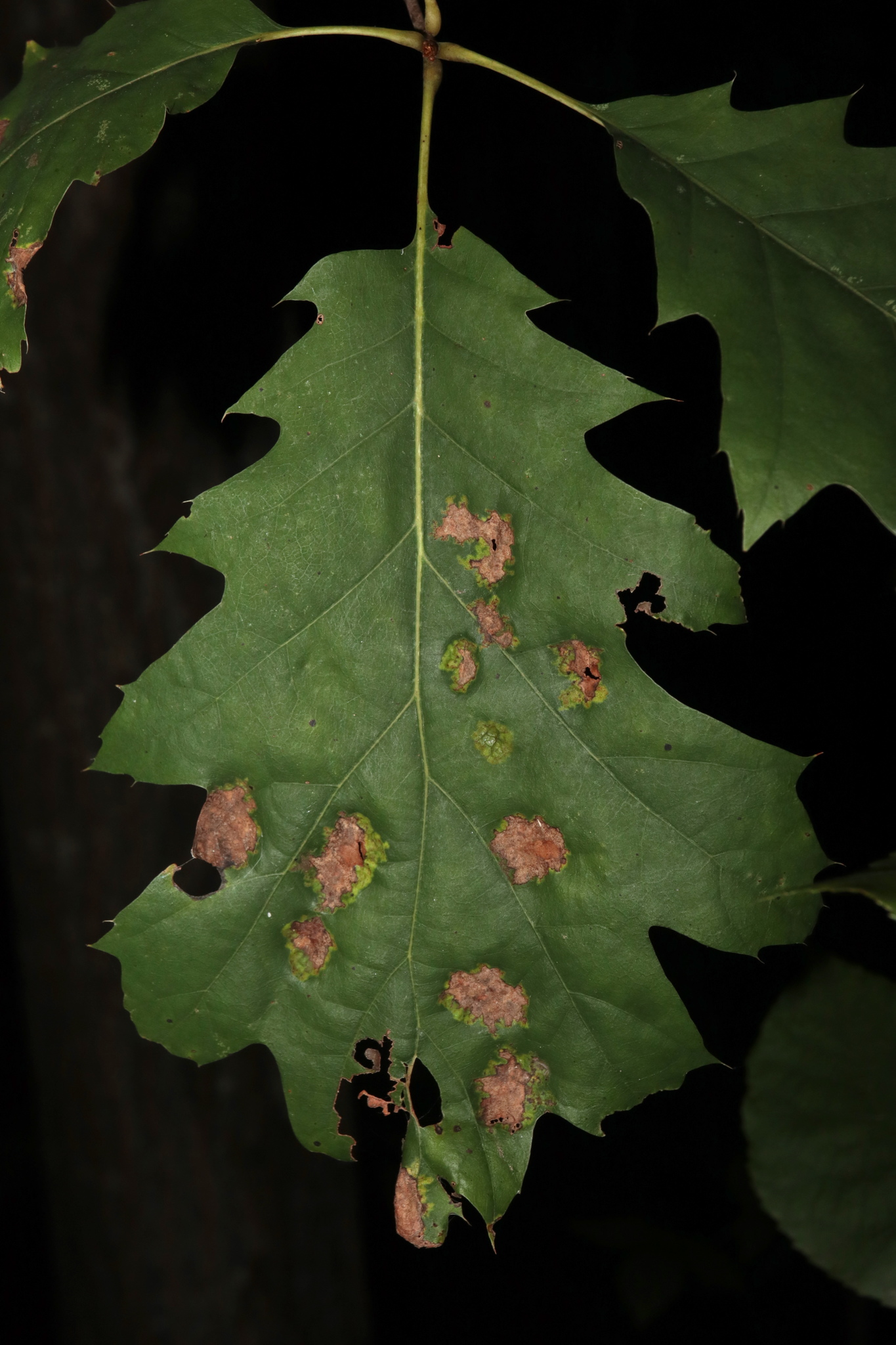
Q. ellipsoidalis (Hill’s oak): Taphrina caerulescens (Fungi) 2024
-
Q. marilandica (blackjack oak): Taphrina caerulescens (Fungi) 2024
-
Q. rubra (red oak): Taphrina caerulescens (Fungi) 2024
-
Q. velutina ‘Rubrifolia’ (“red-leaved” black oak):2 Andricus kollari (asexual) 2003, 2024
Quercus subg. Quercus sect. Quercus
-
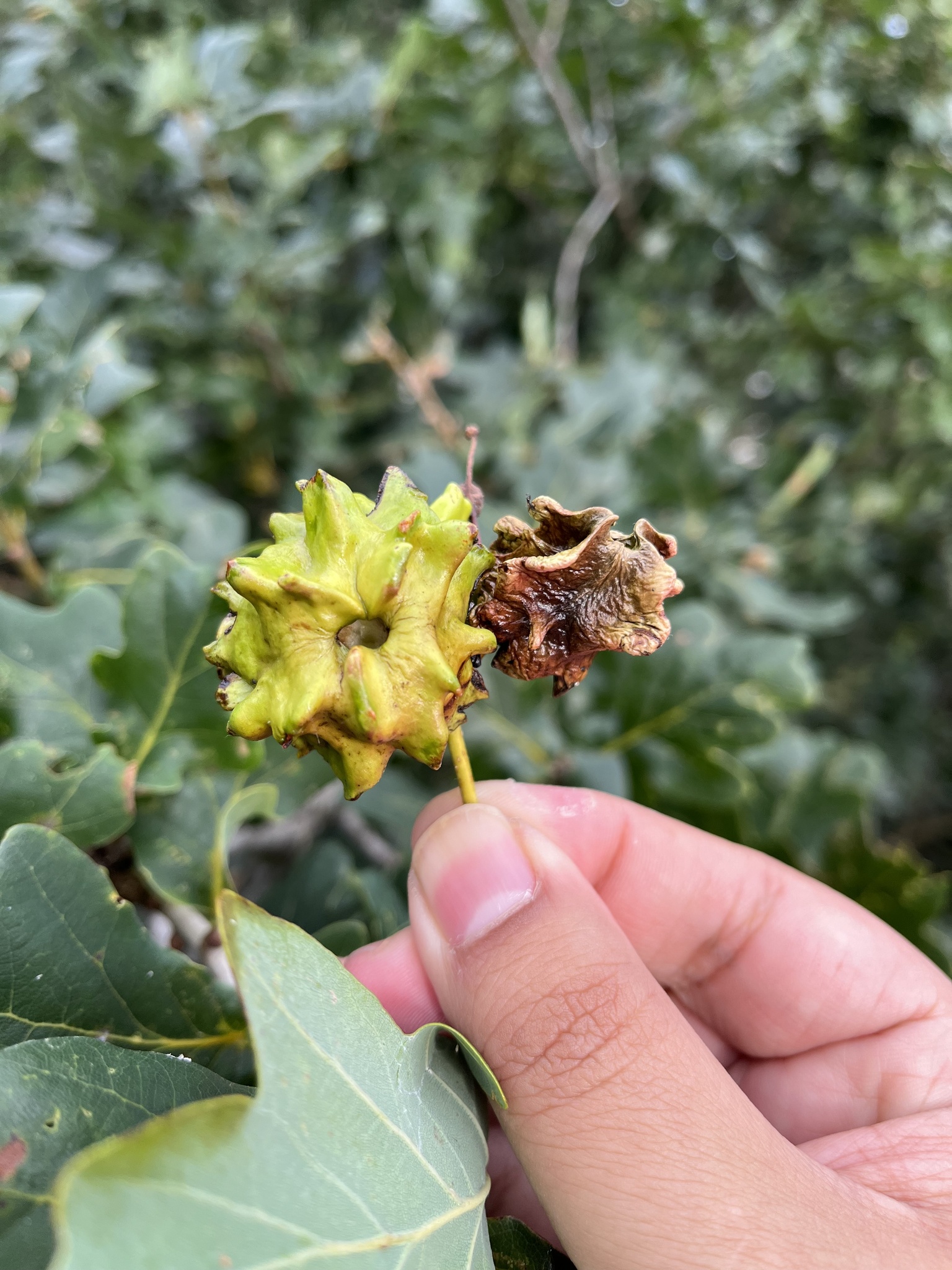
Q. aliena var. acuteserrata (oriental white oak): Andricus aries (generation unrecorded), Andricus lignicolus (asexual) 2024
-
Q. canariensis (Algerian oak): Neuroterus quercusbaccarum 1906; Neuroterus albipes, Neuroterus numismalis 2003; Macrodiplosis roboris (Diptera); Andricus curvator (sexual) 2024
-
Q. dentata (daimyo oak): Neuroterus quercusbaccarum 1906; probably Andricus kollari (asexual) 2003, 2024
-
Q. faginea (Portuguese oak): Neuroterus quercusbaccarum 1906; Andricus aries, Andricus lignicolus, Andricus lucidus, Andricus quercuscalicis 2003; Andricus kollari (asexual) 2003, 2024; Trioza remota (Hemiptera); Neuroterus anthracinus (asexual), Neuroterus numismalis (asexual) 2024
-
Q. frainetto (Hungarian oak): Neuroterus quercusbaccarum 1906
-
Q. infectoria (Aleppo oak): Neuroterus numismalis, Neuroterus quercusbaccarum 1906; Trioza remota (Hemiptera), Neuroterus anthracinus (asexual) 1906, 2024
-
Q. infectoria ssp. veneris: Neuroterus anthracinus (asexual) 2024
-
Q. macranthera (Caucasian oak): Neuroterus quercusbaccarum 1906; Neuroterus numismalis 2003; Neuroterus anthracinus (asexual) 2003, 2004; Andricus quercuscalicis, Neuroterus albipes, Neuroterus quercusbaccarum (asexual) 2024
-
Q. mongolica (Mongolian oak) Neuroterus quercusbaccarum 1906; Neuroterus albipes, Neuroterus numismalis, Andricus kollari, Andricus lignicolus, Andricus lucidus 2003
-
Q. mongolica ssp. crispula: Andricus kollari (asexual) 2024
-
Q. mongolica ssp. mongolica: Trioza remota (Hemiptera); Andricus kollari (asexual) 2024
-
Q. petraea (sessile oak): Andricus kollari, Cynips divisa 1881, 1906; Biorhiza pallida, Neuroterus anthracinus, Neuroterus quercusbaccarum 1906; Andricus quercuscalicis, 2003; Andricus lignicolus (asexual) 2024
-
Q. pubescens (downy oak): Andricus kollari 1881, 1906: Biorhiza pallida, Neuroterus quercusbaccarum 1906; Neuroterus numismalis 1906, 2003; Neuroterus albipes, 2003; Andricus quercuscalicis (asexual) 2003, 2024; Neuroterus anthracinus (asexual) 2024
-
Q. pyrenaica (Pyrenean oak) (rec. as Q. toza): Andricus kollari 1881, 1903; Neuroterus quercusbaccarum 1906
-
Q. ×andegavensis (Q. pyrenaica × Q. robur): Neuroterus anthracinus (asexual) 2024
-
Q. robur (pedunculate oak): Andricus curvator, Andricus inflator, Cynips divisa 1881, 1906; Andricus amenti3, Andricus quadrilineatus 1883; Andricus albopunctatus (= A. paradoxus, asexual?), Andricus callidoma, Andricus foecundatrix (= Aphilothrix gemmae, asexual), Cynips longiventris 1883, 1906; Andricus quercusramuli (asexual), Neuroterus quercusbaccarum, Biorhiza pallida, Cynips quercusfolii, Neuroterus albipes, Neuroterus anthracinus, Neuroterus numismalis 1906; Andricus quercusramuli (sexual) 1973; Neuroterus tricolor, Andricus lignicolus 2003; Andricus lucidus (asexual), Andricus quercuscalicis (asexual) 2003, 2024; Trioza remota (Hemiptera); Andricus aries (generation unrecorded); Andricus gemmeus; Andricus grossulariae (asexual); Andricus kollari (asexual); Andricus lignicolus (asexual), Neuroterus numismalis (asexual); Neuroterus quercusbaccarum (asexual) 2024
-
Q. robur subsp. brutia (rec. as Q. robur thomasii): Neuroterus albipes, Neuroterus quercusbaccarum 1906; Andricus lignicolus 2024
-
Q. robur ‘Cristata’: Neuroterus numismalis, Neuroterus quercusbaccarum 1906; Andricus callidoma 2003; Andricus aries 2024
-
Q. robur Fastigiata Group: Neuroterus quercusbaccarum 2003; Andricus gemmeus (asexual), Andricus quercuscalicis (asexual); Neuroterus quercusbaccarum (asexual) 2024
Quercus subg. Cerris sect. Cerris
-
Q. cerris (Turkish oak): Andricus circulans (= A. kollari) (sexual) 1876; Andricus glandium (= Callyrhitis glandium) 1881, 1883, 1906;4 Andricus lignicolus, Andricus quercuscalicis 2003; Aceria cerrea (mite); Janetia cerris (Diptera); Andricus grossulariae (sexual); Pseudoneuroterus saliens (asexual) 2024
-
Q. castaneifolia × Q. cerris: Aceria cerrea (mite) 2024
-
Q. suber × Q. cerris = Q. ×hispanica ‘Lucombeana’ (Lucombe oak): Andricus circulans (= A. kollari) (sexual) 1876; Andricus glandium (= Callirhytis glandium) 1881, 1883, 1906;5 Andricus grossulariae (asexual) 2024
Quercus subg. Cerris sect. Ilex
-
Q. coccifera (kermes oak): Andricus grossulariae 2003
-
Q. ilex (holm oak): Aceria ilicis (mite); Trioza ilicina (Hemiptera) 2024
Intersectional hybrids
-
Q. ×turneri (Q. ilex × robur): Andricus kollari 1881; Cynips divisa 1881, 1906; Andricus foecundatrix (= Aphilothrix gemmae, asexual); Andricus inflator, Cynips longiventris 1883, 1906; Neuroterus albipes, Neuroterus numismalis, Neuroterus quercusbaccarum 1906; Andricus grossulariae 1906, 2003; Andricus lucidus, Andricus quercuscalicis 2003
References for species lists
Airy Shaw, H. K. 1973. Additions to the Wild Fauna and Flora of the Royal Botanic Gardens, Kew. Kew Bulletin, 28(3), 387–409 [link]
Chinery, M. 2003. Cecidologists at Kew, September 28th 2003. Cecidology 18(2): 75.
Ormerod, E.A. 1877. Turkey Oak-Galls. The Entomologist 10: 42–43.
Ormerod, E.A. 1878. Acorn- and Bud-Galls of Quercus cerris.The Entomologist 11: 201 - 204
Rolfe, R.A. 1881. Notes on the Oak Galls in the Quercetum of the Royal Botanic Gardens, Kew. Entomologist 14: 54–58.
Rolfe, R.A. 1883. Notes on Oak Galls at Kew. Entomologist 16: 29–32.
Rolfe, R.A. 1906. Oak-Galls. In: The Wild Fauna and Flora of the Royal Botanic Gardens, Kew. Bull. Misc. Inf., Add. Ser. V: 46–53.
Spooner, B. 2024. Report of the BPGS visit to the Royal Botanic Gardens, Kew, 31 August 2024. Cecidology 39(2): 97–100.
Works cited
Darlington, A. 1974. The Galls on Oak. In The British Oak - Its History and Natural History. Botanical Society of the British Isles. E.W. Classey Ltd., Berkshire.
Redfern, M., and Shirley, P.S. 2023. British plant galls. Field Studies Council.
Spooner, B., and Bowdrey, J. 2020. Andricus kollari (Hartig) (Cynipidae) and its early history in Britain. Cecidology 35(1): 2–11.
Stace, C. 2019. New Flora of the British Isles. Fourth Edition. C&M Floristics.
1 However, Brian Spooner (pers comm. and Spooner, B. & Bowdrey, J. 2020) has pointed out that “the species was evidently in the country a little earlier, with reports of it being bred from galls in the Hull area by at least 1830.”
2 “A. kollari a dubious record as thought to be confined to Eurasian oaks section Quercus.” Jerry Bowdrey (JB) 11 Sept 2026.
3 “Andricus amenti - listed for Q. robur but doubtfully British.” JB, as above.
4 “Andricus glandium is listed for Q. cerris and Q. suber - this almost certainly references what is now known as Callirhytis glandium whose asexual generation galls acorns. However, current thinking is that these galls in Britain are actually attributable to Callirhytis erythrocepha and that C. glandium is not found in Britain. The species known as Andricus glandulae galls catkins or buds of section Quercus oaks and I don't think this is the species referred to.” JB, as above.
5 As for note 3, above.
Content by the Same Author
The International Oak Society acknowledges the generous support of the following institutions:
Supporting Institutional Members




Standard Institutional Members