Editor's Picks
Website Editor
|
Oct 26, 2026

We were shocked to learn that Julianne Skai Arbor, also...
Website Editor
|
Oct 26, 2026
Over the past two decades, the Zagros forests have been...
Mehdi Pourhashemi
|
Oct 10, 2026
Plant Focus
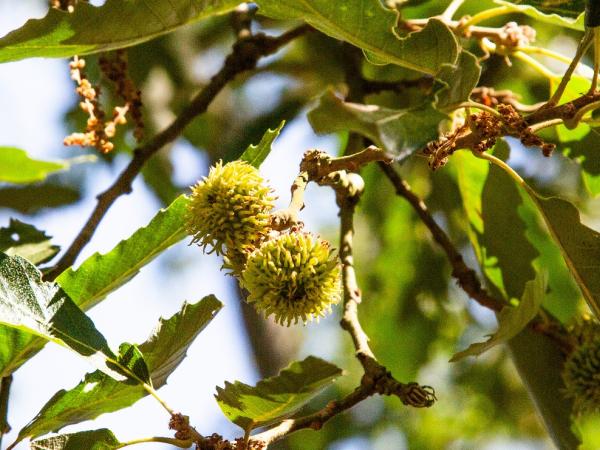
The only oak species endemic to Africa is rare in cultivation. It shouldn't be.
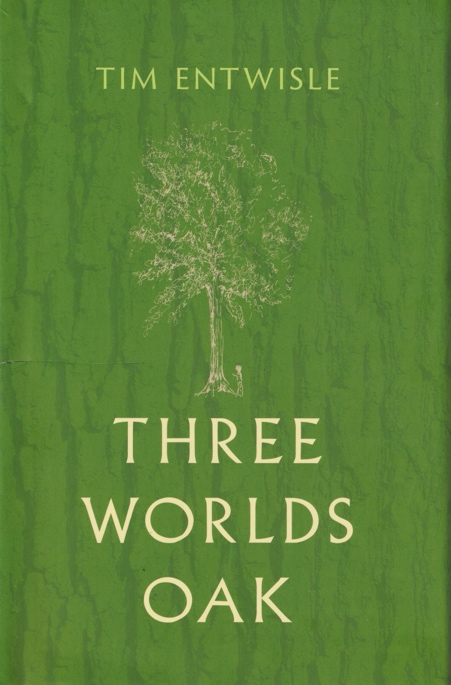
Three Worlds Oak
Tim Entwisle
Reaktion Books Ltd.
ISBN (UK) 978 1 83639 277 4
“My story begins with a death. Mine.”
Thankfully this is not the voice of IOS member Tim Entwisle, former Director of the Royal Botanic Gardens Victoria and Botanic Gardens of Sydney, former Director of Conservation, Living Collections and Estates at the Royal Botanic Gardens, Kew, and Honorary Professor at the University of Melbourne, but of a hybrid oak growing in Melbourne’s Royal Botanic Gardens. Or so we are invited to accept.
Anyone who has read any of Tim’s previous books or his blog will be familiar with his blend of wry humor, erudite exploration of botany and good-natured scientific skepticism. In this book, all of those characteristics are given free rein and indeed put into overdrive as our dying tree takes us on a whirlwind tour of the world of oaks and of their human-assisted exploration of lands new to them, particularly Australia.
On the day after Boxing Day in 2019 our tree, situated on the Oak Lawn of the Botanic Gardens, possibly about 150 years old and labelled as WHITE OAK, split in two and then collapsed, leaving a four-meter-high stump.
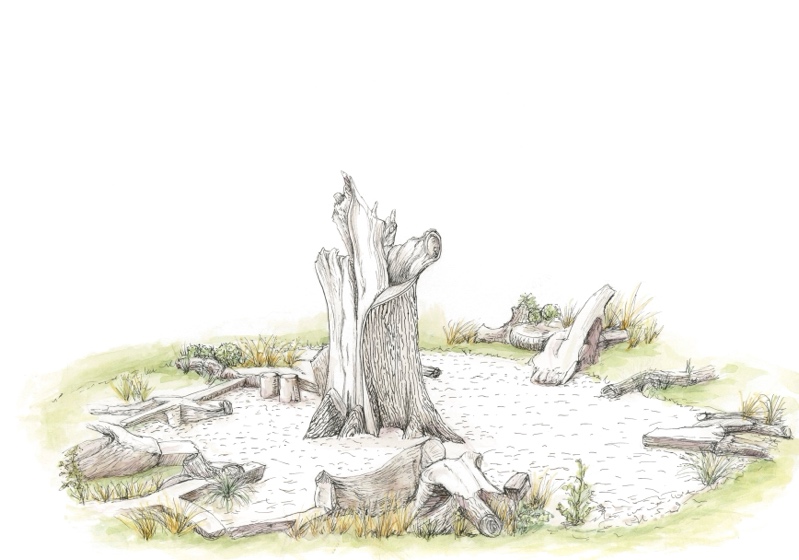
Like many another sentient being, rudely reminded of its own mortality, our oak (it tells us) began to reflect on its origins and parentage. Its label declared it to be a North American Quercus alba, but it knew that to be only partly true. It had another parent, but of what species? It set out, with the help of a capricious mycorrhizal information network, to find out.
The first stop on this quercine Grand Tour is the Swedish university town of Uppsala to make the acquaintance of a man who will provide us with a means of consistently and parsimoniously naming organisms and who will come to be known in taxonomic circles as L. Armed with this knowledge, we learn that the genus Quercus divides into two subgenera—an Old World clade (Cerris) and one associated with the New World (Quercus).
We can now visit the oaks of the Old World. After paying our respects to some of the oldest oaks in Britain, we travel on to the Mediterranean, noting that many of the area’s distinctive oaks (for example, Q. pontica, Q. look, Q. kotschyana) are threatened with extinction there but should do well in the future in Melbourne as its climate becomes more like that of Algiers. Oak names are now ticked off at an accelerating pace as we circle the Mediterranean to arrive at the north coast of Africa.
We need to hurry. After a brief pause to address the important issue of hybridization, courtesy of a Mr. Lucombe, we now cross the Atlantic Ocean to meet the New World clades and one of the putative parents of our oak, Q. alba, before moving on to the oak heartland of California, with its preponderance of leathery-leaved evergreens. Oak names are gathering ever more quickly now as we travel around the USA and meet an entirely new section of the subgenus Quercus: the Lobatae or red oaks.
If the oaks of the USA were breathtaking, just wait until we cross the border to Mexico and beyond. Here the high mountains and more humid areas are home mainly to the Red Oaks, while the White Oaks, which are frequent everywhere, tend to be dry land specialists. But the most impressive feature of Mexico is its amazing oak diversity, with more than 160 recorded species. Unfortunately, we can’t stay to appreciate it. After a quick diversion south, where Q. humboldtii very nearly but not quite makes it to the Equator, we have to head to the Far East.
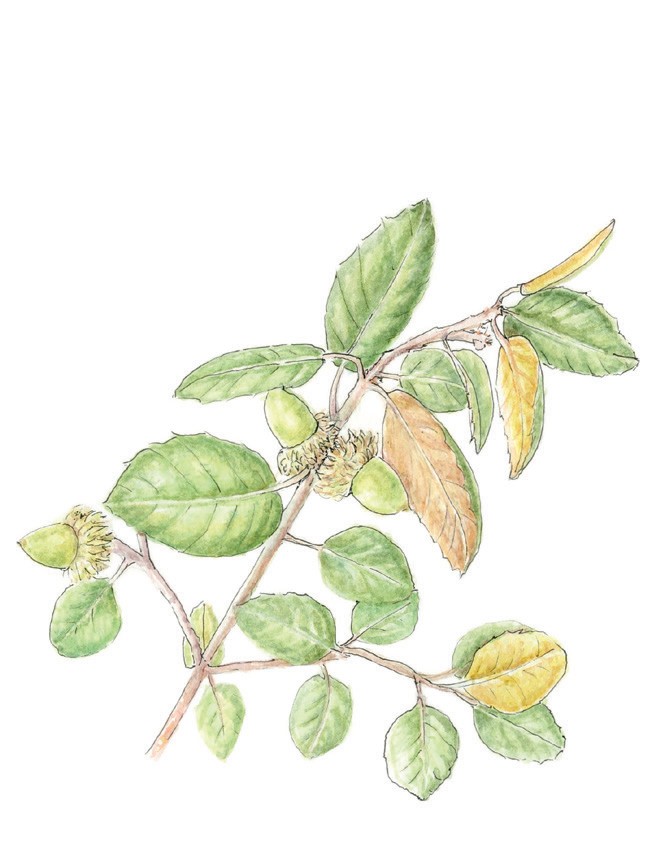
Here we will meet the oaks of an entirely new section of subgenus Cerris, the Cycle-cup Oaks of Cyclobalanopsis, so different in their appearance that they were once given a genus of their own. The Holly Oaks of section Ilex and the Cork Oaks of section Cerris probably evolved here and spread westwards toward the Mediterranean, but the Cycle-cup Oaks moved south, along with the White Oaks until they reached the mouth of the Mekong River. There, the White Oaks capitulated while the Cycle-cups kept expanding southwards beyond the South China Sea, eventually to cross the Equator in Sumatra, Kalimantan and (their most southerly toe-hold) Java. They spread northwards through China, too, although the record for the most northerly oak in the region belongs to a white oak, Q. mongolica, to be found on the island of Sakhalin.
Alas, we have no more time to explore, because we have to get back to Australia. It’s been a fascinating journey; our tree has introduced us to more than 140 oak taxa, and we have learned so much along the way—but has it unequivocally answered the question about its parentage? Sadly for it, no. But now Tim takes over the narrative and bestows an unofficial binomial on our now-dead and childless oak. I won’t divulge it here, but the clue is in the title: three worlds oak. What a marvelous book!
Further "reading"
Content by the Same Author
The International Oak Society acknowledges the generous support of the following institutions:
Supporting Institutional Members




Standard Institutional Members