Editor's Picks

While working on a list of synonyms of European White Oaks...
Roderick Cameron
|
Aug 24, 2026
Report led by The Morton Arboretum will help prioritize oak...
Website Editor
|
Aug 06, 2026
Motivation
I live in the village of Dolné Dubové...
Jozef Čapkovič
|
Jul 20, 2026
Plant Focus
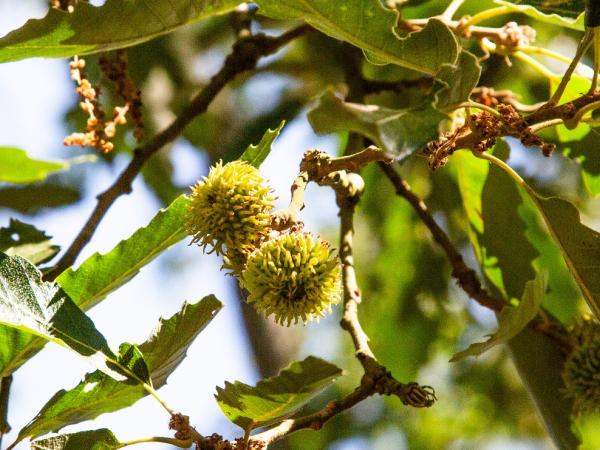
The only oak species endemic to Africa is rare in cultivation. It shouldn't be.
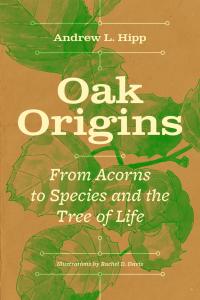
A long-time member for the IOS, Andrew Hipp has been described as "one of the premier naturalists and evolutionary biologists of our time." In his new book, Oak Origins, he draws on his extensive research and experience to tell the story of how oaks evolved and the many ways they shape our world. Andrew had the following to share with IOS members:
"I wrote Oak Origins: From Acorns to Species and the Tree of Life for a simple reason: I was dying to read the story of oaks as individuals, populations, and beings that evolve. The book I wanted to read, however, hadn’t been written yet. There are many excellent oak books out there already, but I wanted something that would tie together the natural history—the squirrels and the pollen, the fungi, the decomposing and growing trees, the forests and savannas that I love walking in—with histories that stretch back years or millions of years. I wanted to see how the Tree of Life connects oaks across the globe, then how that evolutionary history shapes an oak’s relationships to the insects, fungi, birds, mammals, spiders, mosses, lichens, slime molds, and other organisms that depend on it over the course of a century or more of life.
"Oak Origins is that book. It brings the things researchers are learning right now in the laboratory and field and herbarium, all over the world, together into a narrative that tells the numerous overlapping histories that make oaks. The book could just as easily have been titled, “Oaks Viewed from All Angles”, a phrase that also sounds to me like the rallying cry of the International Oak Society. When I meet with friends and colleagues from IOS, I am struck by their passion for oaks (and life in general), and a fascination with both research about and the immediate experience of oaks. I could never have written Oak Origins as it is without the International Oak Society. I had several of you in mind individually as I wrote various sections of this book, endeavoring to write it in such a way that you would find it engaging and up to snuff.
"The result is a uniquely integrative story of oak evolution, ecology, and natural history, and one I have deeply enjoyed working on. It is a celebration of oaks as individuals that stand at the intersections of history. I hope you enjoy it."

Illustrated by Rachel Davis, and with a Foreword by Béatrice Chassé, (Editor of the IOS Journal International Oaks and former IOS President), the book is available from now until its December publication date at a preorder discount of 30% (use code UCPNEW at the University of Chicago Press website).
Content by the Same Author
The International Oak Society acknowledges the generous support of the following institutions:
Supporting Institutional Members




Standard Institutional Members