Editor's Picks
While working on a list of synonyms of European White...
Roderick Cameron
|
Aug 24, 2026
Report led by The Morton Arboretum will help prioritize oak...
Website Editor
|
Aug 06, 2026
Motivation
I live in the village of Dolné Dubové...
Jozef Čapkovič
|
Jul 20, 2026
Plant Focus
The only oak species endemic to Africa is rare in cultivation. It shouldn't be.
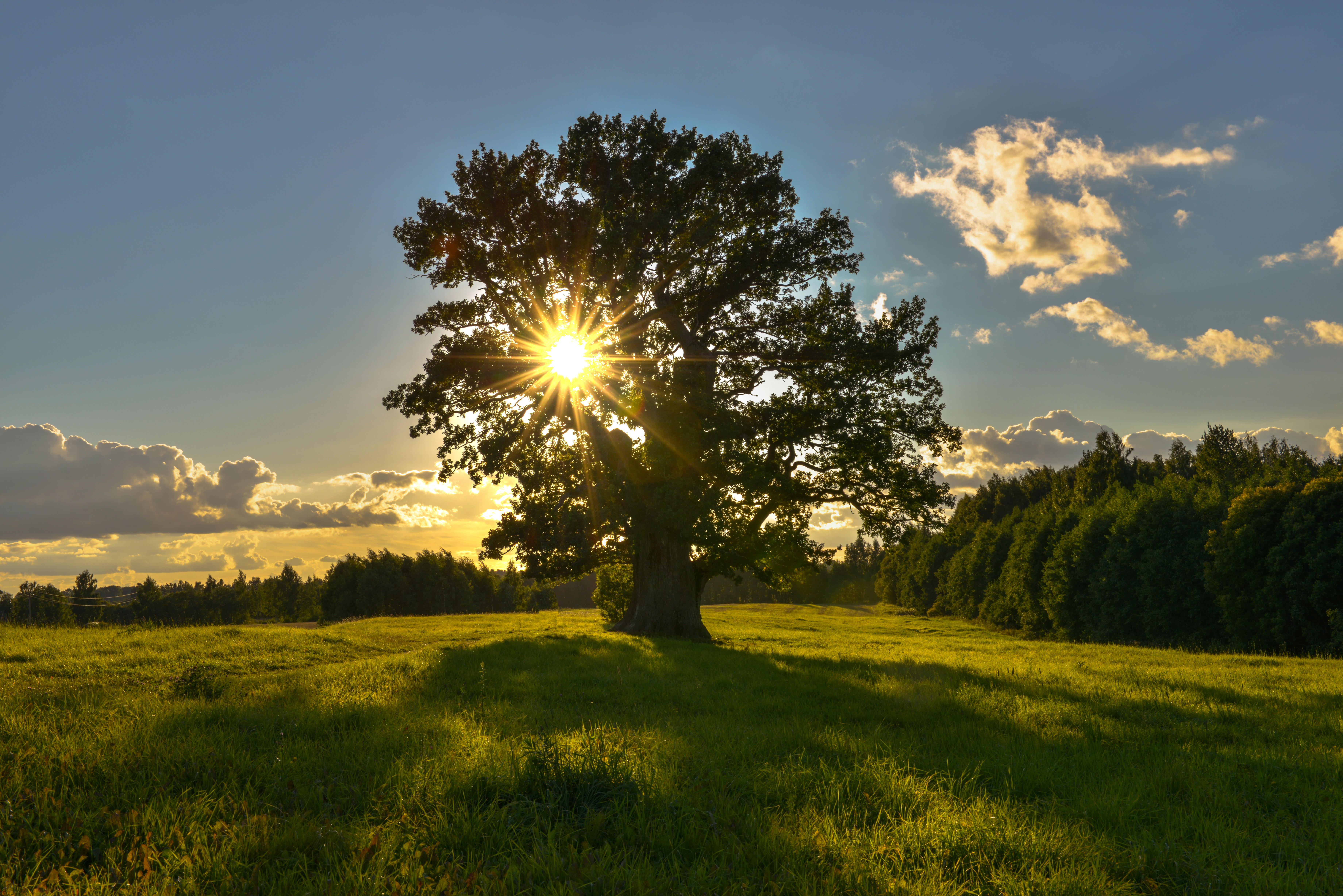 |
| The Tamme-Lauri Oak near Urvaste, southeastern Estonia © Abrget47j / Wikimedia Commons / CC-BY-SA-3.0 |
Oaks are a big deal in Estonia. We have already reported on the oak standing in a stadium in Orisaree that stood up to Stalin and won the European Tree of the Year contest in 2015. This year sees the country’s Centenary, marking 100 years since independence was declared in February 1918. As part of the celebrations organized under the Estonia 100 program, the Estonia 100 oaks project will involve children creating oak groves in parks across Estonia, planting seedlings they have grown themselves. To honor Estonia’s centenary, we chose as subject for this article in our series on Historic Oaks, Estonia’s largest, oldest, and most famous oak: the Tamme-Lauri Oak.
Standing in a clearing near the village of Urvaste in Antsla Parish, Võru County, southeastern Estonia, Tamme-Lauri Tamm, as it is known in Estonian, is a Quercus robur with a circumference of 8.2 meters. It is the oldest
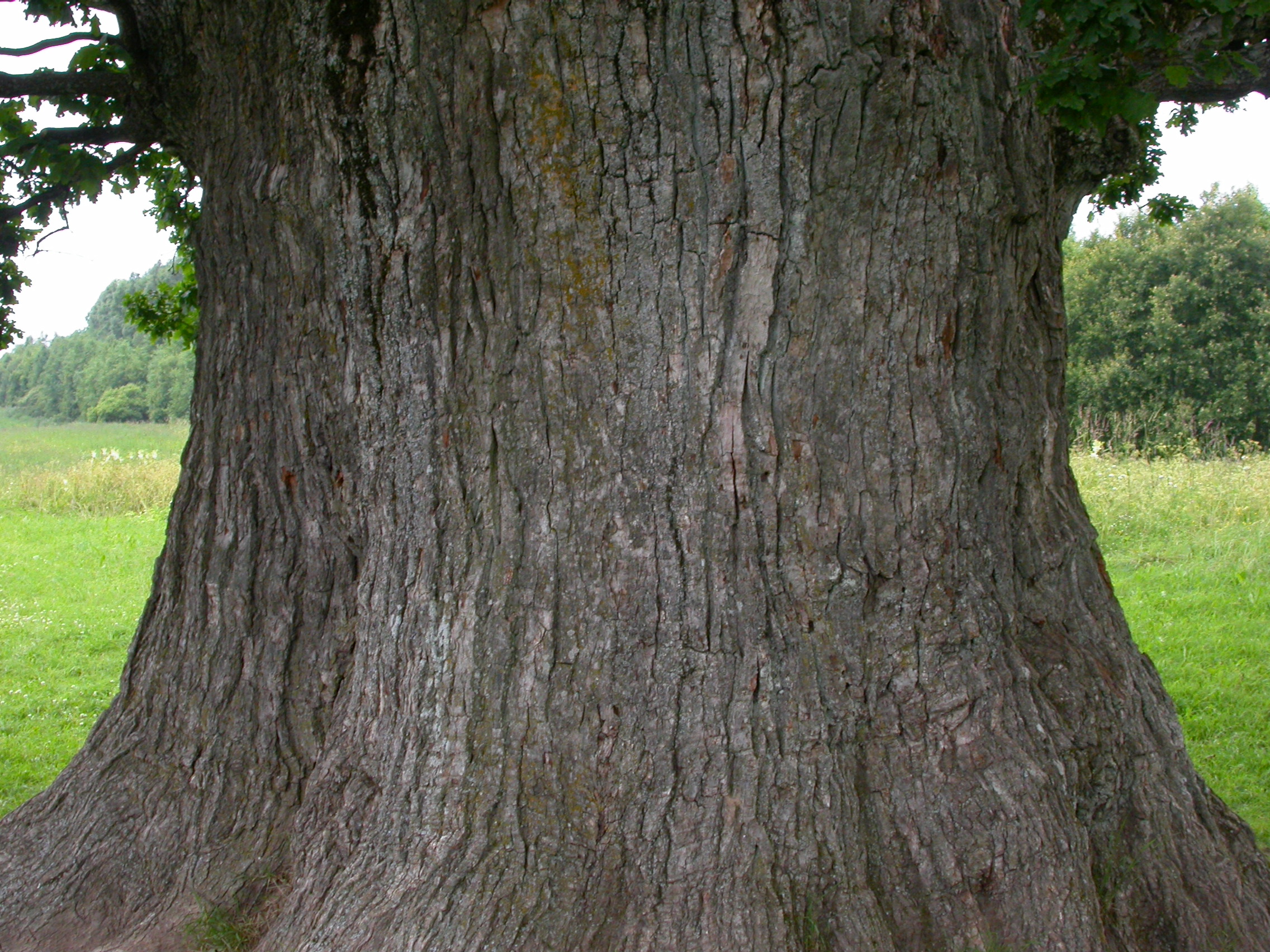 |
| Tamme-Lauri Tamm's 8.2-m-circumference trunk © Andres.Kuusk / Wikimedia Commons / CC-BY-SA-3.0 |
oak in the country, just shy of its 7th century. A study of its annual rings carried out in 1998 established that it was planted in 1326. Its name is thought to derive from Laurits, a fire spirit related to St. Lawrence in Estonian mythology, believed to inhabit the tree.
The trunk of the tree is hollow and in 1969 it was filled with 8 tons of reinforced concrete. During this restoration, evidence was found that the tree had been used as a hideout by the Forest Brothers, a guerilla group that resisted Soviet occupation during and after World War II. Seven people could fit inside the hollow trunk. Numerous cracks in the trunk bear witness to how often the tree has been stuck by lightning. As a solitary tree in a clearing, with roots reaching deep into the ground, it acted as a natural lightning rod. Now an artificial lightning rod erected next to it protects it from further strikes.
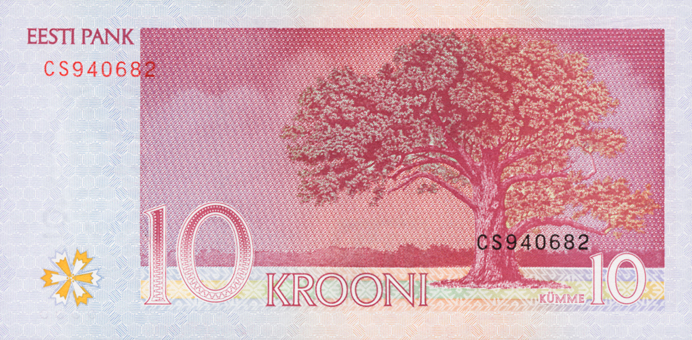
The Tamme-Lauri oak is featured on the 10-kroon banknote, legal currency in Estonia till the euro was adopted in 2011. (There are plenty of instances of oak trees on coins, but is this the only instance of an oak on a banknote?)
 |
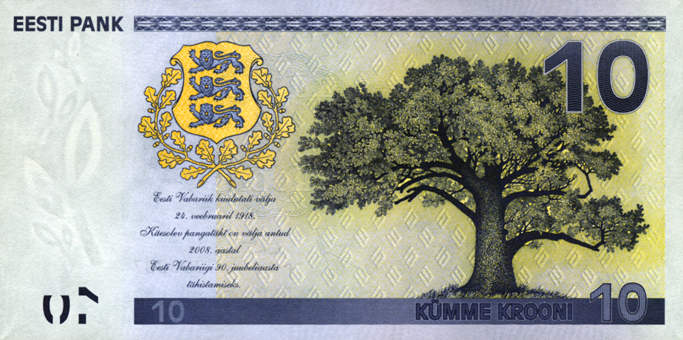 |
| The rear of the 10-kroon banknote depicts the Tamme-Lauri Oak | A collector banknote issued in 2008 also featured the famous oak |
As part of the Estonia 100 oaks project, where Estonians at home and abroad were invited to plant oaks in honor of the centenary, in May this year 130 seedlings grown from Tamme-Lauri’s acorns were planted by volunteers in a grove and avenue in the vicinity of the great oak. Such is the enthusiasm for this project, that there were many more volunteers than expected, many of them children, and the planting expected to take two hours was completed in 45 minutes. You can view a TV news story of the event here. It is in Estonian, but even if your Estonian is not up to scratch, you will be able to pick up on “tamm”, the word for oak—in this case, even more so because the reporter’s last name is also Tamm (it is the most common last name in Estonia).
Content by the Same Author
The International Oak Society acknowledges the generous support of the following institutions:
Supporting Institutional Members




Standard Institutional Members