Editor's Picks

While working on a list of synonyms of European White Oaks...
Roderick Cameron
|
Aug 24, 2026
Report led by The Morton Arboretum will help prioritize oak...
Website Editor
|
Aug 06, 2026
Motivation
I live in the village of Dolné Dubové...
Jozef Čapkovič
|
Jul 20, 2026
Plant Focus
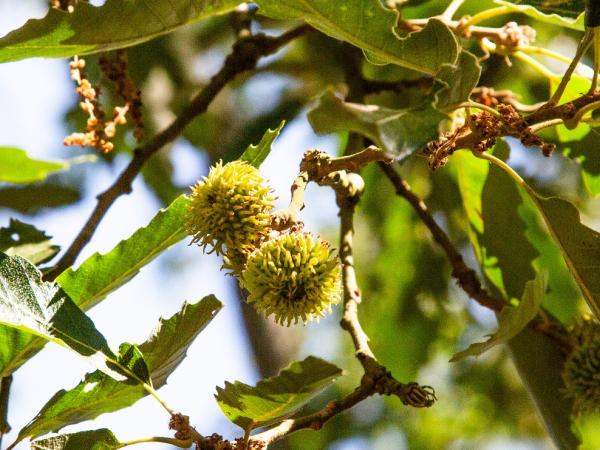
The only oak species endemic to Africa is rare in cultivation. It shouldn't be.
 |
| The Verdun Oak in Southwold, Suffolk, UK. Little is known about it, but a plaque reveals that "this oak tree was grown from an acorn by the Hon Miss Eden from the Battlefield of Verdun and presented to the town in 1921". Photo © James Faulconbridge/WTML |
The Battle of Verdun was fought 100 years ago. It was the longest battle of the First World War. Let’s imagine that now is a century ago: as I write this in late October the battle would been entering its ninth month, having started back in February. And it would go on for another two months, ending a few days before Christmas. At 303 days it was the longest battle in history and one of the deadliest, with an estimated three-quarter of a million casualties. It also destroyed 185,000 hectares of forest, mainly oak and chestnut, and the woodlands still bear the scars of the conflict.
Now The Woodland Trust, the United Kingdom's leading woodland conservation charity, is creating a memorial to soldiers killed at Verdun, by planting oaks. The Trust is looking for oak trees that were grown in England from acorns gathered at Verdun when the battle ended, and the plan is to collect acorns from these trees and grow a second generation of “Verdun oaks” that will be planted at a centenary wood in Surrey, England.
Why and how the original Verdun acorns came to the UK is an unfolding story that is still not resolved. According to The Woodland Trust: "Extracts from newspapers and magazines written at the time provide possible clues. One story suggests that Lord John French, who led the British into Northern Europe in 1915, took a handful of acorns to commemorate the stand the French had made at the Battle of Verdun. There are also reports that the Mayor of Verdun sent a box of acorns to the London and North West Railway Company (LNWR) in early 1917 to be sold for the benefit of the War Seal Foundation, a charity which supported ex-servicemen and their families. Sample boxes were sent to mayors in towns and cities along the route of the railway."
A total of ten Verdun oaks have been located so far, but the search is still going on. So if you know of one (or have your doubts) The Woodland Trust would like to hear from you (verdunoak@woodlandtrust.org.uk). See their webpage here to read about the ones they have found so far.
 |
|
In the Garden of Remembrance in Lichfield, Staffordshire, a plaque marks a lone oak which is identified as originating from Verdun. The plaque states "this oak tree was donated by Mr M Knights. It was grown from the original tree which stood on this site and which was grown from an acorn brought from Verdun in the Great World War 1914-1918". The Lichfield Mercury reports in 1917 that the mayor of Lichfield received two acorns and a chestnut from the LNWR which he had hoped to plant in the museum grounds.Photo © James Faulconbridge/WTML |
Sources:
The Woodland Trust: https://www.woodlandtrust.org.uk/support-us/support-an-appeal/centenary-woods/stories-and-memories/verdun-oaks/
BBC website: http://www.bbc.com/news/uk-england-35622451
Content by the Same Author
The International Oak Society acknowledges the generous support of the following institutions:
Supporting Institutional Members




Standard Institutional Members