Editor's Picks

While working on a list of synonyms of European White Oaks...
Roderick Cameron
|
Aug 24, 2026
Report led by The Morton Arboretum will help prioritize oak...
Website Editor
|
Aug 06, 2026
Motivation
I live in the village of Dolné Dubové...
Jozef Čapkovič
|
Jul 20, 2026
Plant Focus
The only oak species endemic to Africa is rare in cultivation. It shouldn't be.
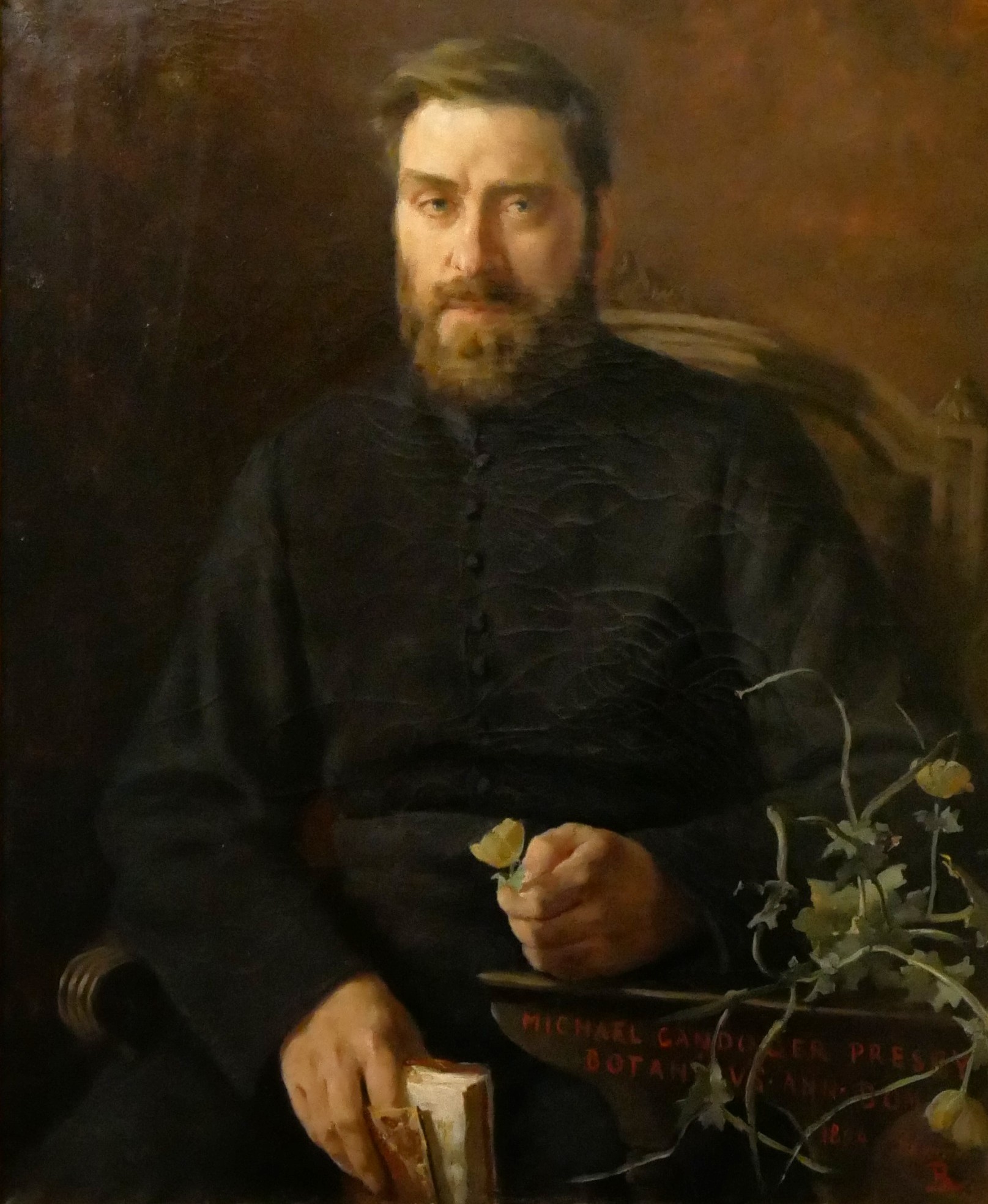
While working on a list of synonyms of European White Oaks, I came across the work of the remarkable Michel Gandoger. He is little-known even in oak taxonomy circles, and yet he published more names of oaks than anyone else, close to 600, exceeding the prolific William Trelease (504 names in Quercus, according to the International Plant Names Index).
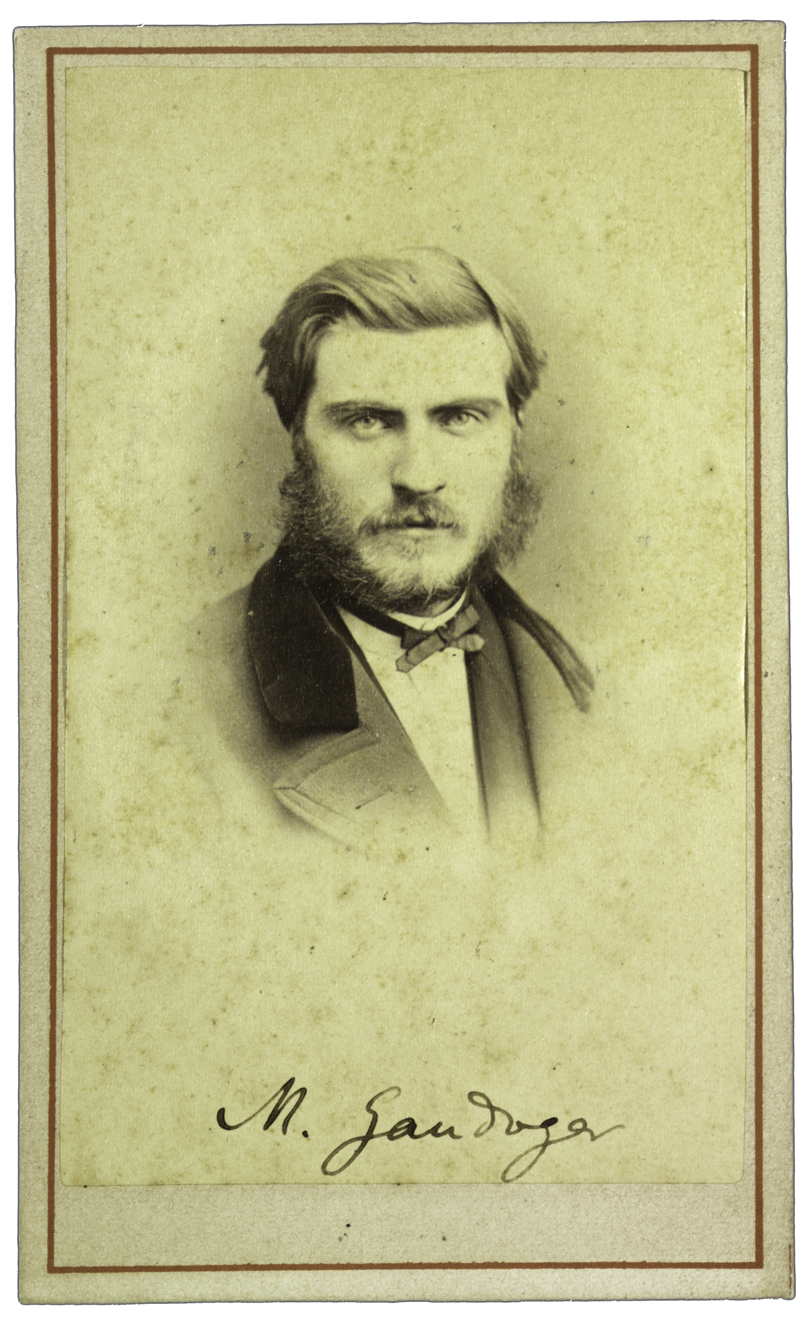
There is scant information available online about his life. A meagre Wikipedia entry points to an obituary published in 1927, by Abbé J.-B. Chardonell, which tells us that he was born in 1850 in Arnas (Rhône department, eastern France), the son of a prosperous vineyard owner. A privileged education led to a degree as a doctor of medicine and mastery of eight foreign languages. He started collecting plants at the age of 15, and helped by his mother and an aunt he obtained herbarium specimens through exchange or purchase, building a herbarium that would eventually comprise 800,000 specimens. By the age of 20 he had already amassed 15,000 specimens, and at 24 he published Flore Lyonnaise et du Sud-Est, a regional flora. Something happened soon after, described mysteriously by Carbonell as “Une circonstance douloureuse lui fit quitter le monde” (“A painful circumstance caused him to withdraw from the world”) (Chardonell 1927). At age 26, he entered holy orders. I have not been able to find what it was that led him to take this decision. A question of cherchez la femme? (Or l’homme, for that matter?)
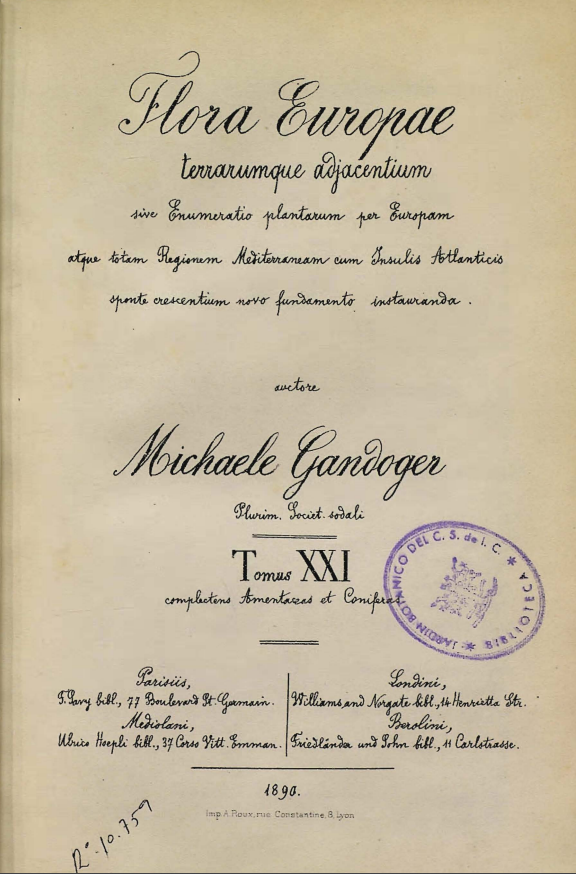
In 1883 he began work on his chef d’œuvre, Flora Europæ (Flora of Europe), which he would complete in 1891 (Gandoger 1883-1891). It is a monumental work: 27 volumes consisting of about 9,600 pages, all of them handwritten. The work was mechanically reproduced by a method called hectography, invented in the 1860s: the original is written with special inks, then transferred to a pan of gelatin or a gelatin pad pulled tight on a metal frame; spirits are applied to transfer the ink from the master to the gelatin, and then copies are made by pressing paper against it. The word “hectograph” derives from ancient Greek ἑκατόν (hekatón, “hundred”), implying that 100 copies could be made using the machine, but apparently 20 to 80 copies is a more realistic estimate.
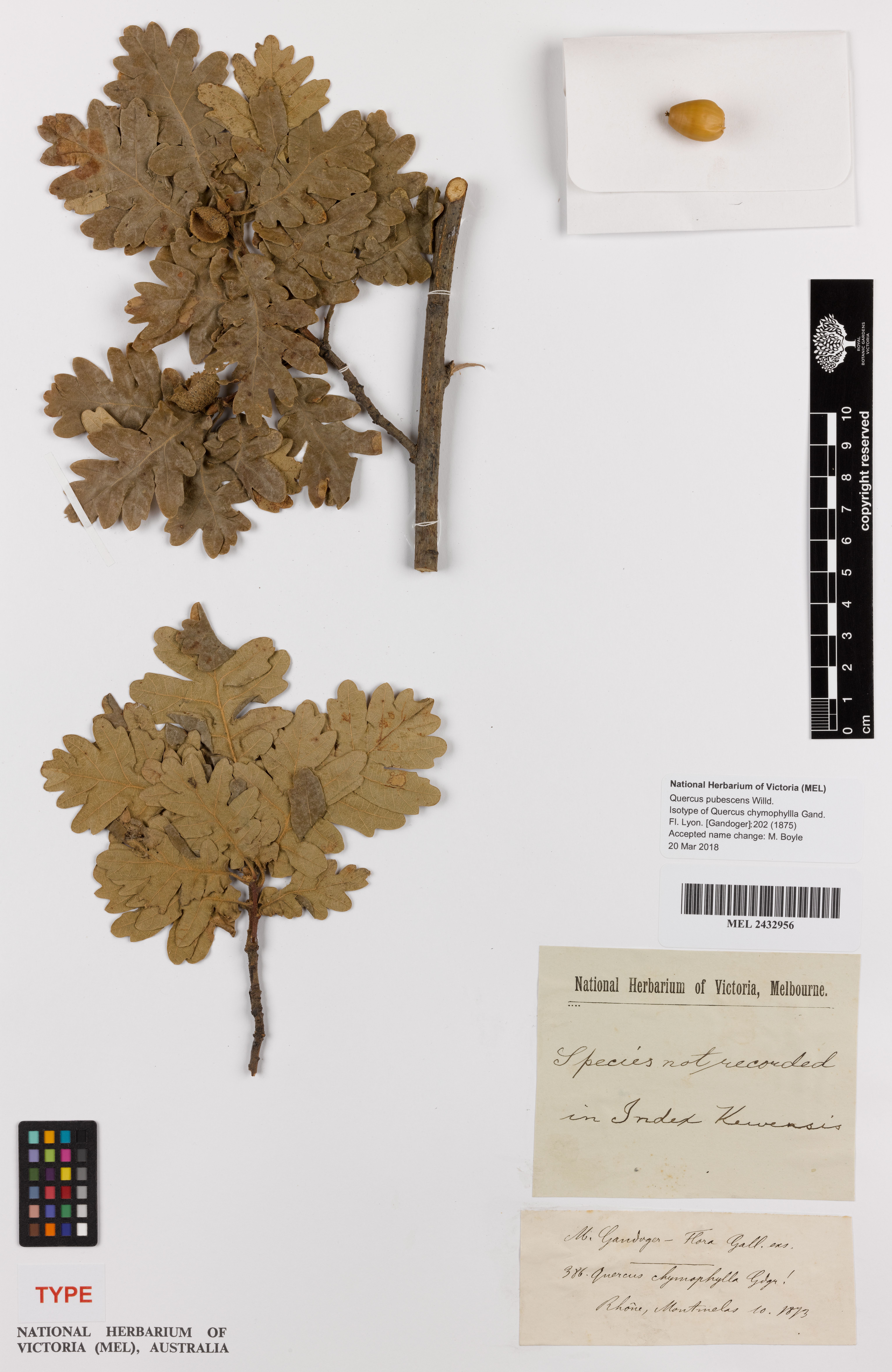
Image: Specimen MEL2432956; reproduced with permission from Royal Botanic Gardens Victoria
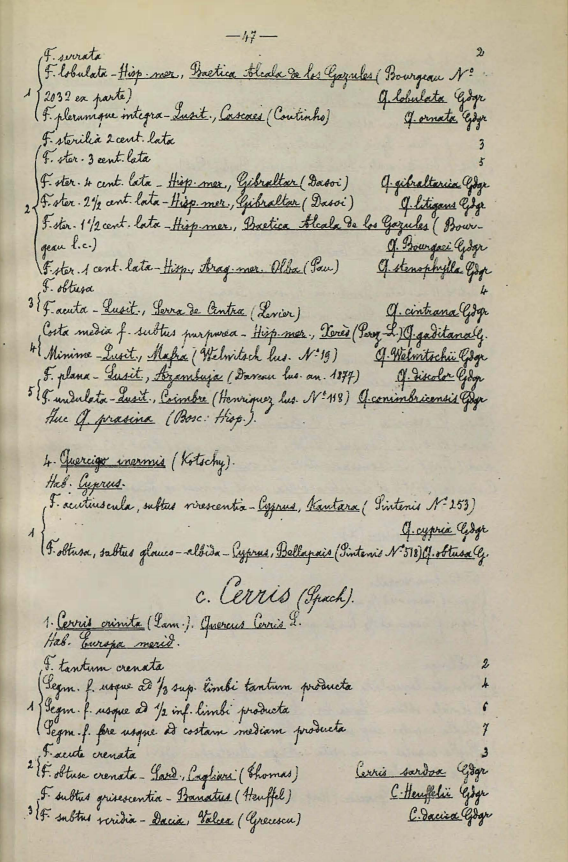
Gandoger published many thousands of names, over 150,000 in Flora Europæ according to some accounts, though I am not sure anyone has sat down to count them. He described plants in many genera (especially Rosa, in which he published over 16,000 names), but I will concern myself here only with his names of oaks. In Flore Lyonnaise he already showed his splitting disposition: his treatment of Quercus included five previously published names, and four of his own, all currently considered synonyms: Quercus bellojoencis (= Q. pubescens), Q. peraffinis (= Q. petraea), Q. chymophylla (= Q. pubescens), and Q. stenobalanos (= Q. ×subpyrenaica). This last name is an earlier homonym of Q. stenobalanos van Seemen, which Trelease had to replace with Q. substenocarpa (a synonym of Q. germana). In Flora Europæ (Vol. 21), I counted 593 oak names (I counted once and on my fingers—don’t hold me to that number). His taxonomical approach is unusual. He splits genus Quercus into five “subgenera” (Euquercus, Quercigo, Cerris, Suber, Coccigera), but he treats them as if they were each a genus. In the index, the "subgenera" are listed in order with other genera, so Suber (Spach) appears between Salix L. and Taxus L. Each contains a large number of taxa identified with binomials, so that what we know as Q. libani Olivier is shown as “Cerris libani Olivier“. Every name comes with a diagnosis of sorts, because the text consists in essence of a key, based at times on detailed morphological characteristics. An example picked at random: under what we know as Q. coccifera, he separates species depending on whether the acorn cups are 12, 14, or 16 mm wide. Rather than a classification system, his treatment seems to consist of a catalogue of the myriad specimens he had access to, and it appears that each specimen got its own binomial name. The result is 148 names for what we now call Q. ilex, 104 names for plants we now recognize as Q. pubescens, and so on.
The case of Gandoger reminds of Borges’s 1942 short story Funes el memorioso (“Funes the Memorious”). It tells the story of a young man in Fray Bentos, Uruguay, who was gifted with a prodigious memory. After being thrown from a horse, he is crippled, but his memory becomes infallible. He can remember every single detail of everything that happens to him or that he thinks of. He is incapable of forgetting. This allows him to learn a new language in days, but it also prevents him from reasoning. He devised a system of numeration in which each number was represented by a different word or phrase: “In place of seven thousand thirteen, he would say (for example) Máximo Pérez; in place of seven thousand fourteen, The Train; other numbers were Luis Melián Lafinur, Olimar, Brimstone, Clubs, The Whale, Gas, The Cauldron, Napoleon, Agustín de Vedia. In lieu of five hundred, he would say nine” (Borges 1962). As the narrator in the story points out, this is the opposite of a system of enumeration: to say 365 is to say three hundreds, six tens, five units. This analysis does not exist in Funes’s “rhapsody of unconnected terms.” Borges says of Funes: “It was not only difficult for him to understand that the generic term dog embraced so many differing sizes and different forms; he was disturbed by the fact that a dog at three-fourteen (seen in profile) should have the same name as the dog at three-fifteen (seen from the front)… Without effort, he had learned English, French, Portuguese, Latin. I suspect, nevertheless, that he was not very capable of thought. To think is to forget a difference, to generalize, to abstract. In the overly replete world of Funes there were nothing but details, almost contiguous details” (Borges 1962). The same could be said of Gandoger’s plethora of names. Taken to its extreme, it would lead to a different binomial name for every oak tree in Europe. The point of taxonomy is to classify and increase understanding, not to give everything its own particular name.
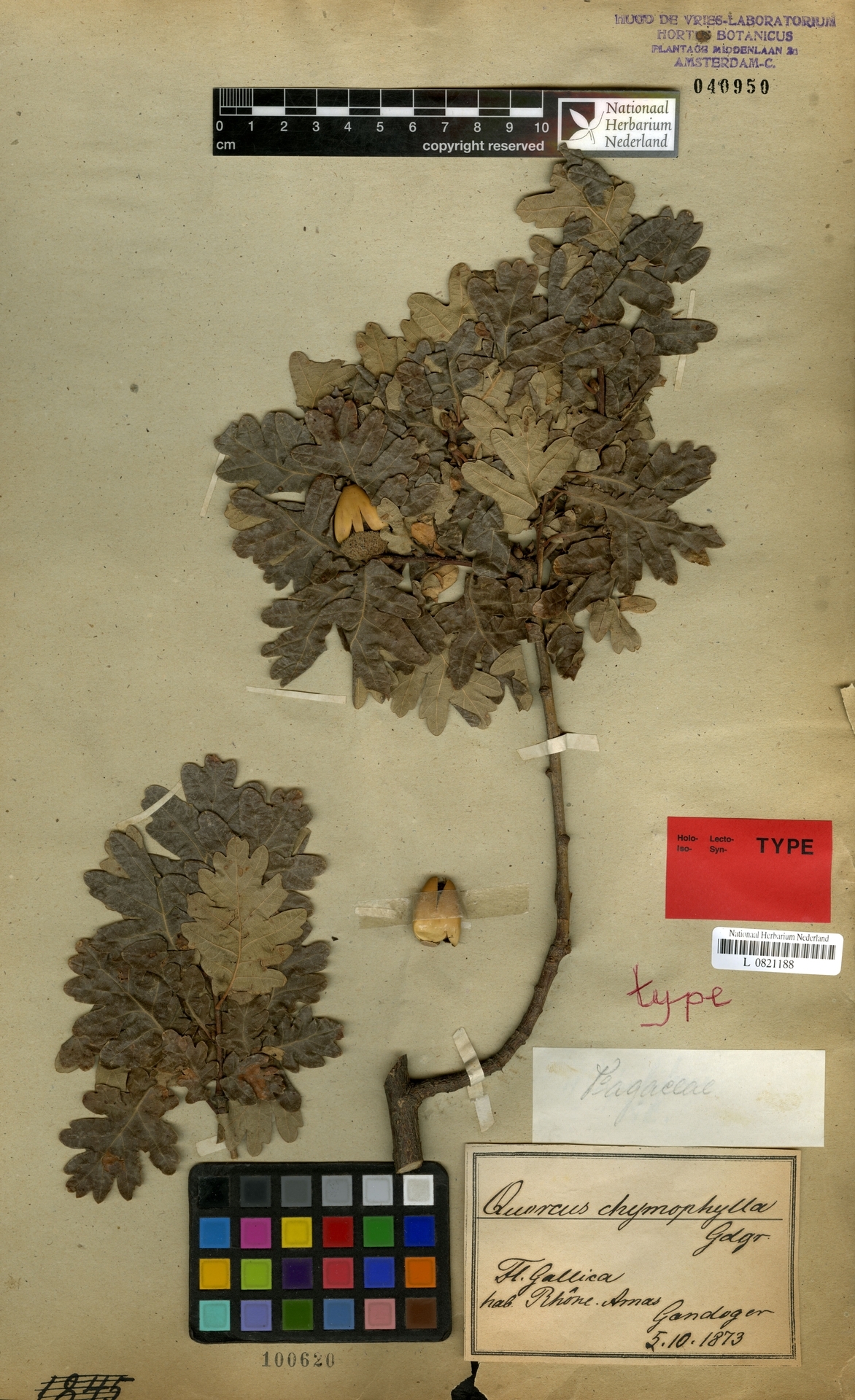
Image: Naturalis Biodiversity Center
The problem with Flora Europæ is that it was validly published and distributed, and the names can be linked to identifiable specimens. Though his publication was at first conveniently ignored by the botanical community (omitted, for example, in Index Kewensis), the fact was that, according to the International Code of Nomenclature, Gandoger’s names were valid and could not be simply swept under the carpet. One of the main problems is that Gandoger’s names create many later homonyms, i.e., illegitimate names, because he occupied so many epithets later adopted by others (cf. Q. substenocarpa, above). There was intense debate on the topic at several International Botanical Congresses (see Fuchs 1960, Rothmaler 1962, Stafleu 1970, Sennikov 2005) and eventually the matter was solved when the whole 27 volumes were rejected by declaring Flora Europæ a suppressed work (opus utique oppressum). This is allowed by Art. 34.1 of the Code, and suppressed works are now listed in its Appendix 1. The Appendix currently includes 50 works, several by the same author, but I venture to suggest that Gandoger leads the pack in the number of rejected names. The rank at which names in a suppressed work are rejected must be specified. In the case of Flora Europæ, it is species names that are rejected, so I understand that his “subgenera” would not be rejected, among them Euquercus Gand., which includes the roburoid oaks. This would make it an earlier homonym of Aimée Camus’s subgenus Euquercus, but in any case the Code now outlaws naming a subdivision of a genus by adding to the genus name the prefix Eu- (Art. 21.3).
The International Plant Names Index and Plants of the World Online include a little over 200 of the names for oaks Gandoger published in Flora Europæ. They are almost all synonyms of Q. robur, Q. petraea, and Q. pubescens. This is not a deliberate selection. According to the IPNI Editors (pers. comm.), the work of adding his names was begun before Flora Europæ was ruled to be a suppressed work in 1994. Once the editors were aware of the status for the work, the remaining names were not added. They do not intend to add them now.
In 1899, a note published in the Botanical Gazette announced that Gandoger, “the well-known author of Flora Europæ… is about to dispose of the herbarium upon which this work was based. Where possible he will divide each specimen into two parts. One set of these is to be presented to the Museum at Paris; the other set will be sold.” One set is today at the herbarium of Lyon University, and according to Charbonnel, it includes an excellent collection of Quercus specimens.
In May 1921, Gandoger wrote to Charbonnel:
Je suis malade, cher ami… Je ne m’illusionne pas et je suis persuadé que je ne passerai pas l’été. Cette main que a tant écrit, ne peut presque plus tenir la plume et va descendre au tombeau… Vous penserez à moi dans vos prières, pour que Dieu, dont j’ai essayé de célébrer les grandeurs et la puissance, soit indulgent.
[I am ill, dear friend… I am under no illusions and am convinced I will not survive the summer. This hand, which has written so much, can scarcely hold the pen anymore and is about to descend to the grave… You will remember me in your prayers, so that God, whose greatness and power I have tried to celebrate, may be merciful.]
Gandoger died on October 4, 1926. Of the 593 oak species names his imagination devised and his pen scribbled to celebrate God’s greatness and power, four synonyms remain.
Works cited
Borges, J.L. 1962. “Funes the Memorious.” In Ficciones, trans. by A. Kerrigan, 107–115. New York: Grove Press. [link]
Charbonnel, J.B. 1927. L’abbé Michel Gandoger. Bulletin de la Société Botanique de France 74(1) : 3–11 [link]
Fuchs, H.P. 1960. Réflexions sur la validité des binômes publiés par Gandoger dans sa Flora Europæ 1883–1891. Bulletin de la Société Botanique de France 107(3-4): 108–223 [link]
Gandoger, M. 1883-1891. Flora Europae terrarumque adjacentium sive Enumeratio plantarum per Europam atque totam Regionem Mediterraneam cum Insulis Atlanticis sponte crescentium, novo fundamento instauranda. Paris, London, Berlin: F. Savy, Bernard Quaritch, Friedländer et Sohn. [link]
Rothmaler, W. 1962. Müssen wir Gandoger gerecht werden? TAXON 11(5): 156–160 [link]
Sennikov, A.N. 2005. Miscellaneous nomenclatural notes (II). Komarovia 4: 138–154 [link]
Stafleu, F.A. 1970. Nomenclature at Seattle. TAXON 19(1): 36–42 [link]
Content by the Same Author
The International Oak Society acknowledges the generous support of the following institutions:
Supporting Institutional Members




Standard Institutional Members