Editor's Picks

While working on a list of synonyms of European White Oaks...
Roderick Cameron
|
Aug 24, 2026
Report led by The Morton Arboretum will help prioritize oak...
Website Editor
|
Aug 06, 2026
Motivation
I live in the village of Dolné Dubové...
Jozef Čapkovič
|
Jul 20, 2026
Plant Focus
The only oak species endemic to Africa is rare in cultivation. It shouldn't be.
In January 2011, I made a quick visit to several natural areas in Palm Beach County, Florida while on a business trip and had my first experience with the varied oak habitats of the South Florida coast. Allan Taylor published a short report from that visit in the Summer 2011 issue of Oak News & Notes. I had no working camera on that trip and the photos in the story were provided by a local oak photographer, Shirley Denton.
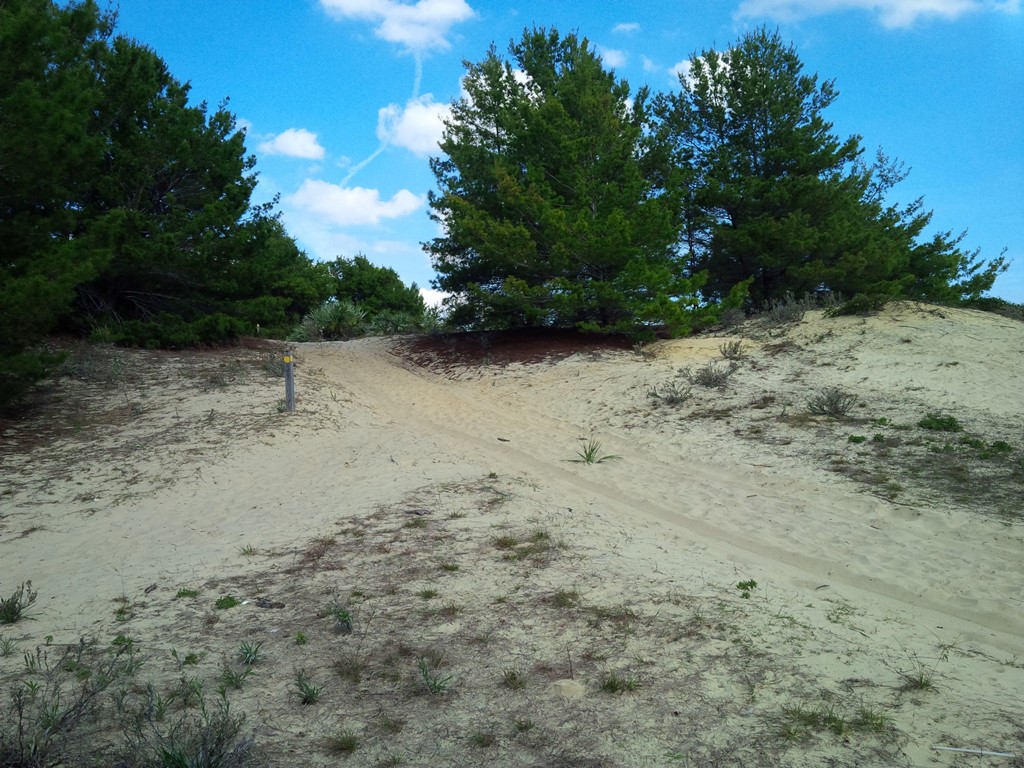
In January 2017, I had the chance to relive the experience and revisit three of those spots – the High Ridge Scrub, Juno Dunes, and Frenchman’s Forest Natural Areas – this time with camera. I found some of the marvels I remembered from 2011, but the landscapes at High Ridge Scrub and Juno Dunes were substantially altered. The County has initiated use of “mechanical vegetative reduction methods” to partly replicate the effects of the native fire-maintained ecology and otherwise create a “mosaic of natural communities and successional stages.” Actual controlled fires are in the management plans for the future.
High Ridge Scrub
High Ridge Scrub Natural Area preserves a fragment of a sand ridge that formerly divided coastal from inland lake systems and is located outside the City of Boynton Beach. The property was used as a “sand mine” in decades past – as much as 10 to 11 meters of sand were removed from the southern part of the area (see photo above).
Five oak species are present, per the County’s management plan – Quercus chapmanii, Q. geminata, Q. myrtifolia, Q. pumila, and Q. virginiana. (I wish I had an expert’s eye for the distinctions among species in the Virentes group, but alas I am bound to have been mistaken in some identifications.)
In 2011, I described a “shady bottomland below the ridge.” It’s gone! In 2015 and again in December 2016 the understory of oaks and other plants was “mechanically reduced,” leaving broad swaths of new oak shoots less than 1 meter tall in bright or filtered sunshine amongst the pines. In that area in 2011, I saw a “lush Q. chapmanii with leaves up to 13-14 cm long,” which I remember as a tree maybe 4 m tall or more – and I think I found it. There are now multiple short shoots surrounding the shredded old stem. It was (is?) a special plant, since standard references say the leaves of the species typically reach only 8-9 cm.

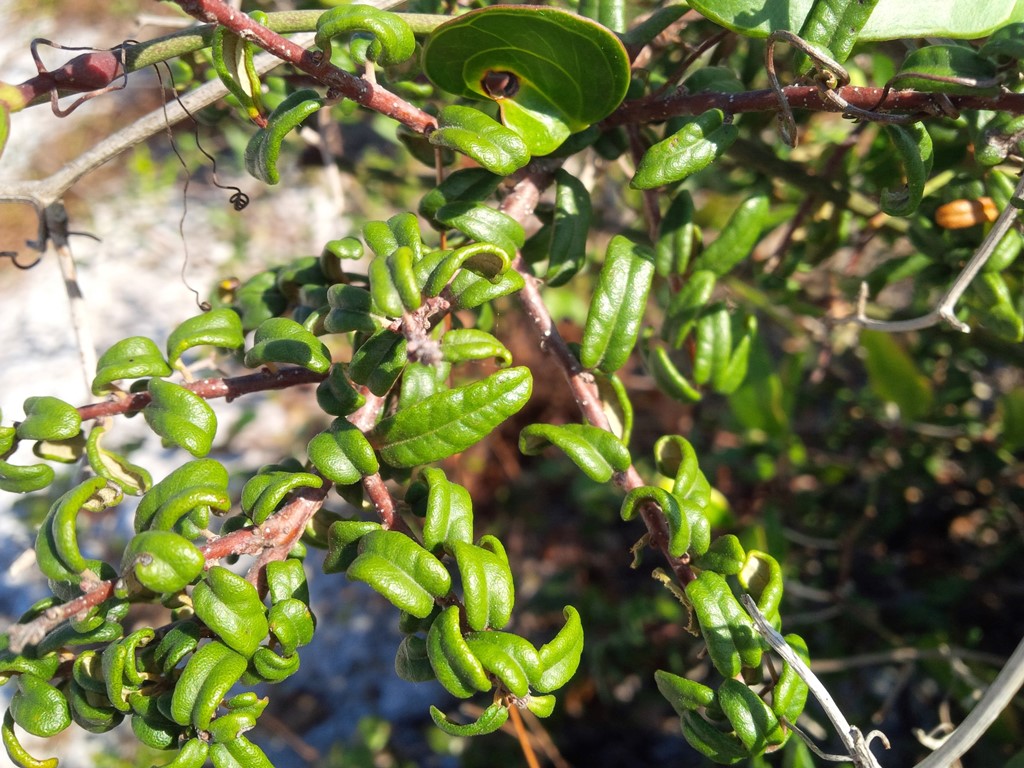
In areas of the preserve where the oaks have not been cut down, the path can be like a canyon or even a tunnel among 2-4 m shrubs and short trees. There are Q. virginiana and/or Q. geminata with big (10 cm plus) and heavy leaves. Unique in my limited experience, there was a Q. myrtifolia (or hybrid), a vine-festooned shrub with pubescent new leaves – older leaves retain the pubescence on the undersides.

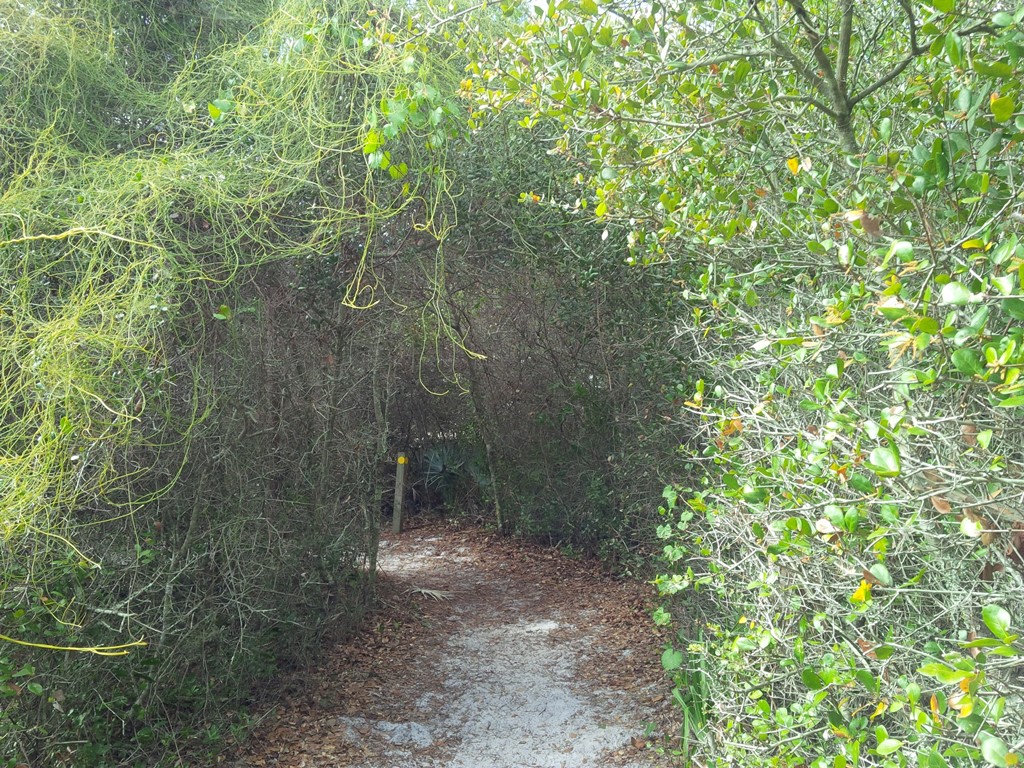
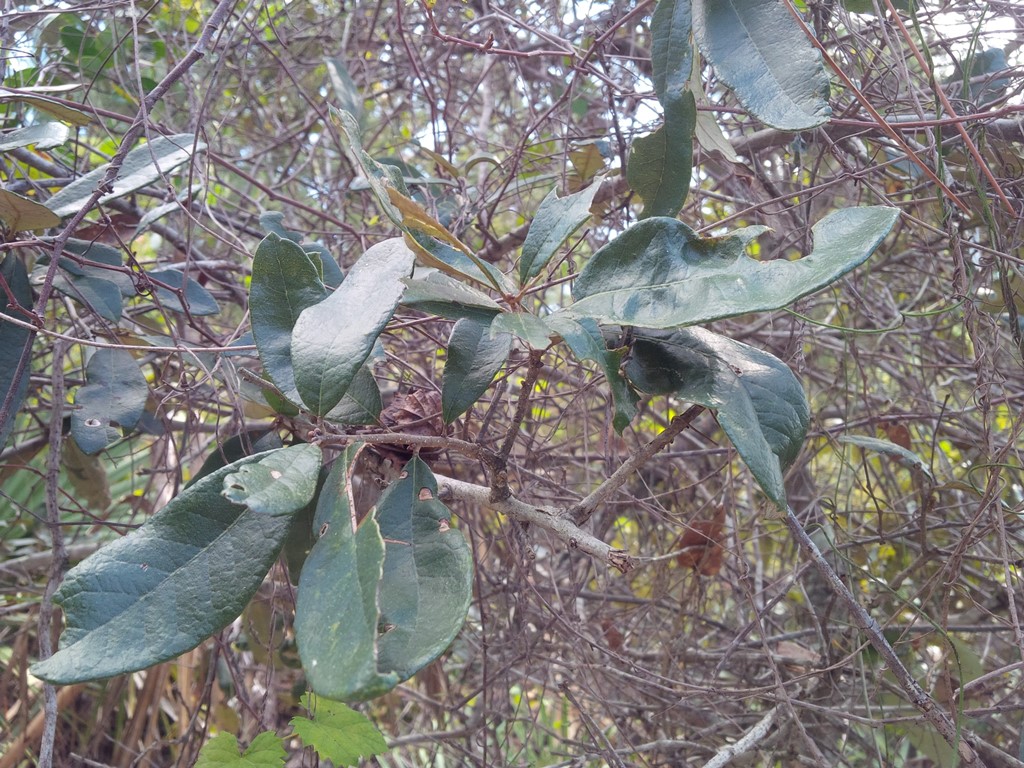


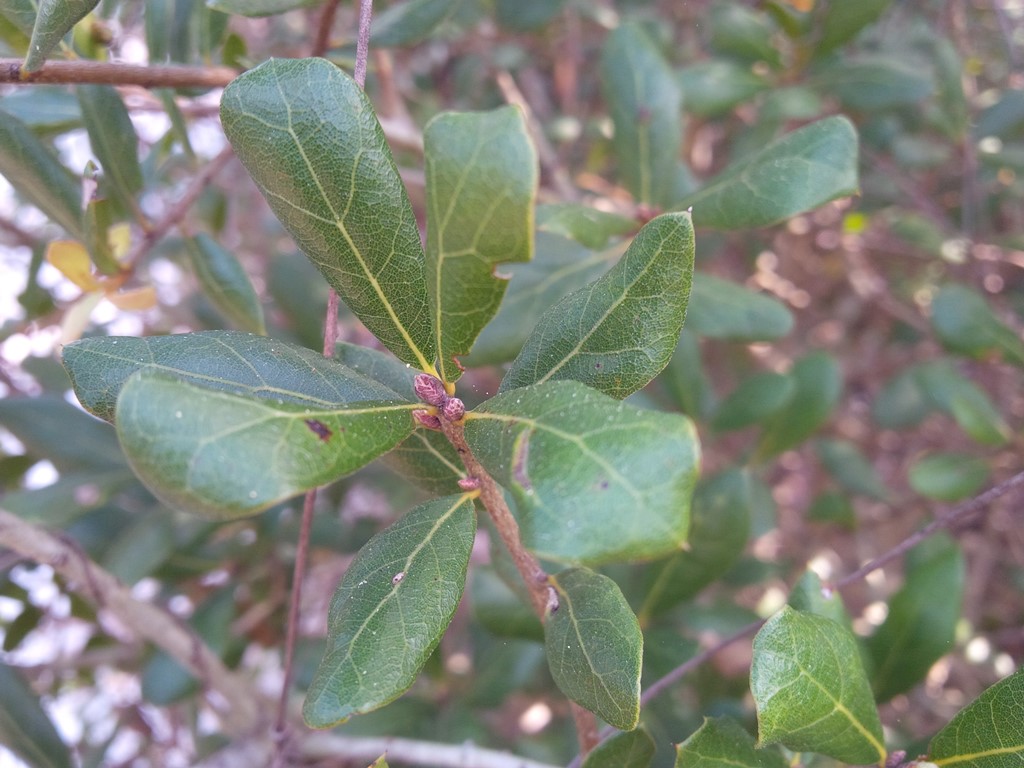

Spring has already come in January to High Ridge Scrub, with occasional flowers opening especially on Q. chapmanii individuals. The wavy-lobed leaves of the plant in the photo are atypical but not unique at this location, and I saw similar plants in other locations. Could they be non-natives, escaped from the garden? Of the taxa listed in the County’s management plan, Q. chapmanii is the only option.
Juno Dunes
I explored just a fraction of the 578-acre Juno Dunes Natural Area in Jupiter, Florida this year – skipping the high dune ridge facing the Atlantic (covered with one-meter-tall Q. geminata) and the pine woods at the area’s western edge along the Coastal Waterway. I walked only the broad dune scrub in the center of the preserve.
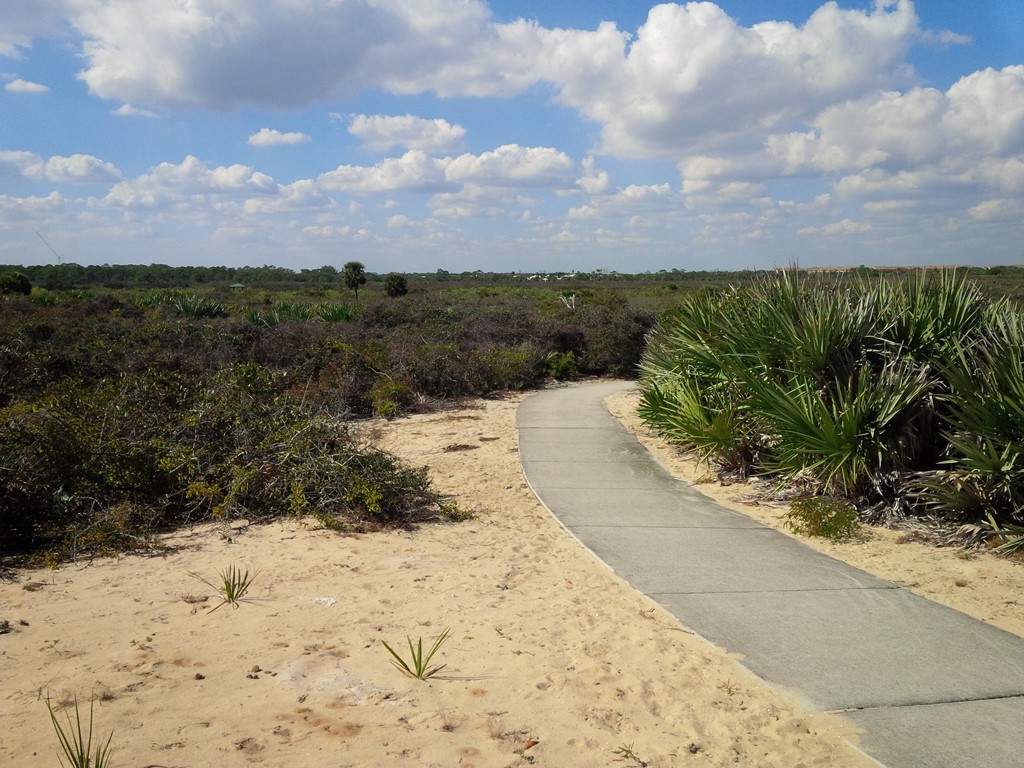
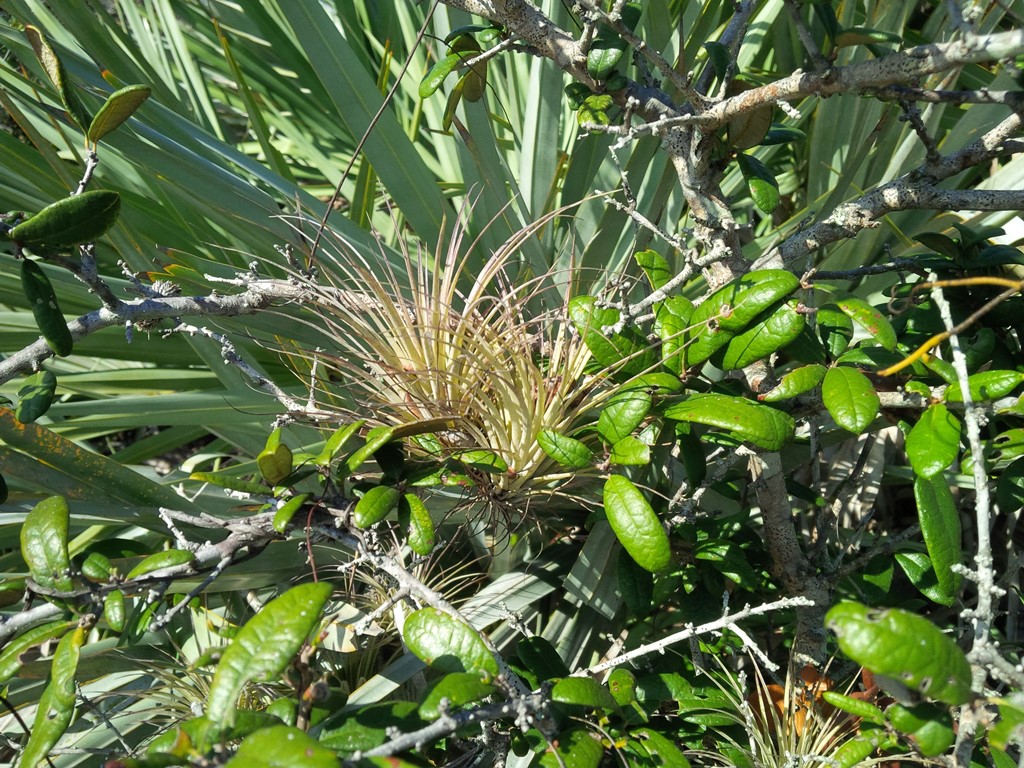
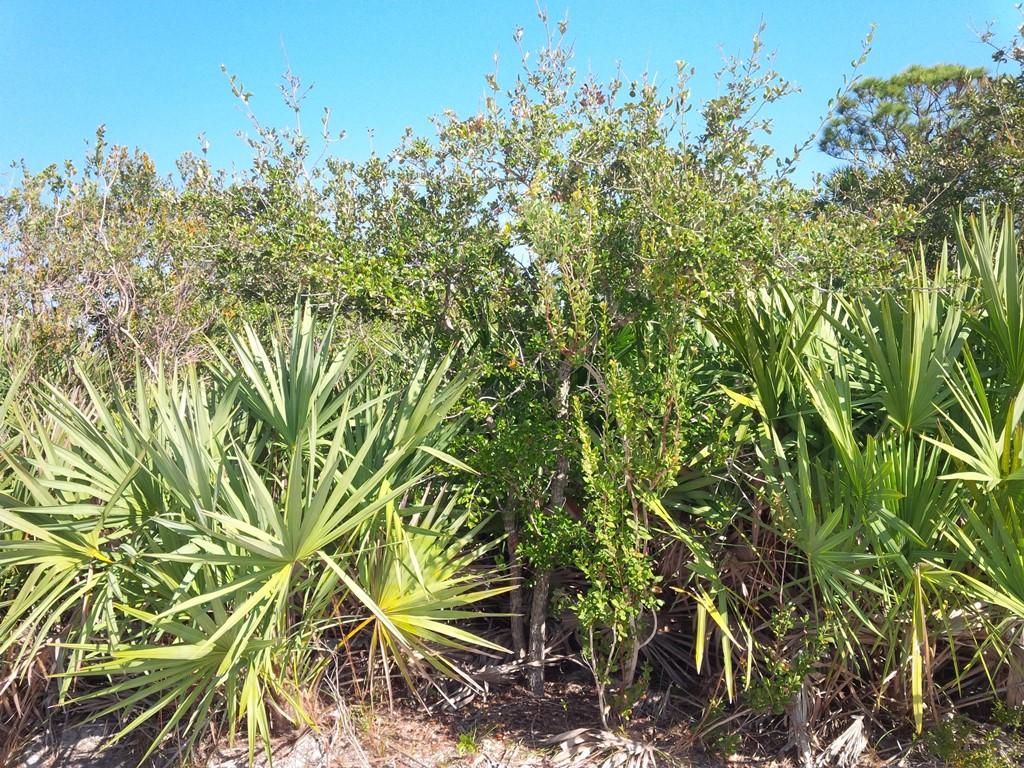
The dune scrub is primarily an assemblage of short Q. chapmanii, Q. geminata, and Q. myrtifolia. No garden designer would purposefully create this palette of three plants, all with “bitty leaves.” But there are also vignettes of fetching beauty, as where this Q. geminata is host to epiphytic Tillandsia and backed by saw palmetto (Serenoa repens) at a height under 1 m.
The County has mowed the south side of the main path across the dune scrub apparently with different mechanics from High Ridge Scrub – the shredded stems are not in evidence here. The oaks are only about half a meter tall in the mowed area and it seemed that mostly Q. geminata was present – maybe mowing close to the soil level is more damaging to the other species. The leaves of the sand live oak in the mowed areas seem diminished in size relative to the plants on the other side of the path, at least for now.
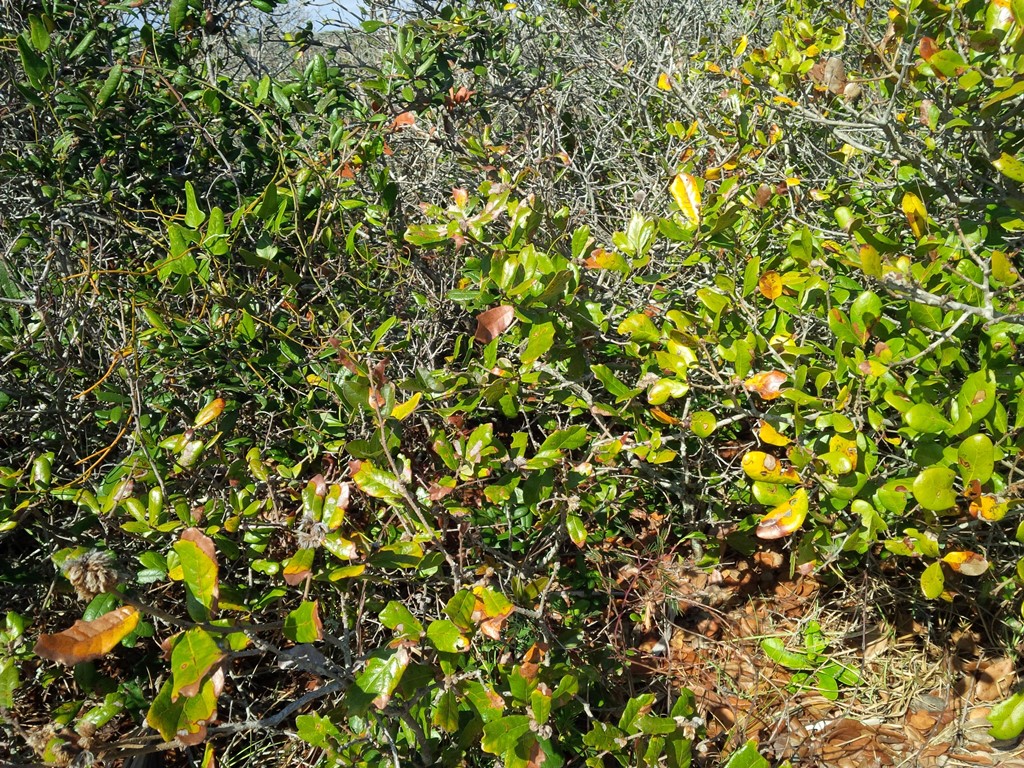
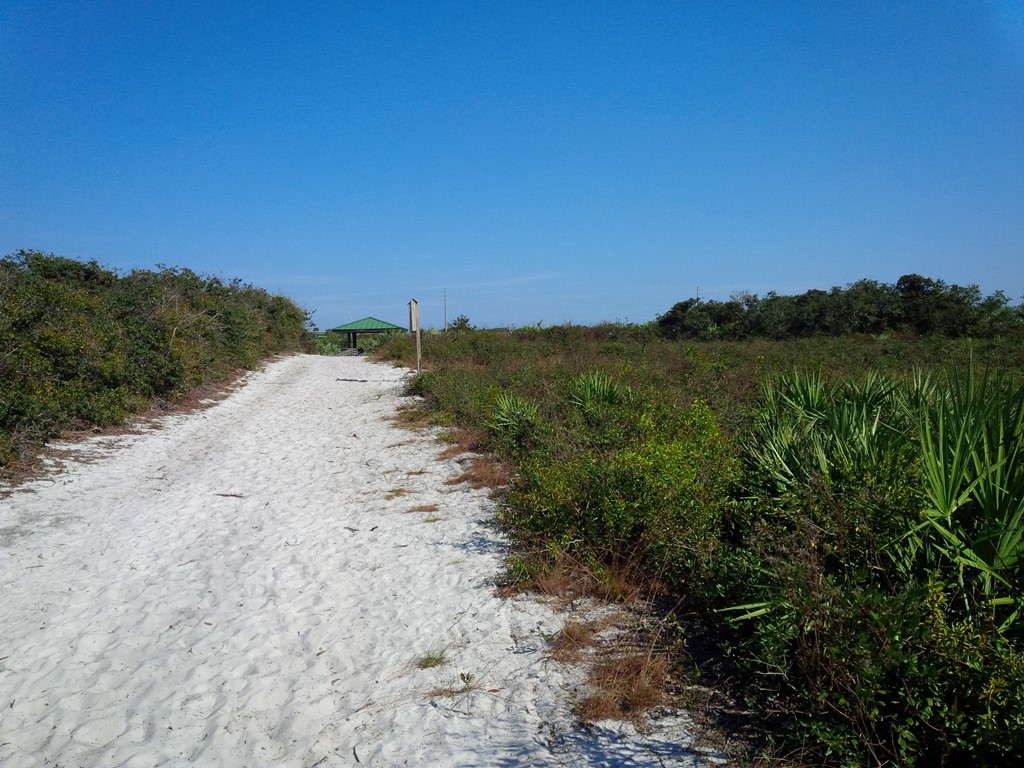
There is a sharp and interesting shift in soil moisture where the scrubbiest scrub gives way to soils that support Q. virginiana and pines and where the saw palmettos become a bigger component.
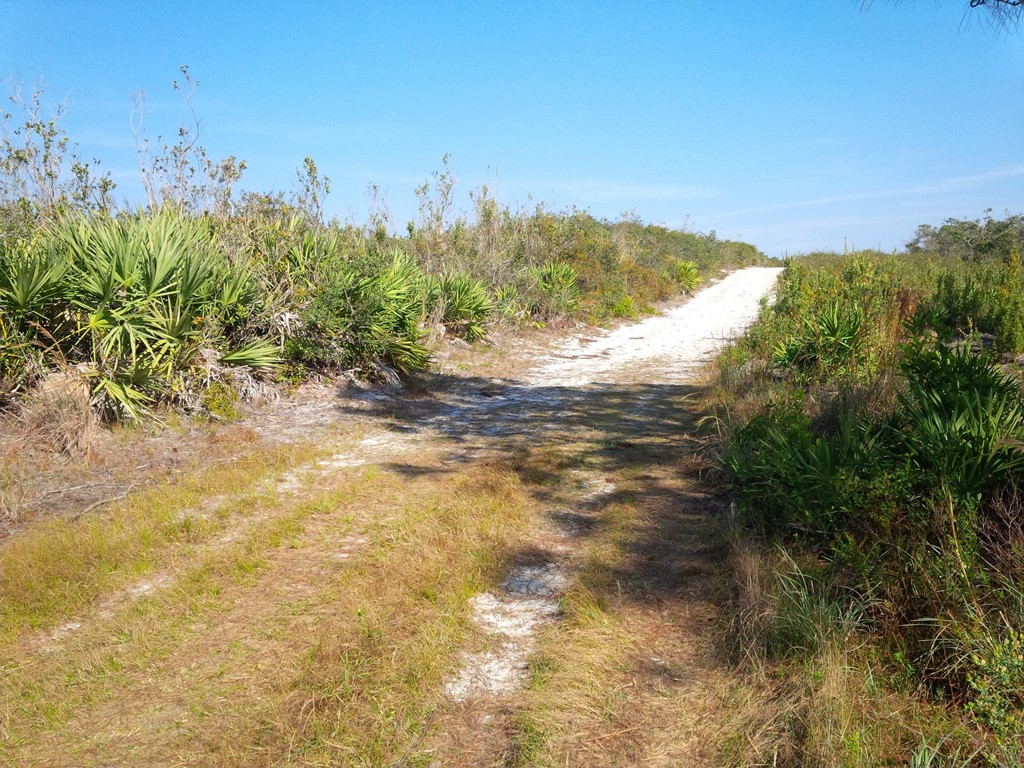
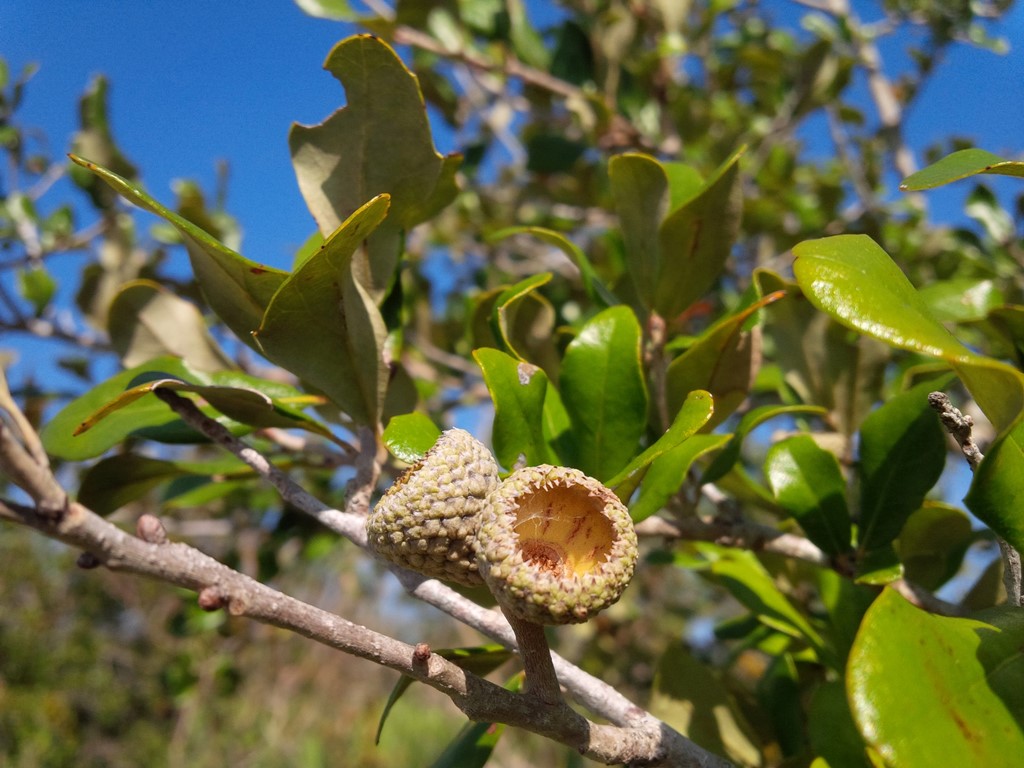
In 2011, I followed a turn in the path to the north and came upon a line of striking, erect Q. virginiana, like a line of short poplars (3-5 m tall) standing out from the rest of the landscape, and holding abundant ripe acorns. Six years later, other plants have grown around them and they have spread their crowns a little – altogether a less remarkable scene. No acorns were to be seen, but a few pretty cupules still shone in the sun.
Frenchman’s Forest
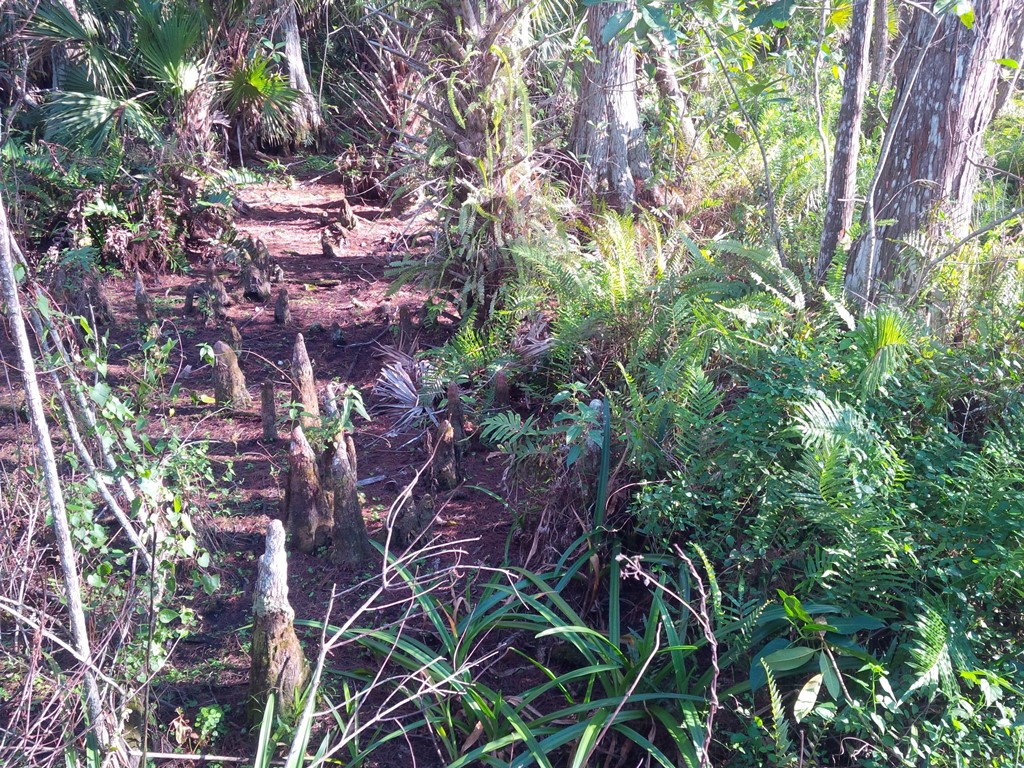
Five to six kilometers southwest of Juno Dunes is the Frenchman’s Forest Natural Area, a wetter area ranging from swamp to dense forest to rather open woods. There are bald cypresses (Taxodium distichum) here with their knees, and Quercus laurifolia growing next to the swamp boardwalk. The north side of the laurel oak’s trunk sports a healthy white fungal growth in the damp.
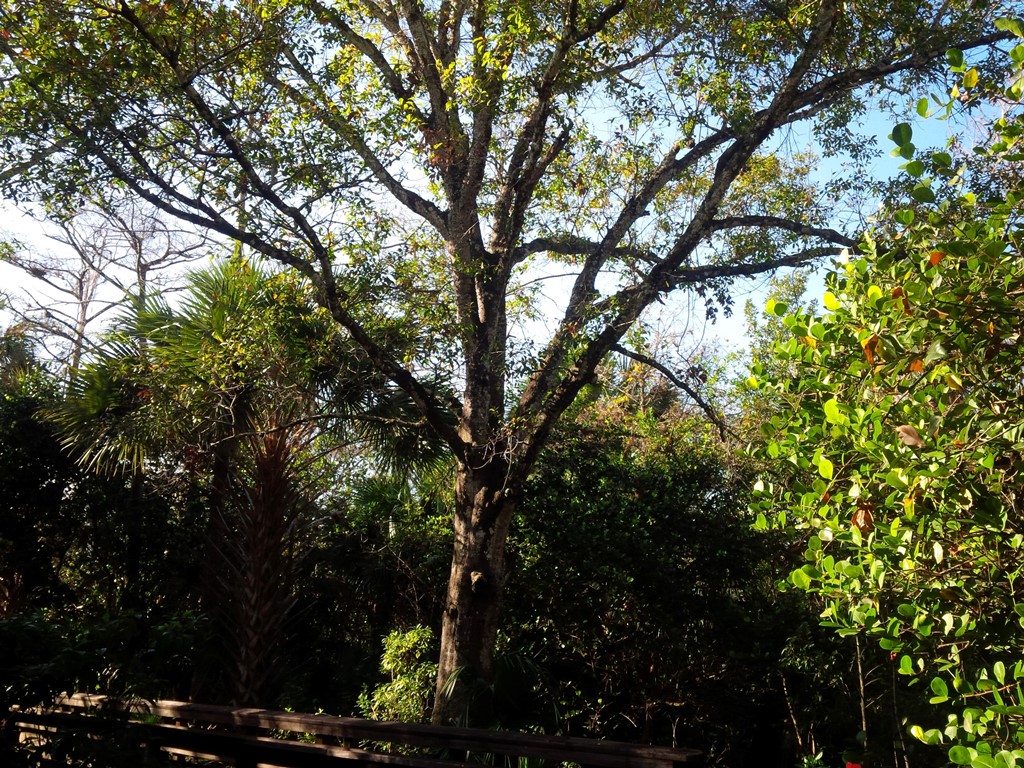
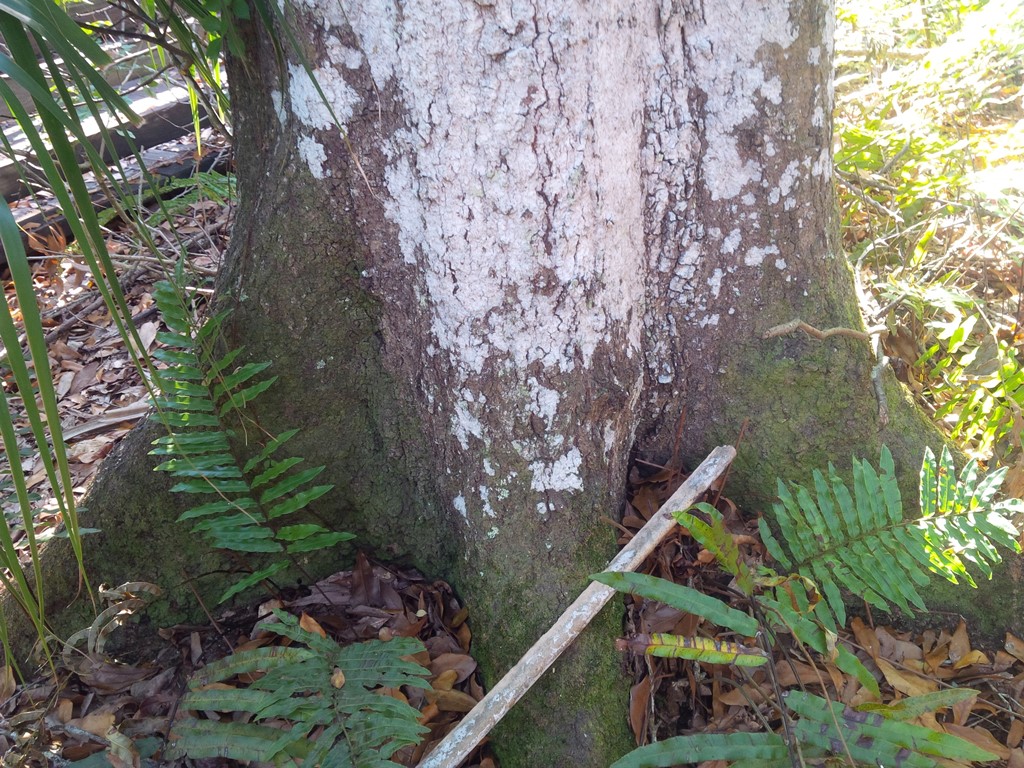
Some Q. virginiana grow big and heavy here, while others are more spare and open.

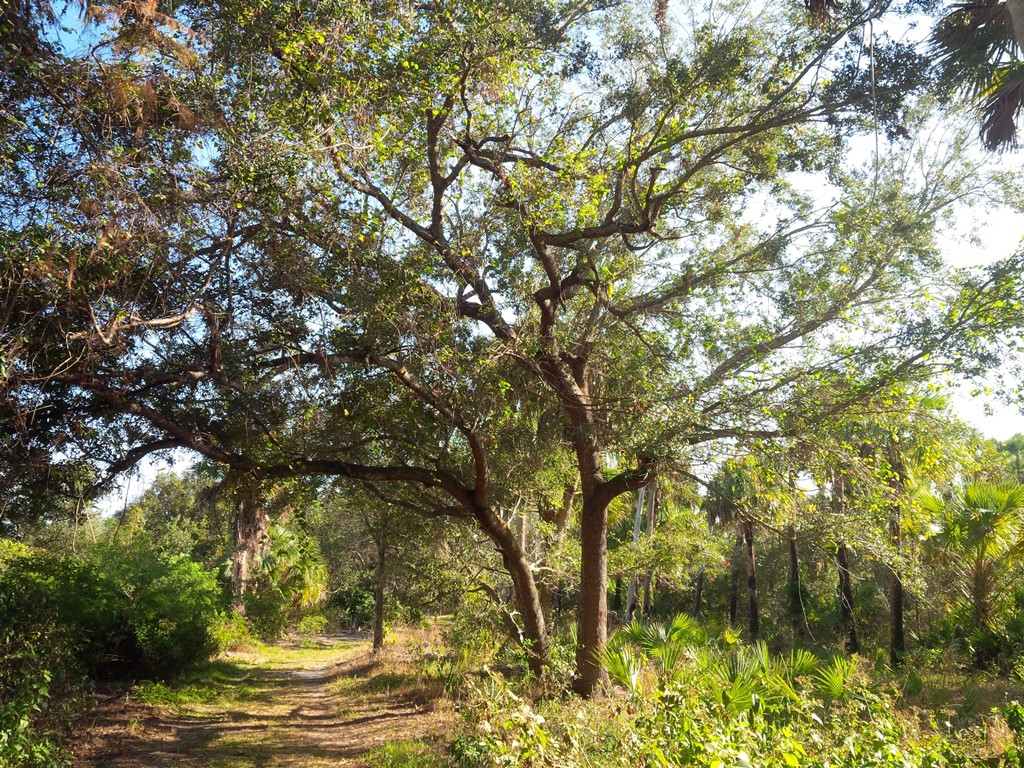
Here also grows at least one Q. myrtifolia near its maximum height, about 9-10 m, but quite spare and not readily photographed among the neighboring trees. Some leaves were at eye level, though.


What a pleasure it was to renew the acquaintance of these old friends, even if rather changed, over a quick 5 hours on a bright January day.
All photos © Dirk Giseburt
Content by the Same Author
The International Oak Society acknowledges the generous support of the following institutions:
Supporting Institutional Members



Standard Institutional Members