Editor's Picks

While working on a list of synonyms of European White...
Roderick Cameron
|
Aug 24, 2026
Report led by The Morton Arboretum will help prioritize oak...
Website Editor
|
Aug 06, 2026
Motivation
I live in the village of Dolné Dubové...
Jozef Čapkovič
|
Jul 20, 2026
Plant Focus
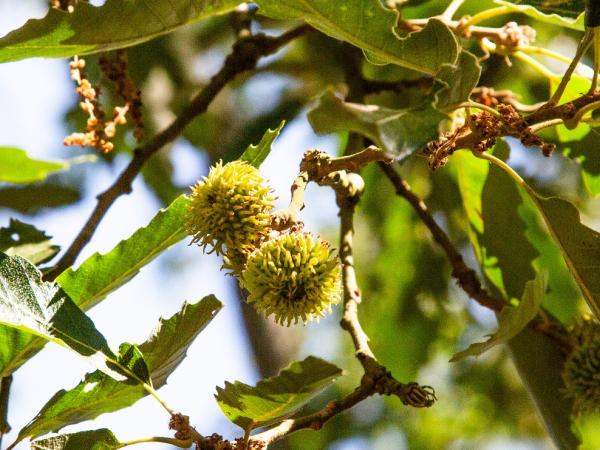
The only oak species endemic to Africa is rare in cultivation. It shouldn't be.
I was wondering what has sprouted from acorns we've collected in France and Spain during the tours before and after the 2012 conference. I have found some quite interesting seedlings. Did anyone have any luck germinating Quercus baloot from La Bergerette, or are there any other interesting seedlings worth seeing? For me, as I am highly interested in hybridisation between different species that don't occur together in their natural range, several produced interesting results, especially Q. galeanensis, Q. saltillensis and Q. wislizeni var. frutescens. Also, I am excited by the possibility of Mexican species being pollinated by hardy, North American types, as we have seen in Jardín Botánico de Iturrarán. I wonder if anyone has managed to grow seedlings from the big Q. rysophylla at Arboretum de Chocha, surrounded by other red oak species.
As I was squirreling around in the arboretums, I learned about many, many different oaks, and am still learning more each day I find some time to read some interesting stuff on the Internet.
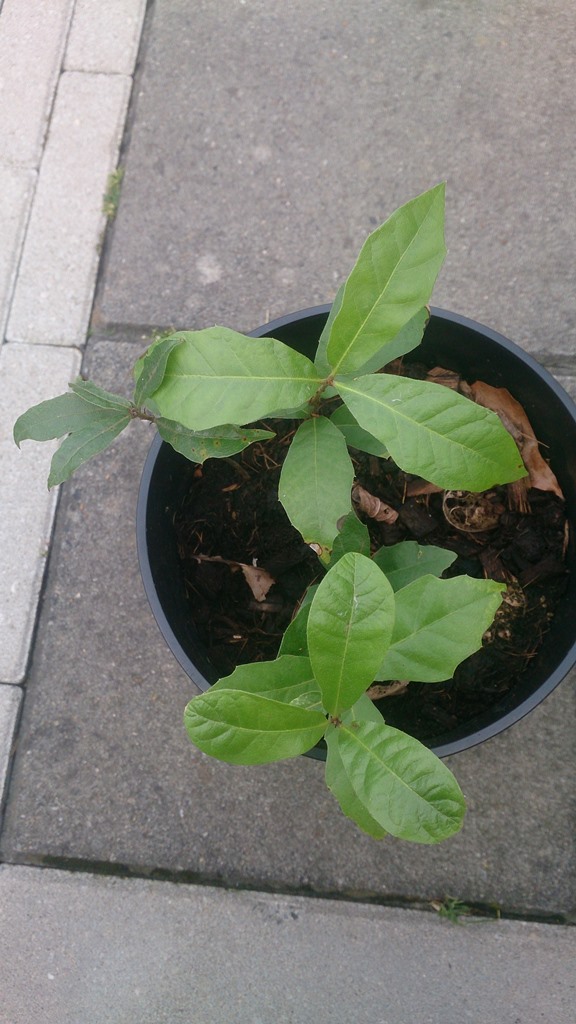 |
| Q. durifolia from Jardín Botánico de Iturrarán |
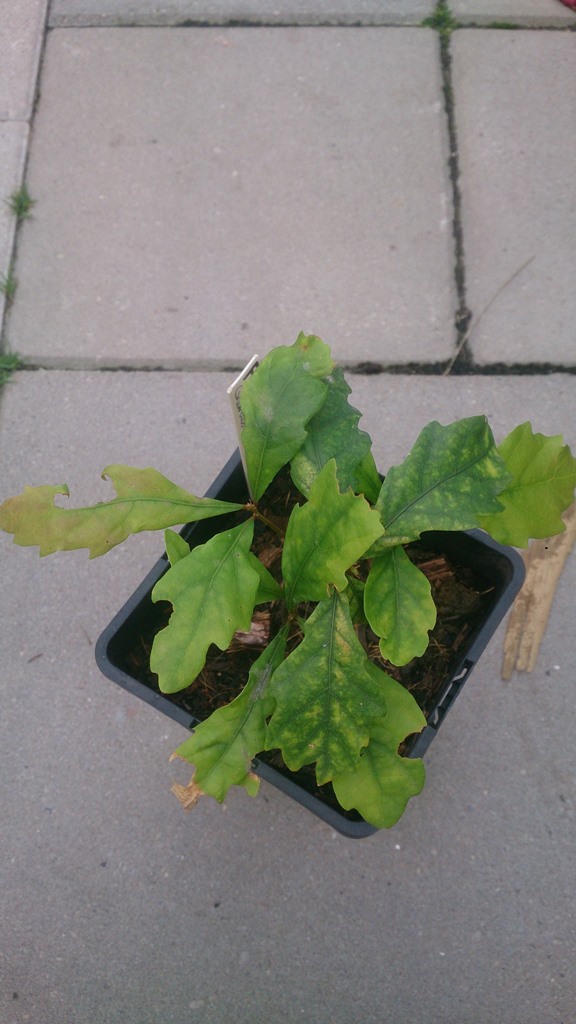 |
| Q. ×turneri from Jardín Botánico de Iturrarán |
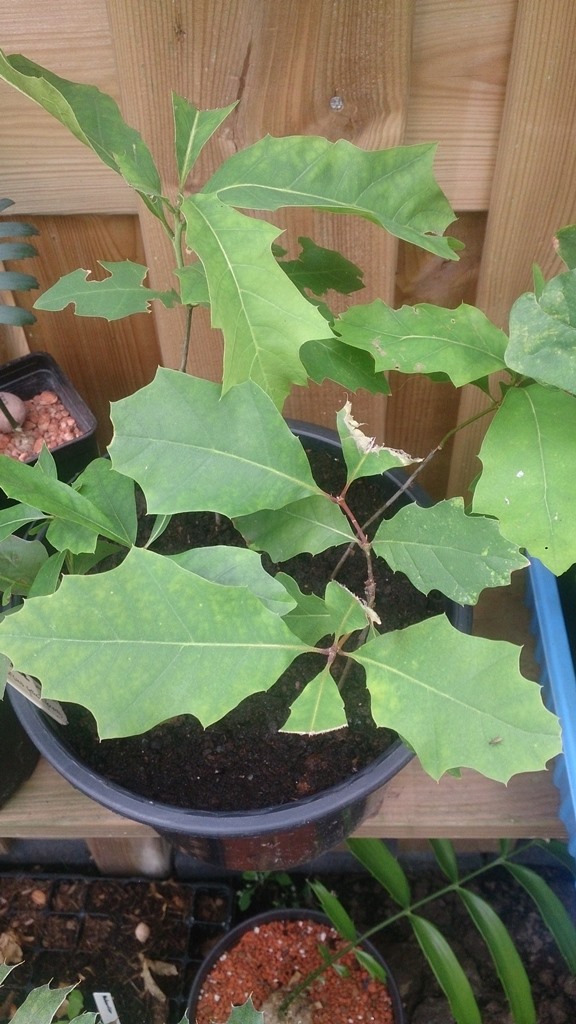 |
| Q. graciliformis from Arboretum de la Bergerette |
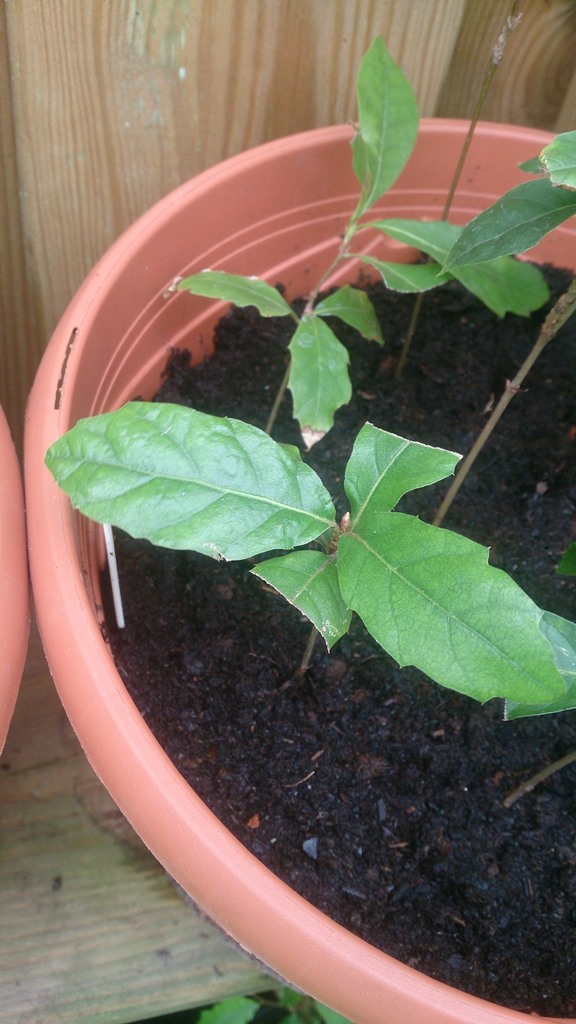 |
| Q. wislizeni var. frutescens from Arboretum des Pouyouleix |
 |
| Q. affinis from Arboretum de la Bergerette |
 |
| Q. galeanensis from Arboretum des Pouyouleix |
 |
| Q. pubescens subsp. subpyrenaica from Jardín Botánico de Iturrarán |
 |
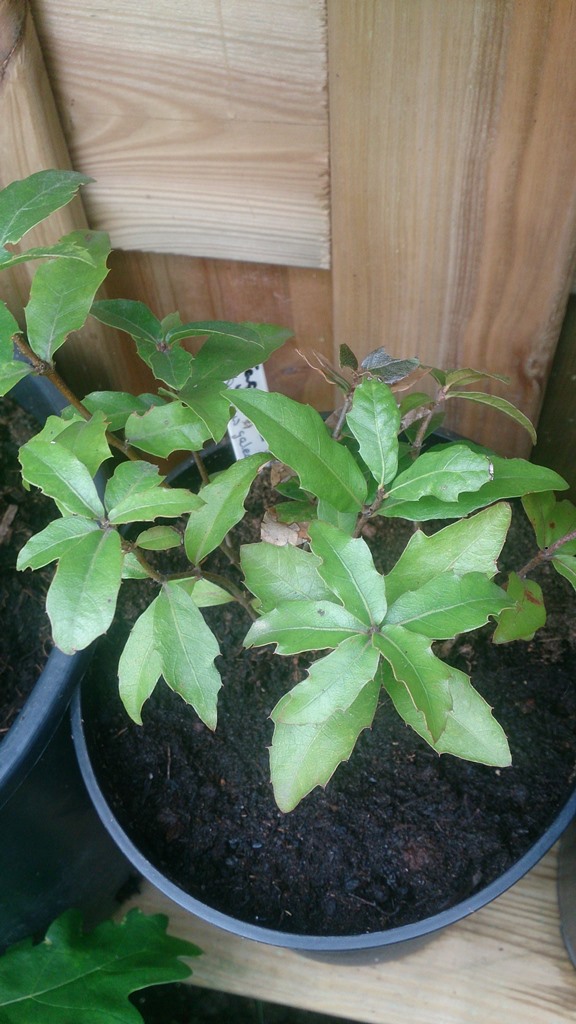
| Q. phillyreoides from Arboretum de la Bergerette. This one was different to the other ones. My speculation is that it has been pollinated by another oak. The other seedlings were straight Q. phillyreoides. I hope I can solve the mystery on this one. |
 |
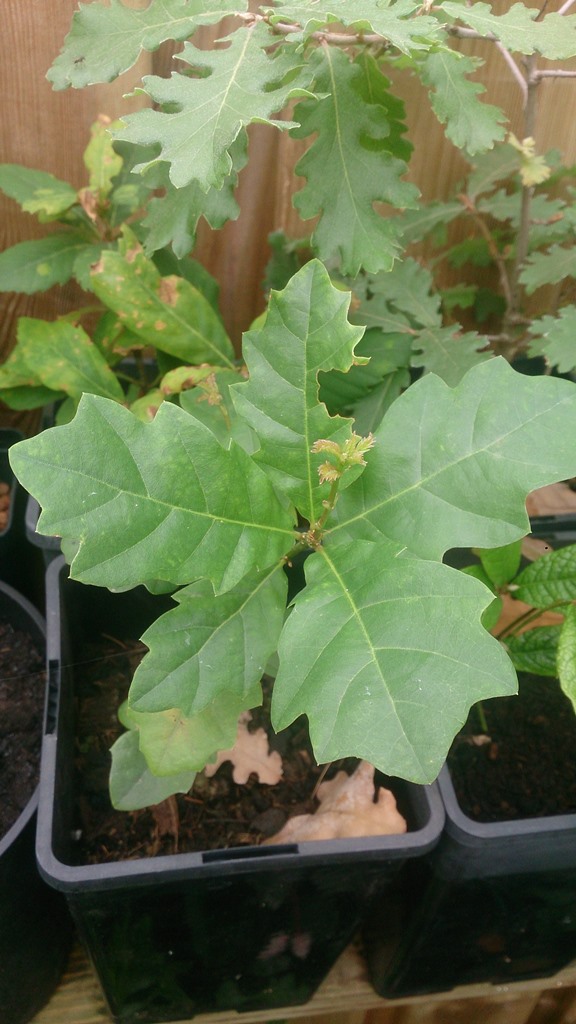
| Q. rugosa from Arboretum de Chocha, Ustaritz. Very likely pollinated by surrounding Q.robur, I suppose. |
 |
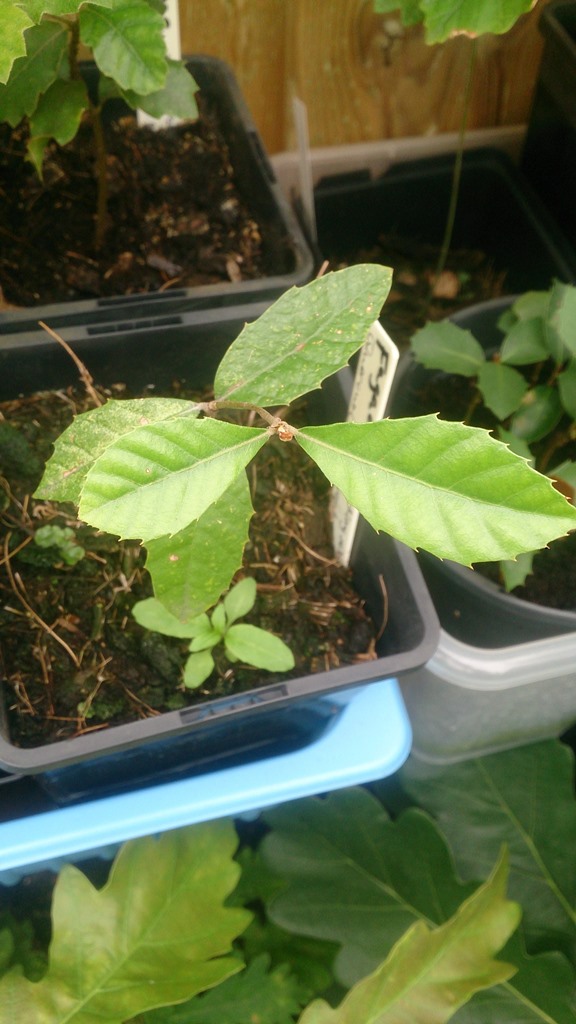
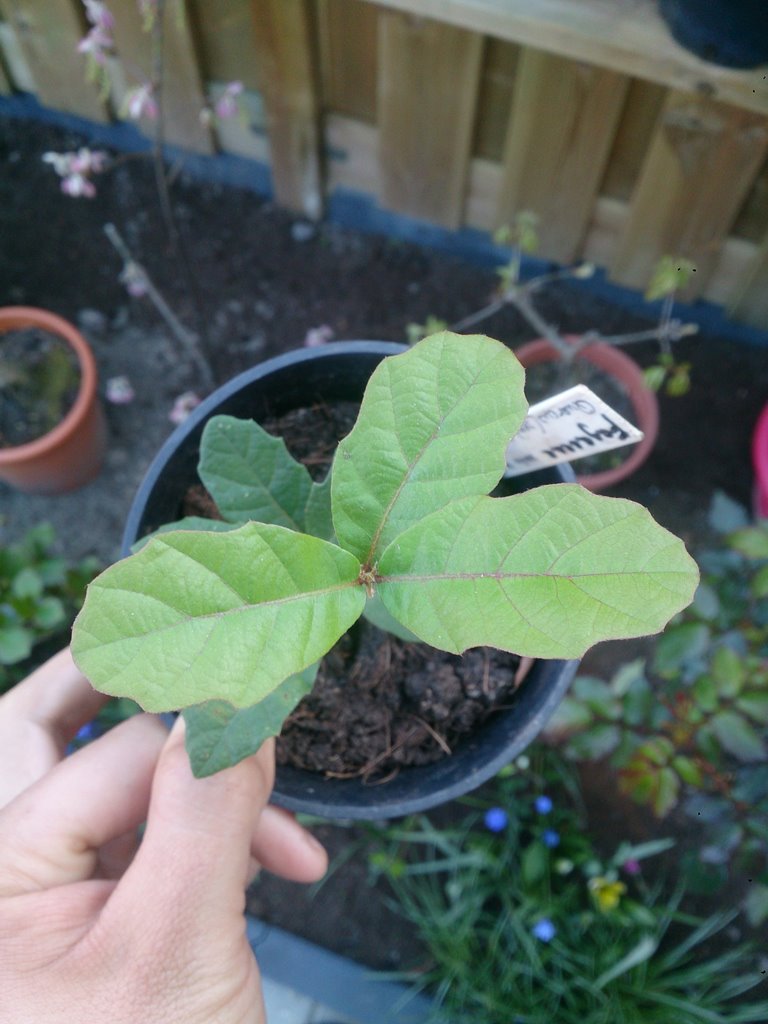
| Q. rysophylla from Arboretum de Chocha, Ustaritz. Surrounded by other red oak species. This seedling is very slow,and the sole survivor out of 40 acorns, I hope someone else had better luck. |
 |
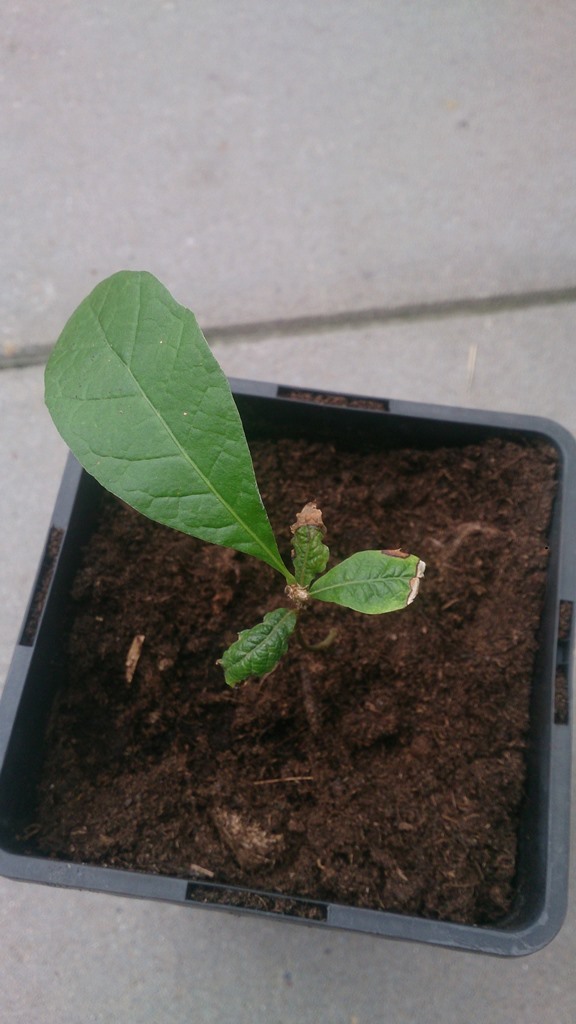
| Q. lusitanica from Jardín Botánico de Iturrarán, looks very good. |
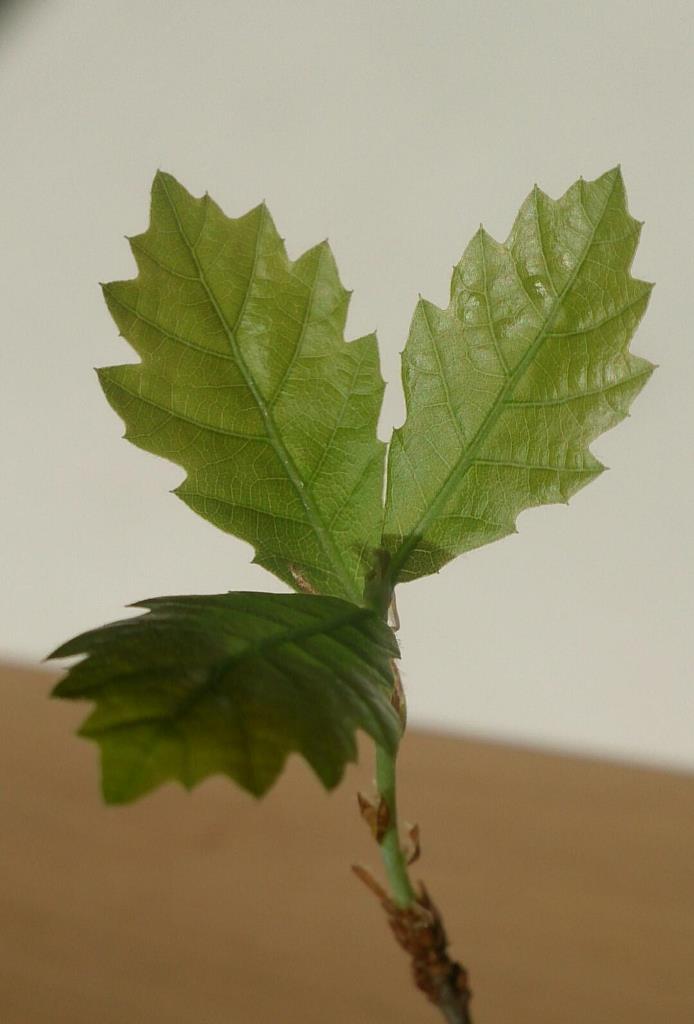 |
| Q. agrifolia from Arboretum de Chocha, Ustaritz. Clearly hybridised by another red oak. It is deciduous, but very nice leaf shape. Very slow growing, unfortunately. |
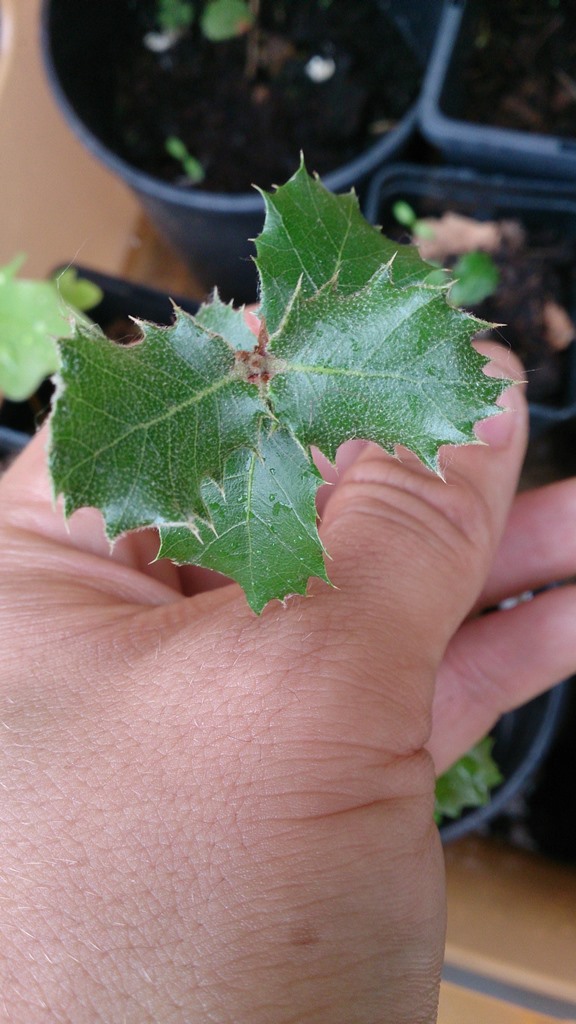 |
| Q. baloot from Arboretum de la Bergerette. It came very true from seed, slow growing, but has all the characteristics of the species. |
Jeroen Braakman
The Netherlands
The International Oak Society acknowledges the generous support of the following institutions:
Supporting Institutional Members




Standard Institutional Members