Editor's Picks

While working on a list of synonyms of European White...
Roderick Cameron
|
Aug 24, 2026
Report led by The Morton Arboretum will help prioritize oak...
Website Editor
|
Aug 06, 2026
Motivation
I live in the village of Dolné Dubové...
Jozef Čapkovič
|
Jul 20, 2026
Plant Focus
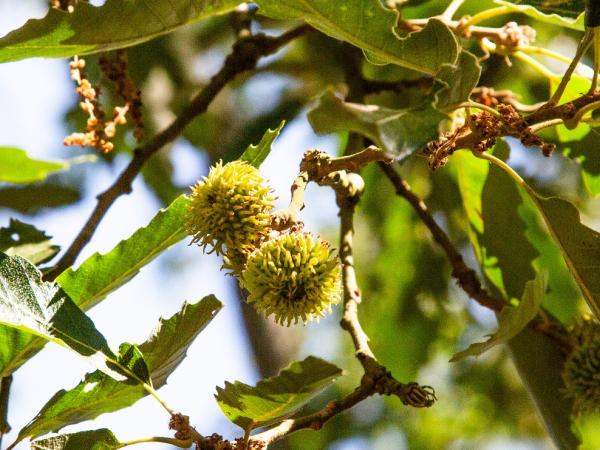
The only oak species endemic to Africa is rare in cultivation. It shouldn't be.
The widespread Quercus ilex L. dieback in Mediterranean forests: investigation of the causes at plant and ecosystem level
Presentation given at the XX International Botanical Conference, Madrid, Spain, July 21–27, 2024.
Authors:
Cecilia Brunetti1,2, Francesca Alderotti1,2, Fabiano Sillo1, Antonella Gori1,2, Mauro Centritto1, Francesco Ferrini1,2,3, Dalila Pasquini2, Matthias Saurer4, Filippo Bussotti2, Martina Pollastrini1,2, Raffaella M. Balestrini1, Paolo Cherubini4
Affiliations:
1. National Research Council of Italy (CNR), Institute for Sustainable Plant Protection, Sesto Fiorentino and Turin, Italy.
2. University of Florence, Department of Agriculture, Food, Environment and Forestry, Sesto Fiorentino, Italy.
3. National Biodiversity Future Center, Palermo Italy.
4. WSL Swiss Federal Institute for Forest, Snow and Landscape Research, Birmensdorf, Switzerland.
Abstract:
Over the past two decades, the occurrence of extreme climatic events in the Mediterranean region has increased, and this climatic pressure has contributed to the spread of vegetation dieback over several forest communities. Dieback has also affected Quercus ilex L., and since this decline has worsened over the last 15 years in many Mediterranean areas, it is crucial to develop effective tools for studying this phenomenon combining different scales of measurement. Our study was conducted over four years (2019-2023) in declining (D) and non-declining (ND) Q. ilex stands in southern Tuscany, assessing physiological and biochemical traits such as gas exchange, water relations, carbohydrate analysis in the wood, and xylem sap isotopic signal (δ18O). Dendrochronological and tree-ring δ13C analyses were combined to investigate the effects of previous droughts on tree growth and water-use efficiency. Lastly, changes in vegetation structure were assessed to monitor the impact of holm oak mortality at the ecosystem level. The results of physiological analyses showed that seasonality had a strong effect on these traits, with the main stress occurring during the summer of 2020, as evidenced by the lowest gas exchange values. According to the results of δ18O analyses, holm oaks mainly took up water from deep soil sources (bottom soil or ground water) owing to their deep-root systems, resulting in only slightly different ring-width patterns and a low responsiveness to seasonal climatic variations in both stands. By contrast, the δ13C results combined with SSR genotyping revealed a more conservative water use of the population in the ND stand, underlying the potential of combining these powerful tools for the selection of seed-bearing genotypes putatively tolerant to water deficit. Furthermore, significant changes in the understory plant community highlight that Q. ilex dieback strongly affects the vegetation structure of Mediterranean forests.

The International Oak Society acknowledges the generous support of the following institutions:
Supporting Institutional Members




Standard Institutional Members