Editor's Picks

While working on a list of synonyms of European White Oaks...
Roderick Cameron
|
Aug 24, 2026
Report led by The Morton Arboretum will help prioritize oak...
Website Editor
|
Aug 06, 2026
Motivation
I live in the village of Dolné Dubové...
Jozef Čapkovič
|
Jul 20, 2026
Plant Focus
The only oak species endemic to Africa is rare in cultivation. It shouldn't be.
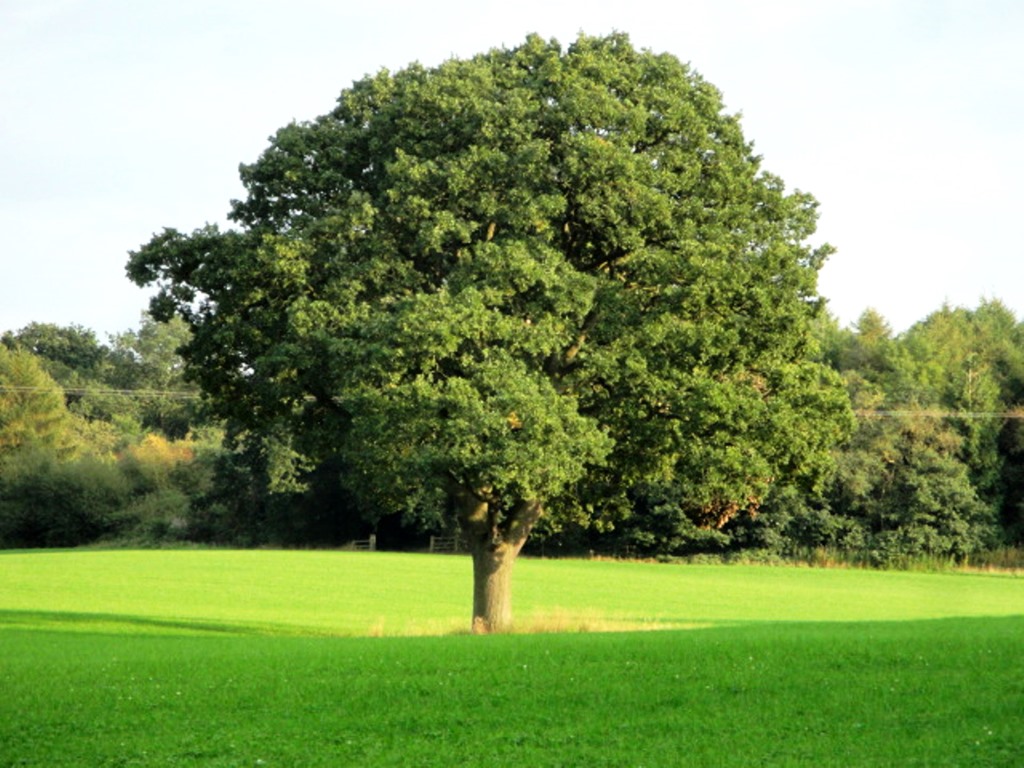
Recent website articles on historic oaks have focused on events related to World War 1, seeing as it took place a century ago (see The War Memorial Oak in Adelaide, Australia and The Gallipoli Oaks Project). But this year sees another important military memorial: June 18, 2015 marked the bicentenary of the Battle of Waterloo, where Napoleon was defeated by allied forces under the Duke of Wellington. I have not been able to find any extant oak that was planted to mark the Battle (Sir Walter Scott seems to have planted one at his home in Abbotsford, but it has not survived), so if any reader knows of one, please let us know. However, there is an oak that is very much connected to the bicentenary and it is being celebrated this year. It stands in Combermere Abbey (Shropshire, UK) which in 1820 was the home of Sir Stapleton Cotton, Viscount Combermere. Sir Stapleton fought under Wellington in the Peninsular War and when his second son was born he named him Wellington and asked the Duke to be his godfather. The baptism took place on Christmas Day 1820 and the Duke of Wellington stayed at Combermere Abbey as a guest for the occasion. Not content with just rolling out the red carpet for the visit of a military superstar, Sir Stapleton had a new wing added to his house for the occasion, complete with ballroom and dining room. It was, as might be expected, a rushed job, and the Wellington Wing was poorly constructed and did not withstand the ravages of time: it was abandoned after World War Two and demolished in the mid-70s. However, Wellington’s visit to Combermere was marked by a more lasting memorial. Mary, Viscountess Combermere, Sir Stapleton’s third wife, writing in 1866, described the event thus: “On the day before the Duke’s departure from Combermere he planted an oak in the park, when the ceremony was celebrated with great pomp and rejoicing. The tree has flourished admirably, and is both straight and strong.”[1] Today, at an age of almost 200 years, the oak is in its prime, and continues to grow “straight and strong”. To commemorate the 200th anniversary of Wellington’s greatest victory, the current owners of Combermere Abbey have raised 200 Quercus robur seedlings from the Wellington Oak’s acorns (harvested in 2013) and used some of them to plant a “Waterloo Memorial Walk” on the grounds and offer the rest for sale to visitors.
Further reading:
Combermere Abbey website
The Iron Duke's Visit to Combermere (on the Combermere Restoration website)
Plant a Piece of British History to Celebrate Waterloo
[1] Combermere, Mary Woolley Gibbings Cotton (Viscountess), and Knollys, William Wallingford. 1866. Memoirs and Correspondence of Field-Marshall Viscount Combermere, G.C.B., Etc., from His Family Papers. London: Hurst and Blackett. Vol. 2, p.6.
Content by the Same Author
The International Oak Society acknowledges the generous support of the following institutions:
Supporting Institutional Members




Standard Institutional Members