Editor's Picks

While working on a list of synonyms of European White...
Roderick Cameron
|
Aug 24, 2026
Report led by The Morton Arboretum will help prioritize oak...
Website Editor
|
Aug 06, 2026
Motivation
I live in the village of Dolné Dubové...
Jozef Čapkovič
|
Jul 20, 2026
Plant Focus
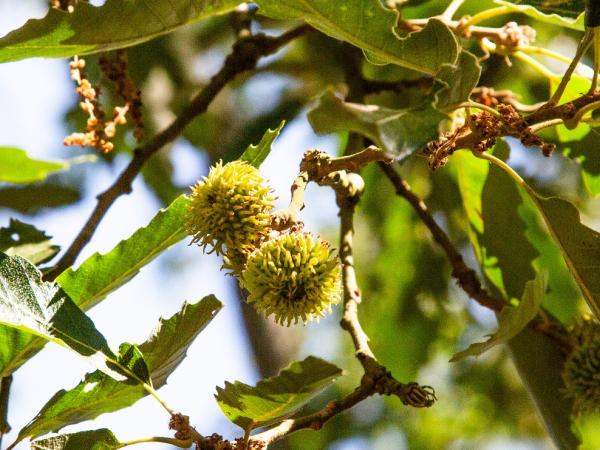
The only oak species endemic to Africa is rare in cultivation. It shouldn't be.
In the Volume 19, No. 1 issue of Oak News & Notes, I wrote of my crusade to find and preserve Q. ×introgressa. A quick recap: this hybrid was described from a single location in Missouri and soon after was destroyed for a building project. I suppose I felt the need to track this plant down as it was originally found only an hour away from my home, and the thought of losing it entirely was not something I could stand. Nearly five years of searching had led only to one questionable grafted tree and a score of undocumented seedlings that looked spot-on for Q. bicolor.
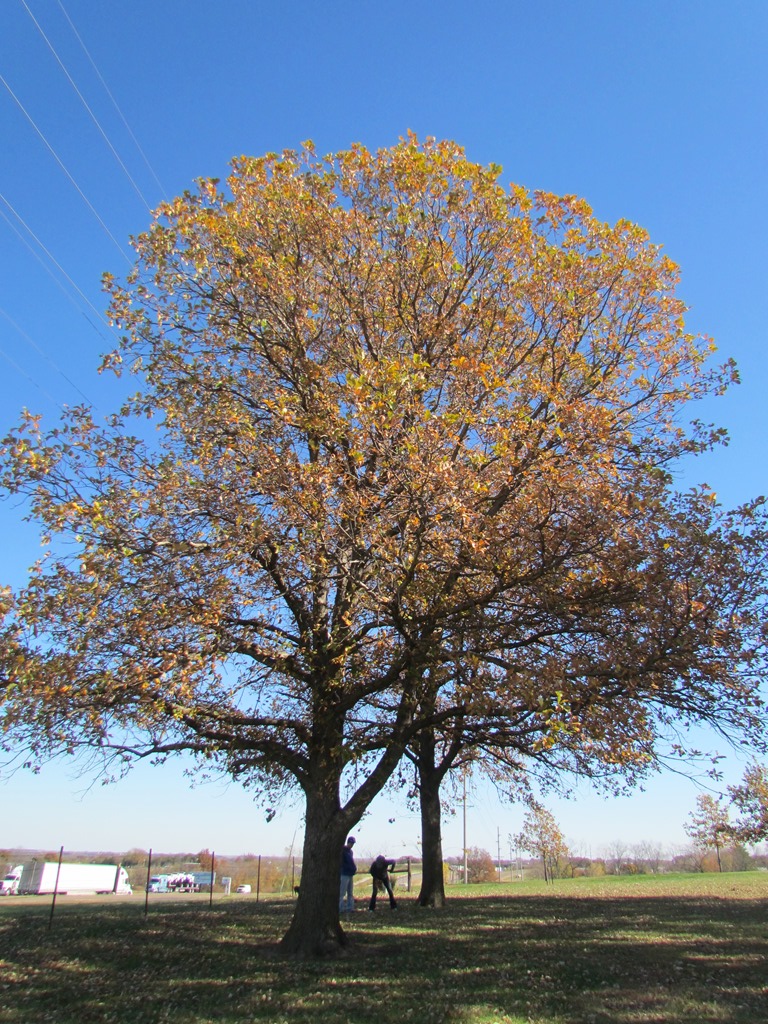
Following a tip from Phil Stark of Kansas, I made a phone call to Jon Petersen of Concordia, Missouri. Concordia is the town where the hybrid was originally found, so it was a promising lead. I met with Jon and his brother Mark, on their family farm just outside of Concordia. They showed me two trees growing together alongside the road that were planted by their father, Marvin, about 30 years prior. The brothers told me the story of their father, who worked at the Concordia rest stop where the trees were found. They told me that their dad dug these trees as seedlings from among the hybrid swarm. These were the first trees I had laid eyes on that had direct ties to the original site. Looking these trees over, it was apparent that both had an affinity towards Q. bicolor, but neither fit within the morphological range of pure Q. bicolor. I collected herbarium specimens from each tree, cupules, and a few remaining acorns.
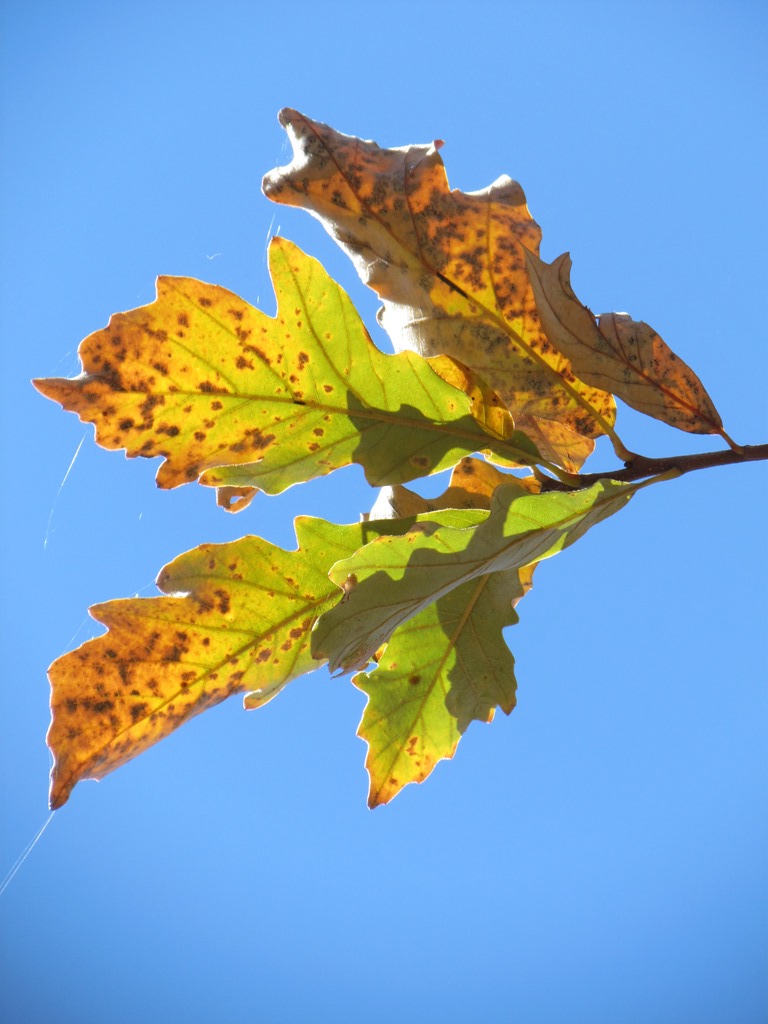
Mark mentioned that there was another one of these trees planted by their father on the property, and when Paul Thomson visited a couple of years ago, he thought that this tree was the most like the hybrid he described in the 1970s. We drove to that tree and it again showed an obvious affinity with Q. bicolor, but its leaves were smaller, and a bit narrower; more like the leaves Thomson showed on the plate in his original publication. I collected herbarium specimens from this tree and found a few cupules and one remaining acorn. The Petersen brothers have collected acorns from these trees for several years and sent them to the Missouri Department of Conservation’s State Nursery in Licking, MO to raise and sell to Missouri landowners. Unfortunately, this trip was too late in the season to find acorns still on the trees, and while the Petersens had picked up several gallons of acorns from these trees, I didn’t take any as it would have been impossible to determine which tree they came from. I collected scion from each tree and plan to graft a number of each of these trees so I can grow them much closer to home to evaluate them easier.
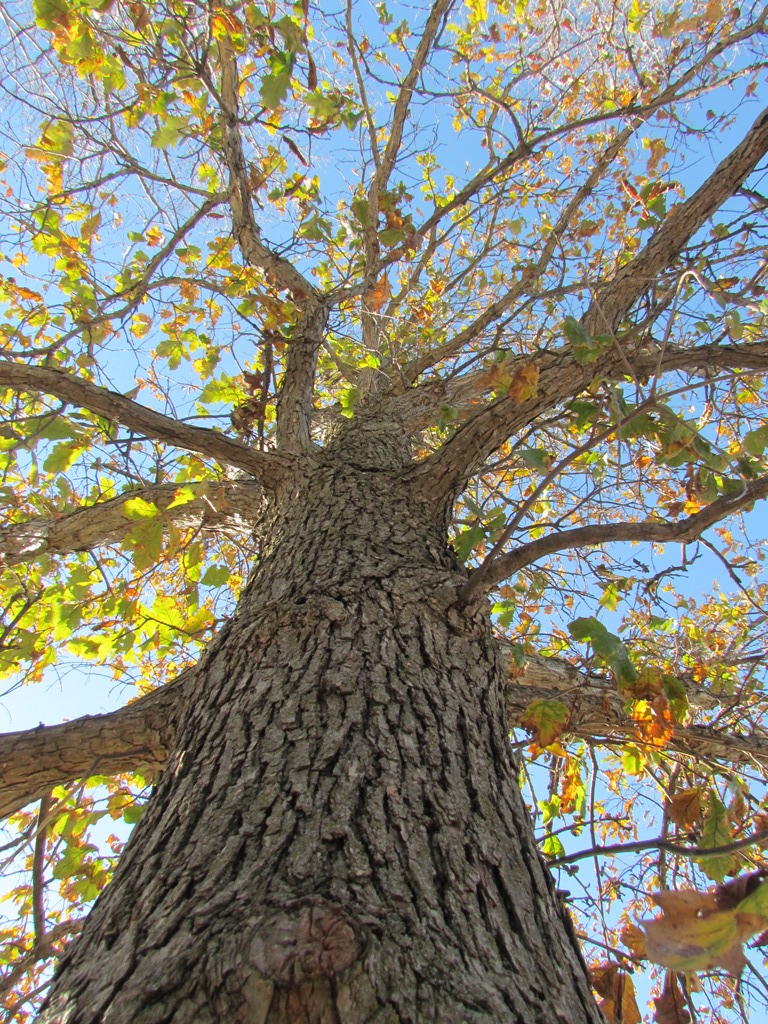
The most exciting part of this trip wasn’t finding these trees, which may sound odd. Of course, this was very exciting, but it was the tree that I almost didn’t see that was the best part. Many people have expressed a certain amount of doubt (myself included) about Thomson’s theory that one half of this hybrid was a hybrid itself (Q. prinoides × muehlenbergii). These two species can be difficult enough to tell apart and nearly impossible in a three-way hybrid. So, even though I had found trees that I could tie directly to the original collection site, there was no way to positively tell if the trees I had found were actually the three-way hybrid that Thomson named Q. ×introgressa.
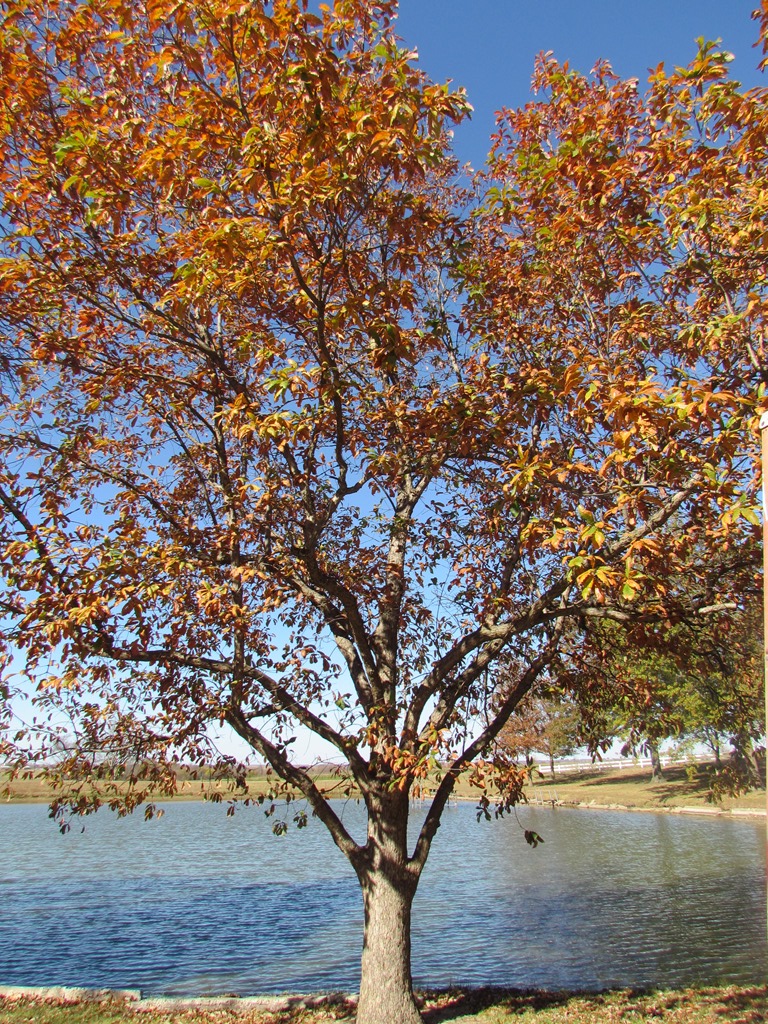
As I was leaving, Mark made an off-hand comment that his dad had also planted a chinkapin oak (Q. muehlenbergii) near the lake and wondered if I’d like to see it. It was on the way out so I said yes. As I casually looked at this “chinkapin” oak, it dawned on me that I was looking at a putative Q. prinoides × muehlenbergii hybrid, and better yet, the brothers think that their father took this tree from the original site. Admittedly, I am inferring some of this information as Marvin passed away in 2007 and I cannot ask him more specific details. However, if my suspicions check out, I believe it can be concluded with a certain amount of confidence that the three trees suspected as being Q. ×introgressa on the Petersen property are the real deal. I will await confirmation from real experts before I call this hunt a success. Andrew Hipp from The Morton Arboretum has agreed to analyze the specimens and report his findings. Perhaps this story will have a happy ending after all.
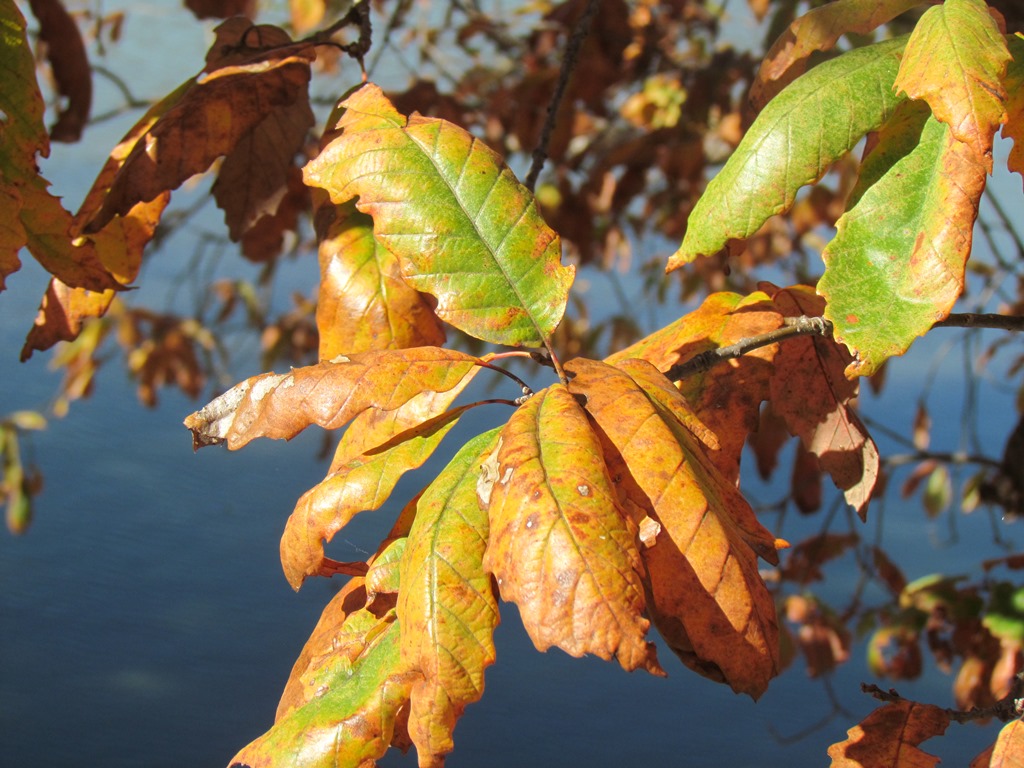
Below: Jon and Mark Petersen of Concordia, MO

Content by the Same Author
The International Oak Society acknowledges the generous support of the following institutions:
Supporting Institutional Members




Standard Institutional Members