Editor's Picks

While working on a list of synonyms of European White...
Roderick Cameron
|
Aug 24, 2026
Report led by The Morton Arboretum will help prioritize oak...
Website Editor
|
Aug 06, 2026
Motivation
I live in the village of Dolné Dubové...
Jozef Čapkovič
|
Jul 20, 2026
Plant Focus
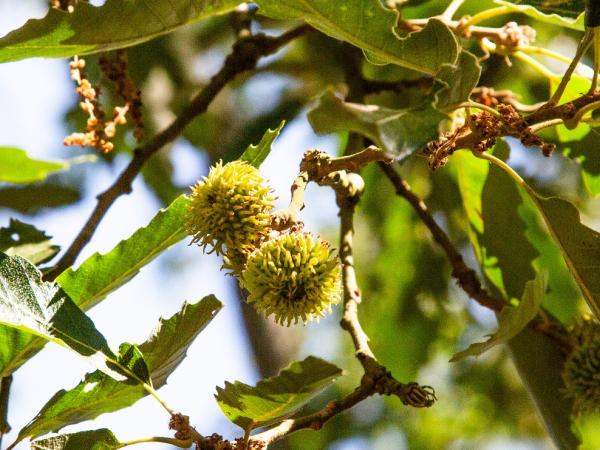
The only oak species endemic to Africa is rare in cultivation. It shouldn't be.
Global count reaches 3 trillion trees
There are roughly 3 trillion trees on earth, says a study published by Nature. That is 7 times more than previously estimated. Nevertheless, the authors estimate that 15 billion trees are cut each year and the world population of trees is estimated to have decreased by 46% since man started farming some 12000 years ago.
Logically, more trees means more carbon-storage capacity. However, the authors remain cautious about this. Carbon-storage capacity also depends on tree size. Large tree store more carbon than smaller, thinner trees. And tree density has an impact on size.
"A thourough understanding of total vegetative carbon storage capacity requires information about both the size and the number of individual trees," write the authors.
The full article can be viewed on line here.
Crowther, T. W. et al. Nature http://dx.doi.org/10.1038/nature14967 (2015).
Content by the Same Author
The International Oak Society acknowledges the generous support of the following institutions:
Supporting Institutional Members




Standard Institutional Members