Editor's Picks

While working on a list of synonyms of European White Oaks...
Roderick Cameron
|
Aug 24, 2026
Report led by The Morton Arboretum will help prioritize oak...
Website Editor
|
Aug 06, 2026
Motivation
I live in the village of Dolné Dubové...
Jozef Čapkovič
|
Jul 20, 2026
Plant Focus
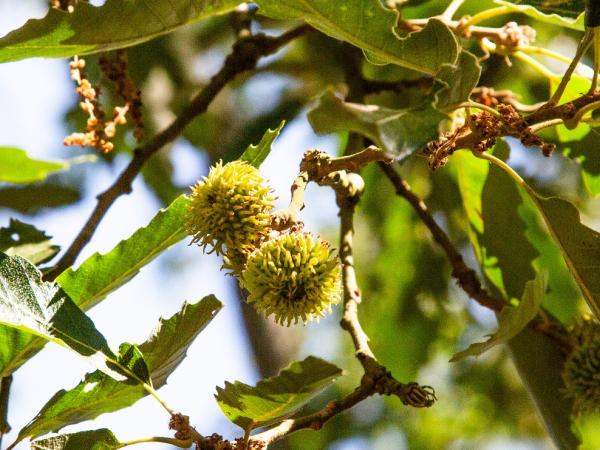
The only oak species endemic to Africa is rare in cultivation. It shouldn't be.
 Full text available for IOS members only. If you are a member, you need to log in.
 To create an account click here; if you have already registered, click here to become a member.
Individual articles can be purchased for U$S 10. If you would like to purchase an article, email a request to website@internationaloaksociety.org
Published May 2025 in International Oaks No. 36: 79–94
Abstract
The genus Quercus is made up of about 450 identified species plus some 180 named hybrids. The ability to hybridize is an evolutionary advantage for oaks that has allowed them to adapt to ecological niches and changing climate since they first appeared in the fossil record approximately 56 million years ago. Their propensity to hybridize has made them stand out as outliers in attempts to define the concept of “species”. Recent research makes trying to define a “species” even more complex, as awareness of a holobiome made up of a host species and its related organisms becomes more prevalent. Advances in molecular genetics have clarified the evolution and population structures of oaks. Entire genomes have now been sequenced, nuclear and chloroplast DNA is analyzed in greater detail, genes and their expression have been identified, and the role of epigenetic processes in altering gene expression is better understood.
This review presents some of the latest study results and ideas about what defines a “species”, as well as those pointing to hybridization and introgression as part of the explanation of how Quercus has come to be such a successful genus.
Keywords
epigenetics, holobiome, holobiont, gene flow, oak lineages, named hybrids
References
Abbott, R., D. Albach, S. Ansell, J.W. Arntzen, S.J.E. Baird, N. Bierne, J. Boughman, A. Brelsford, C.A. Buerkle, and R. Buggs. 2013. Hybridization and speciation. Journal of Evolutionary Biology 26(2): 229-246.
Ackermann, R.R., M.L. Arnold, M.D. Baiz, J.A. Cahill, L. Cortés‐Ortiz, B.J. Evans, B.R. Grant, P.R. Grant, B. Hallgrimsson, and R.A. Humphreys. 2019. Hybridization in human evolution: Insights from other organisms. Evolutionary Anthropology: Issues, News, and Reviews 28(4): 189-209.
Aguillon, S.M., T.O. Dodge, G.A. Preising, and M. Schumer. 2022. Introgression. Current Biology 32(16): R865-R868.
Aitken, S.N., and M.C. Whitlock, M.C. 2013. Assisted gene flow to facilitate local adaptation to climate change. Annual Review of Ecology, Evolution, and Systematics 44(1): 367-388.
Albarrán-Lara, A., M. Ochoa-Zavala, A. Torres-Miranda, I.M. De-la-Cruz, P. Dávila-Aranda, J.M. Peñaloza-Ramírez, H. Rodríguez-Correa, and K. Oyama. 2023. Long-distance dispersal drives the genetic variation and historical demography of Quercus magnoliifolia and Quercus resinosa (Fagaceae) in the Mexican highlands. Tree Genetics and Genomes 19(6): 45.
Alonso, C., M. Medrano, R. Pérez, A. Canto, V. Parra‐Tabla, and C.M. Herrera. 2019. Interspecific variation across angiosperms in global DNA methylation: phylogeny, ecology and plant features in tropical and Mediterranean communities. New Phytologist 224(2): 949-960.
An, M., Deng, M., Zheng, S.-S., Jiang, X.-L., and Song, Y.-G. (2017). Introgression Threatens the Genetic Diversity of Quercus austrocochinchinensis (Fagaceae), an Endangered Oak: A Case Inferred by Molecular Markers. Frontiers in Plant Science 8: 229.
Ashley, M.V., J.R. Backs, L. Kindsvater, and S.T. Abraham. 2018. Genetic variation and structure in an endemic island oak, Quercus tomentella, and mainland canyon oak, Quercus chrysolepis. International Journal of Plant Sciences 179(2): 151-161.
Ashley, M.V., S. Abraham, L.C. Kindsvater, D. Knapp, and K. Craft. 2010. Population structure and genetic variation of Island oak, Quercus tomentella Engelmann on Santa Catalina Island. In Oak Ecosystem Restoration Research on Catalina Island, California, edited by Denise A. Knapp, pp. 125-135. Avalon: Catalina Island Conservancy.
Ashley, M.V., J.R. Backs, and S.T. Abraham. 2016. Landscape and conservation genetics of the Island Oak, Quercus tomentella. International Oaks No. 27: 83-90.
Backs, J.R., and M.V. Ashley. 2016. Evolutionary history and gene flow of an endemic island oak: Quercus pacifica. American Journal of Botany 103(12): 2115-2125.
Backs, J.R., M. Terry, and M.V. Ashley. 2016. Using genetic analysis to evaluate hybridization as a conservation concern for the threatened species Quercus hinckleyi C.H. Muller (Fagaceae). International Journal of Plant Sciences 177(2): 122-131.
Backs, J.R., M. Terry, M. Klein, and M.V. Ashley. 2015. Genetic analysis of a rare isolated species: a tough little West Texas oak, Quercus hinckleyi CH Mull. Journal of the Torrey Botanical Society 142(4): 302-313.
Batalova, A.Y., and K.V. Krutovsky. 2023. Genetic and Epigenetic Mechanisms of Longevity in Forest Trees. International Journal of Molecular Sciences 24(12): 10403.
Bordenstein, S., and K. Theis. 2015. Host Biology in Light of the Microbiome: Ten Principles of Holobionts and Hologenomes. PLoS Biol 13(8): e1002226. https://doi.org/10.1371/journal.pbio.1002226
Borrel, G., J.-F. Brugère, S. Gribaldo, R.A. Schmitz, and C. Moissl-Eichinger. 2020) The host-associated archaeome. Nature Reviews Microbiology 18(11): 622-636.
Brown, R. 1871. Descriptions of some new or little-known species of oaks from North-west America. Ann. Mag. Nat. Hist. 7(40): 249-256. https://doi.org/10.1080/00222937108696362
Bueno, C.G., Y. Meng, and L. Neuenkamp. 2022. How can mycorrhizal symbiosis mediate multiple abiotic stresses in woody plants? Flora 295: 152146.
Burgarella, C., Z. Lorenzo, R. Jabbour-Zahab, R. Lumaret, E. Guichoux, R.J. Petit, A. Soto, and L. Gil. 2009. Detection of hybrids in nature: application to oaks (Quercus suber and Q. ilex). Heredity 102(5): 442-452.
Cannon, C.H., and R.J. Petit. 2020. The oak syngameon: more than the sum of its parts. New Phytologist 226(4): 978-983.
Cavender‐Bares, J., A. González‐Rodríguez, D.A.R. Eaton, A.L. Hipp, A. Beulke, and P.S. Manos. 2015. Phylogeny and biogeography of the American live oaks (Quercus subsection Virentes): a genomic and population genetics approach. Molecular Ecology 24(14): 3668-3687.
Chen, X.-D., X. Zhang, H. Zhang, T. Zhou, Y.-M. Zhao, J. Yang, and G.-F. Zhao. 2021. Genetic differentiation and demographic history of three Cerris oak species in China based on nuclear microsatellite makers. Forests 12(9): 1164.
Conte, L., C. Cotti, and G. Cristofolini. 2007. Molecular evidence for hybrid origin of Quercus crenata Lam. (Fagaceae) from Q. cerris L. and Q. suber L. Plant Biosystems 141(2): 181-193.
Coyne, J.A., and H.A. Orr. 2004. Speciation: a catalogue and critique of species concepts. In Philosophy of Biology: An Anthology, edited by Alex Rosenberg and Robert Arp, pp. 272-292. Wiley-Blackwell.
Deng, M., X.L. Jiang, A.L. Hipp, P.S. Manos, and M. Hahn, M. 2018. Phylogeny and biogeography of East Asian evergreen oaks (Quercus section Cyclobalanopsis; Fagaceae): Insights into the Cenozoic history of evergreen broad-leaved forests in subtropical Asia. Molecular Phylogenetics and Evolution 119: 170-181. https://doi.org/10.1016/j.ympev.2017.11.003
Denk, T., G.W. Grimm, A.L. Hipp, J.M. Bouchal, E.-D. Schulze, and M.C. Simeone. 2023. Niche evolution in a northern temperate tree lineage: biogeographical legacies in cork oaks (Quercus section Cerris). Annals of Botany 131(5): 769-787.
Denk, T., G.W. Grimm, P.S. Manos, M. Deng, and A.L. Hipp. 2017. An updated infrageneric classification of the oaks: review of previous taxonomic schemes and synthesis of evolutionary patterns. In Oaks physiological ecology. Exploring the functional diversity of genus Quercus L., pp. 13-38. Switzerland: Springer.
Eaton, D.A.R., A.L. Hipp, A. González-Rodríguez, and J. Cavender-Bares. 2015. Historical introgression among the American live oaks and the comparative nature of tests for introgression. Evolution: International Journal of Organic Evolution 69(10): 2587- 2601.
Fortini, P., R. Di Pietro, E. Proietti, S. Cardoni, L. Quaranta, and M.C. Simeone. 2024. Dissecting the continuum and unravelling the phylogeographic knot of plastid DNA in European white oaks (Quercus sect. Quercus): ancient signatures and multiple diversity reservoirs. European Journal of Forest Research 143(1): 107-127.
Gao, X. 2011. New oaks for the urban environment: propagation and selection of hybrid oaks. Master’s Thesis, Cornell University.
Gaylord, E.S., R.W. Preszler, and W.J. Boecklen. 1996. Interactions between host plants, endophytic fungi, and a phytophagous insect in an oak (Quercus grisea × Q. gambelii) hybrid zone. Oecologia 105: 336-342.
Goulet, B.E., F. Roda, and R. Hopkins. 2017. Hybridization in plants: old idea s, new techniques. Plant Physiology 173(1): 65-78.
Gray, M.W. 2017. Lynn Margulis and the endosymbiont hypothesis: 50 years later. Molecular Biology of the Cell 28(10): 1285-1287.
Hardin, J.W. 1975. Hybridization and introgression in Quercus alba. Journal of the Arnold Arboretum 56(3): 336-363.
Harrison, R.G., and E.L. Larson. 2014. Hybridization, introgression, and the nature of species boundaries. Journal of Heredity 105(S1): 795-809.
Harvati, K., and R.R. Ackermann. 2022. Merging morphological and genetic evidence to assess hybridization in Western Eurasian late Pleistocene hominins. Nature Ecology and Evolution 6(10): 1573-1585.
Hassani, M.A., P. Durán, and S. Hacquard, S. 2018. Microbial interactions withi n the plant holobiont. Microbiome 6: 1-17.
Hélardot, J.-L. Oaks of the World. http://oaksoftheworld.fr/hybridesaf.htm, http://oaksoftheworld.fr/hybridesgl.htm, http:// oaksoftheworld.fr/hybridesmr.htm, http://oaksoftheworld.fr/hybridessz.htm. Retrieved April 4, 2024.
Herrera, C.M., M. Medrano, P. Bazaga, C. and Alonso. 2022. Ecological significance of intraplant variation: Epigenetic mosaicism in Lavandula latifolia plants predicts extant and transgenerational variability of fecundity‐related traits. Journal of Ecology 110(11): 2555-2567.
Hipp, A.L., P.S. Manos, M. Hahn, M. Avishai, C. Bodénès, J. Cavender‐Bares, A.A. Crowl, M. Deng, T. Denk, S. Fitz‐Gibbon, O. Gailing, M.S.González‐Elizondo, A. González‐Rodríguez, G.W. Grimm, X. Jiang, A. Kremer, I. Lesur, J.D. McVay, C. Plomion, and H. Rodríguez‐Correa. 2020. Genomic landscape of the global oak phylogeny. New Phytologist 226(4): 1198-1212.
Ishida, T.A., K. Hattori, H. Sato, and M.T. Kimura. 2003. Differentiation and hybridization between Quercus crispula and Q. dentata (Fagaceae): insights from morphological traits, amplified fragment length polymorphism markers, and leafminer composition. American Journal of Botany 90(5): 769-776.
Johannes, F., and R.J. Schmitz. 2019.. Spontaneous epimutations in plants. New Phytologist 221(3): 1253-1259.
Kremer, A., A. Delcamp, I. Lesur, S. Wagner, C. Rellstab, E. Guichoux, and T. Leroy. 2024. Whole-genome screening for near-diagnostic genetic markers for four western European white oak species identification. Annals of Forest Science 81(1): 21.
Kremer, A., and A.L. Hipp. 2020. Oaks: an evolutionary success story. New Phytologist 226: 987-1011.
Lazcano, A., and J. Peretó. 2017. On the origin of mitosing cells: A historical appraisal of Lynn Margulis endosymbiotic theory. Journal of Theoretical Biology 434: 80-87.
Leroy, T., Q. Rougemont, J. Dupouey, C. Bodénès, C. Lalanne, C. Belser, K. Labadie, G. Le Provost, J. Aury, A. Kremer, and C. Plomion. 2020. Massive postglacial gene flow between European white oaks uncovered genes underlying species barriers. New Phytologist 226(4): 1183-1197.
Li, X., Y. Li, Y.A. El-Kassaby, and Y. Fang. 2024. Diverse leaf functional and phenotypic traits in hybrid oak individuals: Unveiling genetic variation, adaptation, and evolutionary potential within Quercus Species. Forest Ecology and Management 561: 121830.
Li, X., G. Wei, Y.A. El-Kassaby, and Y. Fang. 2021. Hybridization and introgression in sympatric and allopatric populations of four oak species. BMC Plant Biology 21(1): 1-14.
Lopez De Heredia, U., H. Sanchez, and A. Soto. 2018. Molecular evidence of bidirectional introgression between Quercus suber and Quercus ilex. iForest-Biogeosciences and Forestry 11(2): 338.
Lyu, D., J. Zajonc, A. Pagé, C.A.S. Tanney, A. Shah, N. Monjezi, L.A. Msimbira, M. Antar, Nazari, M., and R. Backer. 2021. Plant holobiont theory: the phytomicrobiome plays a central role in e volution and success. Microorganisms 9(4): 675.
Manos, P.S. 1993. Foliar trichome variation in Quercus section Protobalanus (Fagaceae). SIDA, Contributions to Botany (1993): 391-403.
Manos, P.S. 2023. Innovation and introgression in the continental radiations of Fagaceae across the Northern Hemisphere. International Oaks No. 34: 45-58.
Manos, P. S., and A.L. Hipp. 2021. An Updated Infrageneric Classification of the North American Oaks (Quercus Subgenus Quercus): Review of the Contribution of Phylogenomic Data to Biogeography and Species Diversity. Forests 12(6): 786.
Margulis, L. 1971. Symbiosis and evolution. Scientific American 225(2): 48-61.
Martin, F., A. Kohler, C. Murat, C. Veneault-Fourrey, and D.S. Hibbett. 2016. Unearthing the roots of ectomycorrhizal symbioses. Nature Reviews Microbiology 14(12): 760-773.
Matijašić, M., T. Meštrović, H. Čipčić Paljetak, M.Perić, A.Barešić, and D. Verbanac. 2020. Gut microbiota beyond bacteria— mycobiome, virome, archaeome, and eukaryotic parasites in IBD. International Journal of Molecular Sciences 21(8): 2668.
Matute, D.R., and B.S. Cooper. 2021. Comparative studies on speciation: 30 years since Coyne and Orr. Evolution 75(4): 764-778. https://doi.org/https://doi.org/10.1111/evo.14181
Mayr, E. 1942. Systematics and the Origin of Sspecies. Columbia University Press.
McCauley, R.A., A.C. Cortés-Palomec, and K. Oyama. 2019. Species diversification in a lineage of Mexican red oak (Quercus section Lobatae subsection Racemiflorae)—the interplay between distance, habitat, and hybridization. Tree Genetics and Genomes 15(2): 1.
McVay, J.D., A.L. Hipp, and P.S. Manos. 2017. A genetic legacy of introgression confounds phylogeny and biogeography in oaks. Proceedings of the Royal Society of London B: Biological Sciences 284(1854): 20170300.
Mead, A., S. Fitz-Gibbon, J. Knapp, and V. Sork. 2024. Comparison of conservation strategies for California Channel Island Oak (Quercus tomentella) using climate suitability predicted from genomic data. Evolutionary Applications 17(12):e70057. https:// onlinelibrary.wiley.com/doi/10.1111/eva.70057 2024-2025.
Medrano, M., C. Alonso, P. Bazaga, E. López, and C.M. Herrera. 2020. Comparative genetic and epigenetic diversity in pairs of sympatric, closely related plants with contrasting distribution ranges in south-eastern Iberian mountains. AoB Plants 12(3): plaa013.
Meneganzin, A., and M. Bernardi. 2023. Were Neanderthals and Homo sapiens ‘good species’? Quaternary Science Reviews 303: 107975.
Mesny, F., S. Hacquard, and B.P.H.J. Thomma. 2023. Co‐evolution within the plant holobiont drives host performance. EMBO Reports 24(9): e57455.
Moran, E.V, J. Willis, and J.S. Clark. 2012. Genetic evidence for hybridization in red oaks (Quercus sect. Lobatae, Fagaceae). American Journal of Botany 99(1): 92-100.
Nagamitsu, T., K. Uchiyama, A. Izuno, H. Shimizu, and A. Nakanishi. 2020. Environment‐dependent introgression from Quercus dentata to a coastal ecotype of Quercus mongolica var. crispula in northern Japan. New Phytologist 226(4): 1018-1028.
Neophytou, C.H., G. Palli, A. Dounavi, and F.A. Aravanopoulos. 2007. Morphological differentiation and hybridization between Quercus alnifolia Poech and Quercus coccifera L. (Fagaceae) in Cyprus. Silvae Genetica 56(1-6): 271-277.
Nixon, K.C., and C.H. Muller. 1994. New names in California oaks. Novon 391-393.
Ortego, J., Gugger, P. F., and Sork, V. L. (2018). Genomic data reveal cryptic lineage diversification and introgression in Californian golden cup oaks (section Protobalanus). New Phytologist 218(2): 804-818.
Ottaviani, G., J. Martínková, T. Herben, J.G. Pausas, and J. Klimešová. 2017. On plant modularity traits: functions and challenges. Trends in Plant Science 22(8): 648-651.
Palmer, E.J. 1948. Hybrid oaks of North America. Journal of the Arnold Arboretum 29(1): 1-48.
Pérez-Pedraza, A., H. Rodríguez-Correa, S. Valencia-Ávalos, C.A. Torres-Miranda, M. Arenas-Navarro, and K. Oyama, K. 2021. Effect of hybridization on the morphological differentiation of the red oaks Quercus acutifolia and Quercus grahamii (Fagaceae). Plant Systematics and Evolution 307(3): 37.
Petit, R.J., C. Bodénès, A. Ducousso, G. Roussel, and A. Kremer. 2004. Hybridization as a mechanism of invasion in oaks. New Phytologist 161(1): 151164.
Qi, M., F.K. Du, F. Guo, K. Yin, and J. Tang, J. 2024. Species identification through deep learning and geometrical morphology in oaks (Quercus spp.): Pros and cons. Ecology and Evolution 14(2): e11032.
Rauschendorfer, J., R. Rooney, and C. Külheim. 2022. Strategies to mitigate shifts in red oak (Quercus sect. Lobatae) distribution under a changing climate. Tree Physiology 42(12): 2383-2400.
Reutimann, O., B. Dauphin, A. Baltensweiler, F. Gugerli, A. Kremer, and C. Rellstab. 2023. Abiotic factors predict taxonomic composition and genetic admixture in populations of hybridizing white oak species (Quercus sect. Quercus) on regional scale. Tree Genetics and Genomes 19(3): 22.
Roughgarden, J. 2023. Holobiont evolution: Population theory for the hologenome. The American Naturalist 201(6): 763-778.
Sahu, P.K., and S. Mishra. 2021. Effect of hybridization on endophytes: the endo-microbiome dynamics. Symbiosis 84(3): 369-377.
Sánchez‐Acevedo, V., A. González‐Rodríguez, C.A. Torres‐Miranda, H. Rodríguez‐Correa, S. Valencia‐Á., I.M. De‐la‐Cruz, and K. Oyama. 2023. Nuclear and chloroplast DNA phylogeography reveals high genetic diversity and postglacial range expansion in Quercus mexicana. American Journal of Botany 110(12): e16251.
Šijačić-Nikolić, M., I. Kerkez Janković, M. Jovanović, J. Milovanović, and J. Aleksić. 2023. Genetic Diversity and Genetic Structure of Three Sympatric Oak Species in Serbian Landscape of Outstanding Features “Kosmaj” Assessed by Nuclear Microsatellites. South-East European Forestry: SEEFOR 14(2): 117-127.
Simeone, M.C., S. Cardoni, R. Piredda, F. Imperatori, M. Avishai, G.W. Grimm, and T. Denk. 2018. Comparative systematics and phylogeography of Quercus Section Cerris in western Eurasia: inferences from plastid and nuclear DNA variation. PeerJ 6: e5793.
Slama, A., S. Fkiri, F. Mezni, B. Stiti, J. Salcedo-Castro, I. Touhami, M. Khammassi, A. Khaldi, and Z. Nasr. 2023. Effect of mycorrhization on growth and physiology performance of Quercus species. Notulae Botanicae Horti Agrobotanici Cluj-Napoca 51(4): 13290.
Smithson, M.W., M.F. Dybdahl, and S.L. Nuismer. 2019. The adaptive value of epigenetic mutation: limited in large but high in small peripheral populations. Journal of Evolutionary Biology 32(12): 1391-1405.
Song, Y., M. Deng, A.L. Hipp, and Q. Li. 2015. Leaf morphological evidence of natural hybridization between two oak species (Quercus austrocochinchinensis and Q. kerrii) and its implications for conservation management. European Journal of Forest Research 134: 139-151.
Sousa, F., M.B. Viegas, J. Costa, I. Marques, F. Pina-Martins, F. Simões, J. Matos, M. Glushkova, C. Miguel, and M.M. Veloso. 2023. Haplotype diversity patterns in Quercus suber (Fagaceae) inferred from cpDNA sequence data. Plant Systematics and Evolution 309(6): 42.
Sullivan, A. R., Owusu, S. A., Weber, J. A., Hipp, A. L., and Gailing, O. (2016). Hybridization and divergence in multi-species oak (Quercus) communities. Botanical Journal of the Linnean Society 181(1): 99-114.
Tamaki, I., and M. Okada. 2014. Genetic admixing of two evergreen oaks, Quercus acuta and Q. sessilifolia (subgenus Cyclobalanopsis), is the result of interspecific introgressive hybridization. Tree Genetics and Genomes 10(4): 989-999.
Terry, M., and S. Scoppa. 2010. Quercus hinckleyi × Q. vaseyana, a putative hybrid from Presidio County, Texas. Phytologia 92: 400-406.
Tóth, E.G., K. Cseke, A. Benke, B.B. Lados, V.T. Tomov, P. Zhelev, J.D. Kámpel, A. Borovics, and Z.A. Köbölkuti. 2023. Key triggers of adaptive genetic variability of sessile oak [Q. petraea (Matt.) Liebl.] from the Balkan refugia: outlier detection and association of SNP loci from ddRAD-seq data. Heredity 131(2): 130-144.
Trelease, W. 1917. Naming American hybrid oaks. Proceedings of the American Philosophical Society 56(1): 44-52.
Tucker, J.M. 1990. Hybridization in California oaks. Fremontia 18: 13-19.
Turland, N.J., J.H. Wiersema, F.R. Barrie, W. Greuter, D.L. Hawksworth, P.S.Herendeen, S. Knapp, W.-H. Kusber, D.-Z. Li, K. Marhold, T.W. May, J. McNeill, A.M. Monro, J. Prado, M.J. Price, and G.F. Smith, eds. 2018. International Code of Nomenclature for algae, fungi, and plants (Shenzhen Code) adopted by the Nineteenth International Botanical Congress Shenzhen, China, July 2017. Regnum Vegetabile 159. Glashütten: Koeltz Botanical Books. DOI https://doi.org/10.12705/Code.2018
Uslu, E., G. Kibar, and M.T. Babaç. 2021. Genetic Diversity of Some Quercus (Fagaceae) and their Putative Hybrids in Turkey. Journal of Innovative Approaches in Science Research 5(2): 29-44.
Vázquez, F.M., S. Ramos, E. Doncel, A.J. Coombes, and M. Rodríguez-Coombes. 2003. New Oak Hybrids from Spain. International Oaks No. 14: 49-60.
Wang, L-L., Y. Li, S.-S. Zheng, G. Kozlowski, J. Xu, and Y.-G. Song. 2024. Complete Chloroplast Genomes of Four Oaks from the Section Cyclobalanopsis Improve the Phylogenetic Analysis and Understanding of Evolutionary Processes in the Genus Quercus. Genes 15(2): 230.
Wu, C. 2001. The genic view of the process of speciation. Journal of Evolutionary Biology, 14(6): 851-865.
Zhou, B-F., S. Yuan, A.A. Crowl, Y.-Y. Liang, Y. Shi, X.Y. Chen, Q.-Q. An, M. Kang, P.S. Manos, and B. Wang. 2022. Phylogenomic analyses highlight innovation and introgression in the continental radiations of Fagaceae across the Northern Hemisphere. Nature Communications 13(1): 1320.
The International Oak Society acknowledges the generous support of the following institutions:
Supporting Institutional Members




Standard Institutional Members