Editor's Picks

While working on a list of synonyms of European White Oaks...
Roderick Cameron
|
Aug 24, 2026
Report led by The Morton Arboretum will help prioritize oak...
Website Editor
|
Aug 06, 2026
Motivation
I live in the village of Dolné Dubové...
Jozef Čapkovič
|
Jul 20, 2026
Plant Focus
The only oak species endemic to Africa is rare in cultivation. It shouldn't be.
Quercus ‘Zehra’ is a cultivar, a hybrid between Q. rysophylla and an unknown species, probably Q. falcata, found at the Karaca Arboretum.
On Sunday, 20 September 2026, the day before the International Oak Society's Tour of Western Anatolia officially began, I set out on a day trip to find the original tree of Quercus ‘Zehra’ at the Karaca Arboretum in Yalova, Türkiye.
I was in Istanbul for the IOS tour, which would open the following day with a meeting of the Global Conservation Consortium for Oak (GCCO) at the Faculty of Forestry of Istanbul University. I had arrived a day early, as had fellow IOS member Roderick Cameron. It seemed the perfect opportunity to revisit an arboretum I had last seen in 2013—and, hopefully, to locate a tree I had failed to find on that earlier visit.
In the weeks preceding our visit, I had emailed several contacts in Türkiye, as well as the arboretum's general email address, hoping to obtain information about the tree's location. Unfortunately, none of these enquiries yielded useful information, and the arboretum itself did not reply.
Roderick and I decided to make the journey anyway. We took the ferry from Yenikapı in Istanbul across the Sea of Marmara to Yalova, then continued by minibus to Karaca Arboretum.
Once there, we found the tree almost immediately.
A remarkable tree—and a surprising label
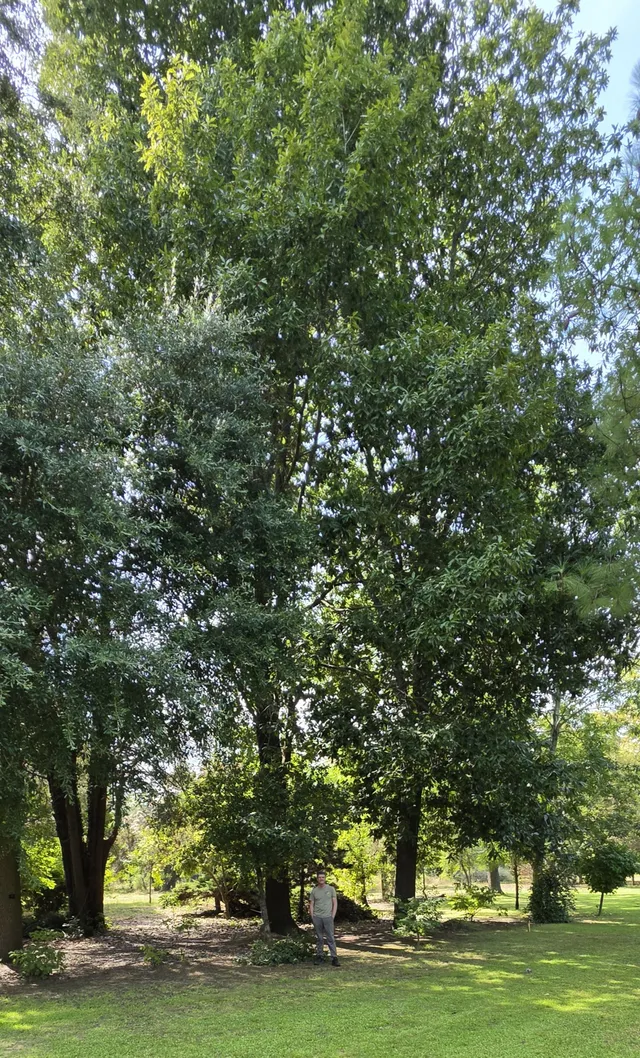
The original Quercus ‘Zehra’ is an impressive specimen. Yet the most surprising was the label attached to it: “Quercus phellos.”
The tree is clearly the original specimen, or ortet, of Quercus ‘Zehra’. The history of ‘Zehra’ is closely linked to the International Oak Society. The cultivar was discovered during an earlier IOS visit to Türkiye in October 2002. Dirk Benoit, the now retired nurseryman behind Pavia Nursery, documented the journey in his article “Op zoek naar eiken van Istanbul naar Dalaman”, published in Belgische Dendrologie Belge in 2003.
Greater detail on the history of Quercus ‘Zehra’ is given in Allen Coombes's article “Tree of the Year: Quercus rysophylla Weatherby”, published in the 2015 Yearbook of the International Dendrology Society (pp. 22–52).
According to the cultivar entry, Hayrettin Karaca (1922–2020), a Turkish businessman, environmentalist and the founder of the arboretum, arranged for propagation material to be sent to Pavia Nursery the winter following the IOS tour and asked that the selection be named after his daughter, Zehra.
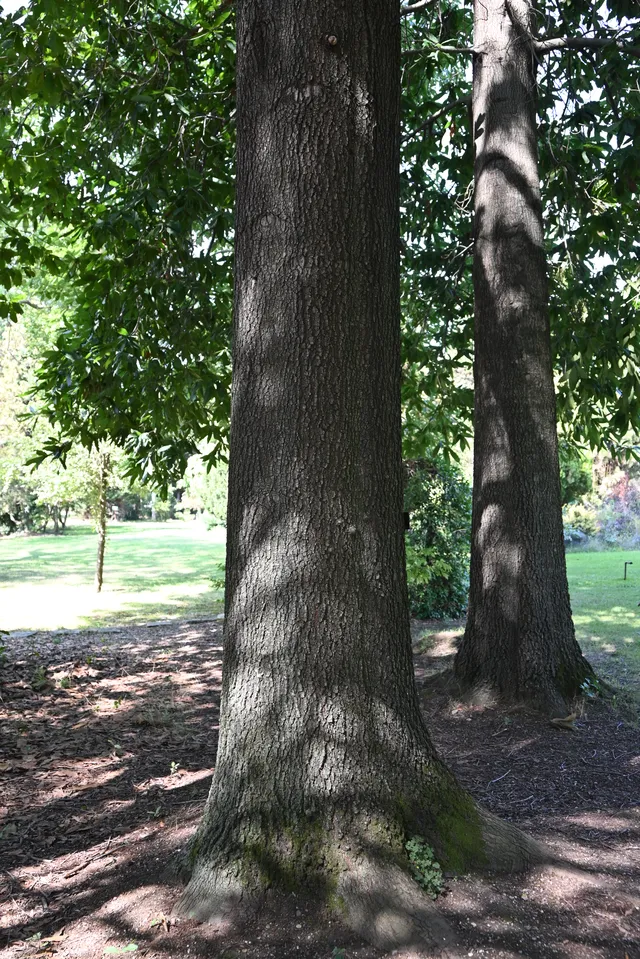
The original tree was already approximately 10 metres tall when Allen collected the standard specimen on 27 October 2002. Nearly 24 years later, when Roderick and I returned to Karaca Arboretum, the tree had reached an estimated height of 26 metres and a trunk girth of around 250 cm.
The incorrect label raises the possibility that the arboretum's current management may not be aware of the identity and horticultural significance of this remarkable tree.
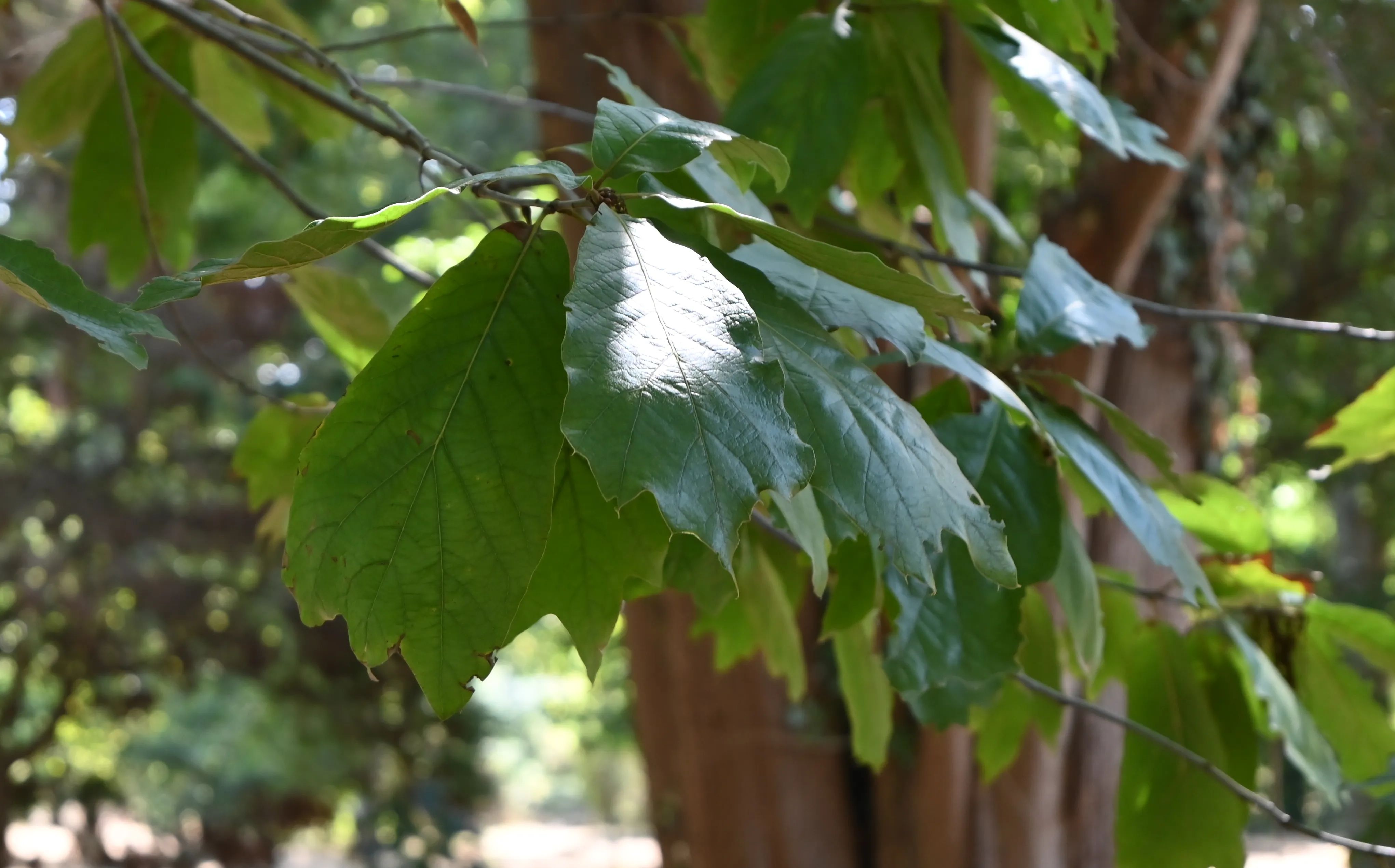
The neighboring oaks
The tree is in a group of trees that includes three other oaks. Walking along the dirt road coming from the main entrance, with the trees on our left, we encountered them in the following order:
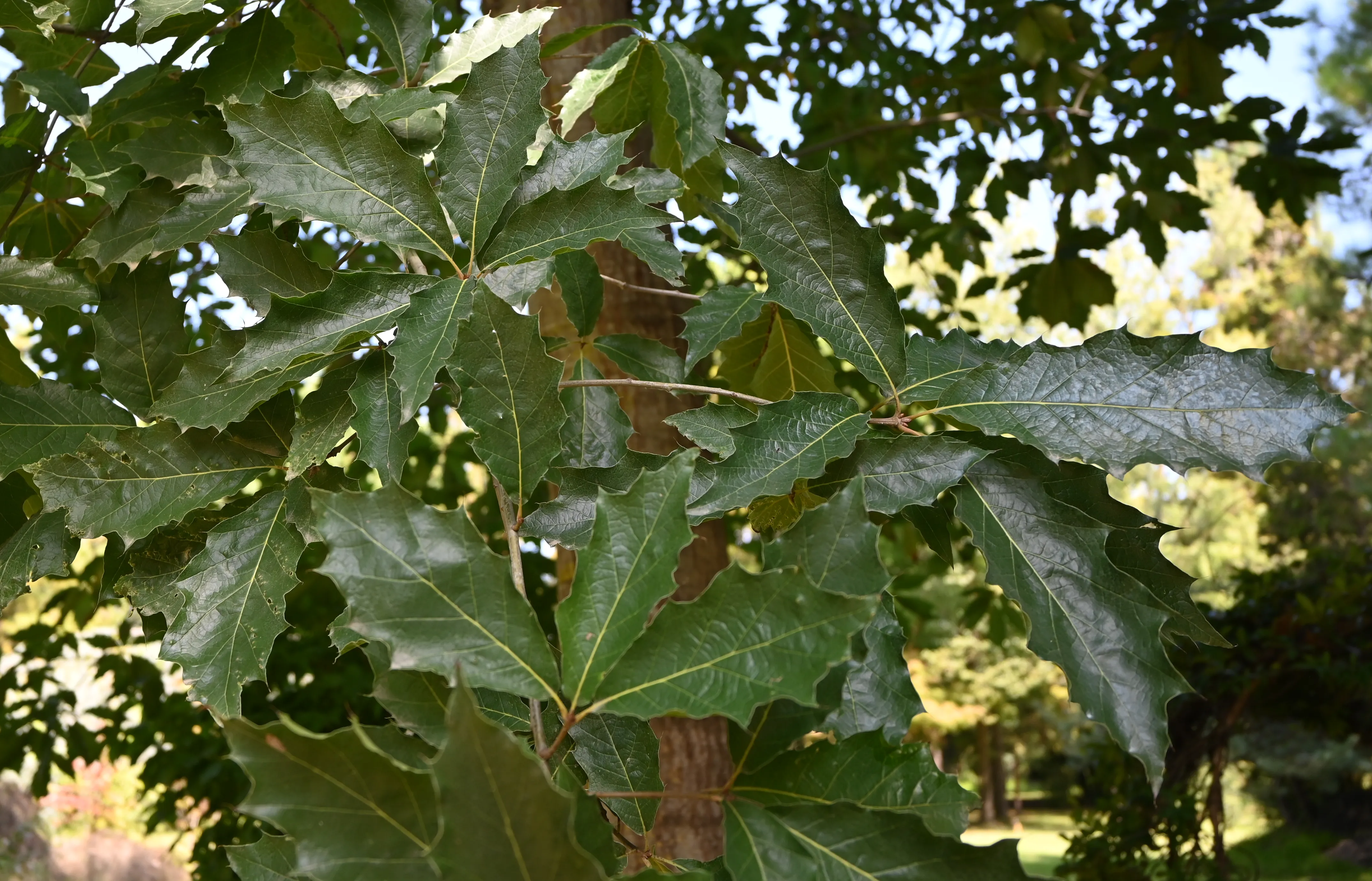
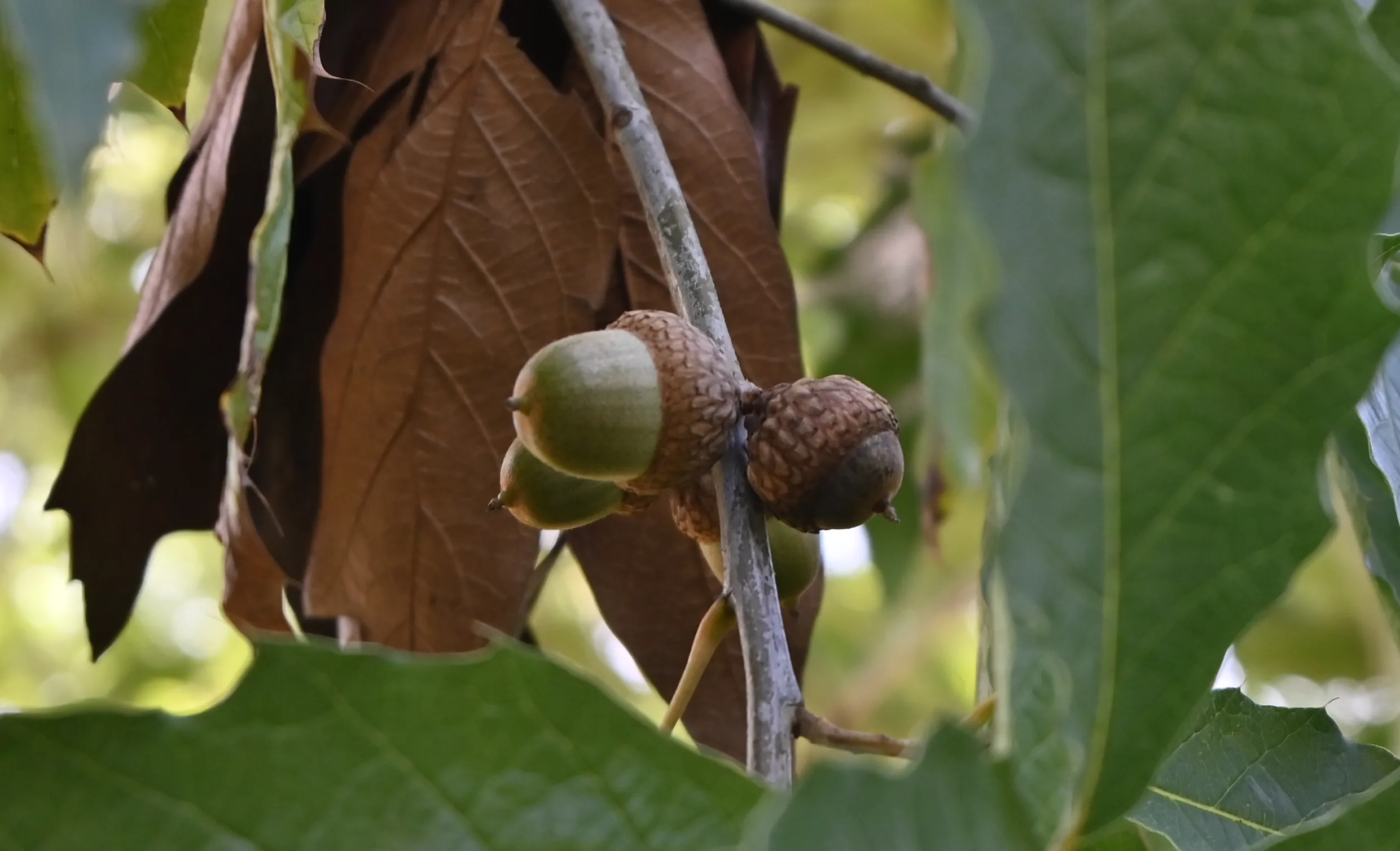
- A younger, unidentified Quercus, labelled Quercus sp. Its appearance suggests a possible hybrid between Q. rysophylla and Q. rubra. It might be a spontaneous seedling of the next tree (see pictures at the bottom of this post).
- Quercus rysophylla, unlabeled. It probably originated from the same collection as ‘Zehra’ and is mentioned in previous reports. It does not appear to be a hybrid.
- Quercus ‘Zehra’, the tree we had come to see.
- Another oak, labelled Quercus sp., which we identified as the American species Quercus laurifolia.
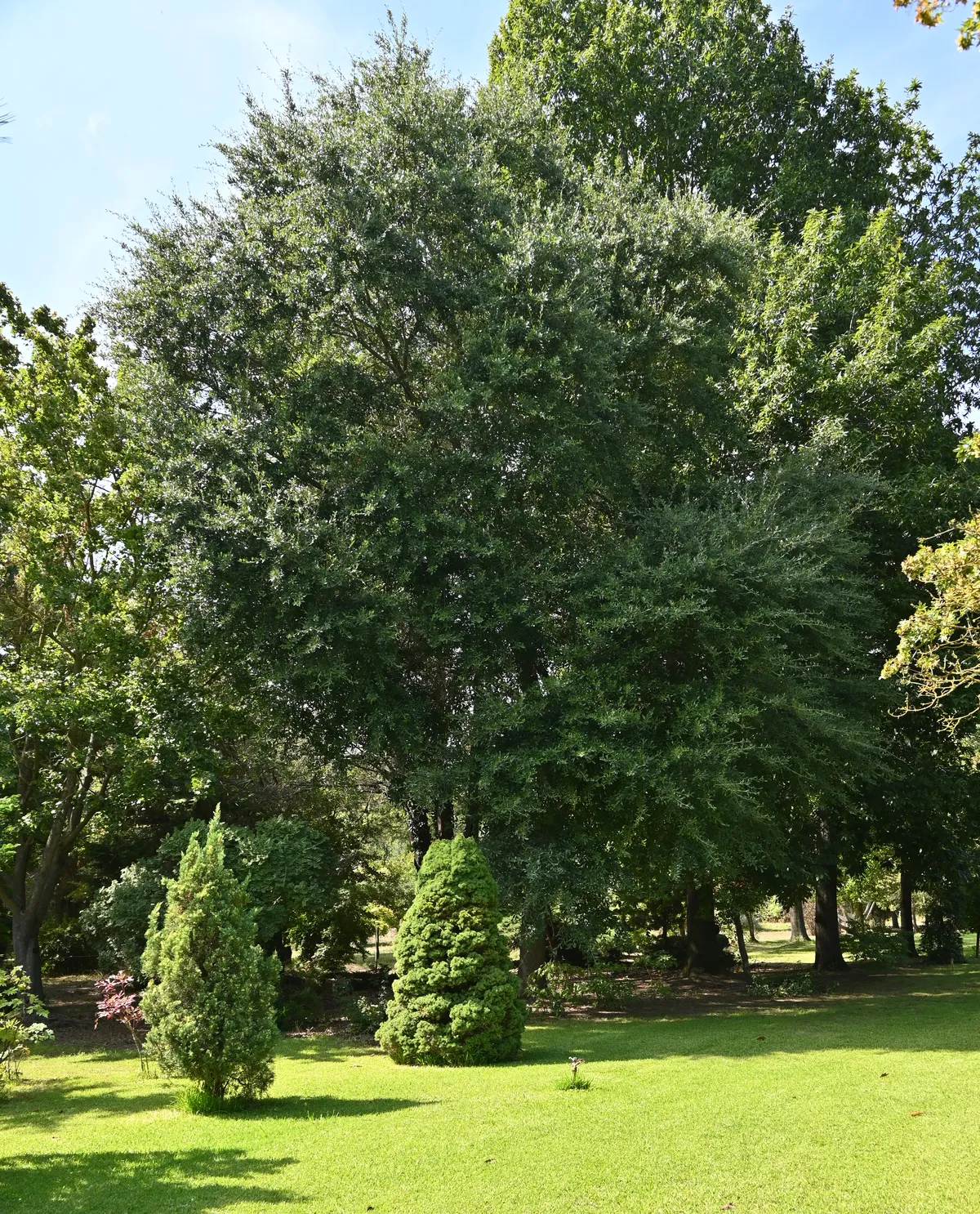
From arboretum tree to cultivated selection
Dirk Benoit received the scions and propagated the selection successfully. Through his efforts, ‘Zehra’ became available to other growers and collectors.
One of the largest specimens in Belgium stands at Dirk's nursery. I measured it in October 2025: It stands 13 meters tall, with a girth of 135 cm. It is also probably among the largest cultivated examples in Europe. Another specimen at Arboretum Bokrijk was measured at 18 m x 110 cm (photo on TSO). Both trees are recorded in the BELTREES database.
A visit worth making?
Finding the original Quercus ‘Zehra’ was a nice way to begin the 2026 IOS tour. And the tree was considerably larger than I had imagined. The Karaca Arboretum has a large oak collection, mostly located on the right side of the dirt road I mentioned earlier (and where I had tried to find Q. ‘Zehra’ in 2013). Many are red oaks. Unfortunately, the great majority of these oaks are unlabeled and identifying them precisely seems somewhat of a daunting task (unless the arboretum has detailed accession records and maybe maps).
The pictures here after are pictures of the younger oak mentioned in the text , labelled Quercus sp. Its appearance suggests a possible hybrid between Q. rysophylla and Q. rubra. Click to enlarge.
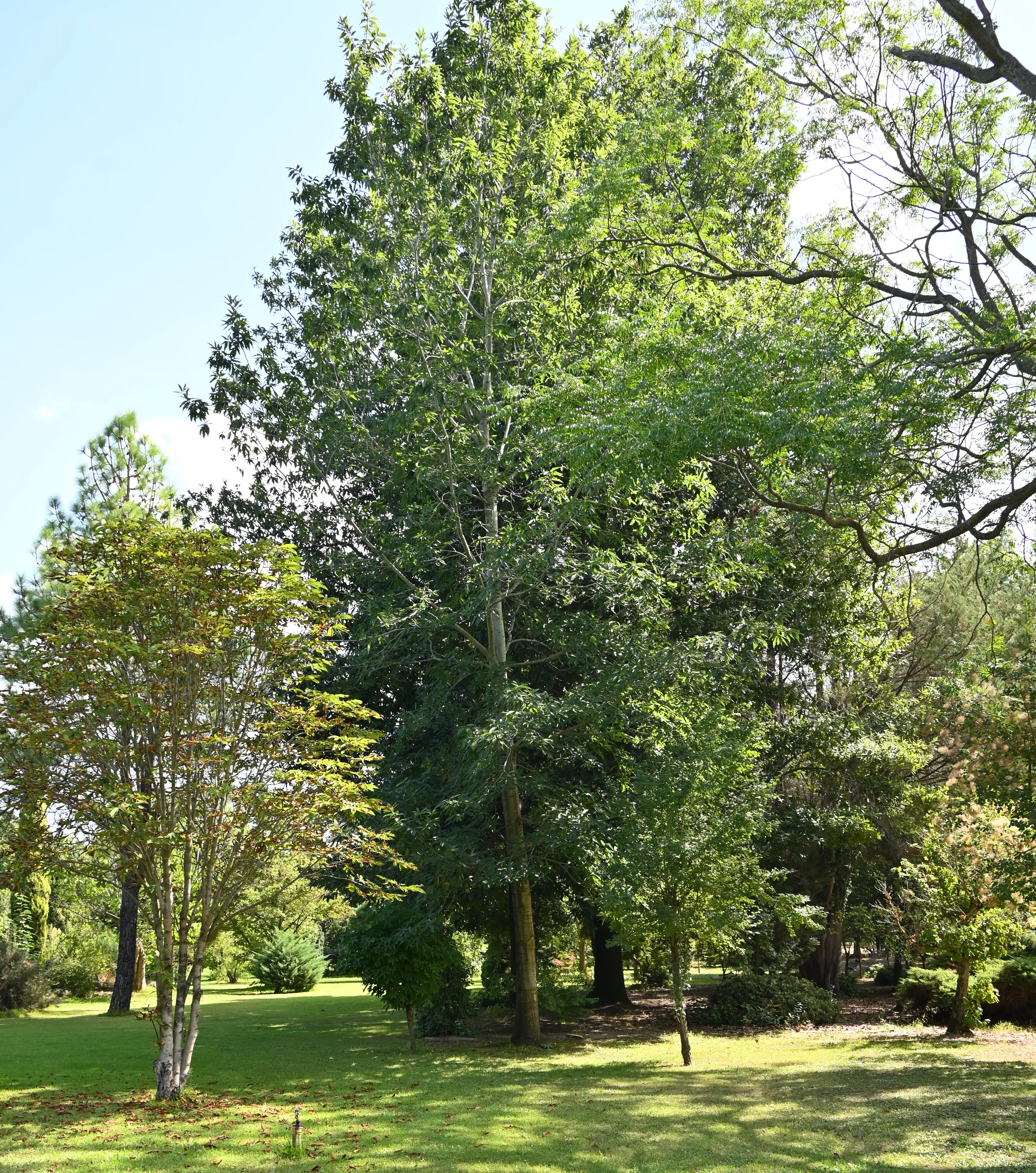
References
- Benoit, D. (2003). “Op zoek naar eiken van Istanbul naar Dalaman.” Belgische Dendrologie Belge, 47–54.
- Coombes, A. (2016). “Tree of the Year: Quercus rysophylla Weatherby.” International Dendrology Society Yearbook 2015, 22–52. (link)
- Russell, R. (2020). “Cultivar Close-Up: Quercus ‘Maya’ and ‘Zehra’.” International Oak Society, 10 February 2020.
- Coombes, Allen & Cameron, Roderick (2026). “Quercus rysophylla hybrids.” Trees and Shrubs Online.
Content by the Same Author
The International Oak Society acknowledges the generous support of the following institutions:
Supporting Institutional Members



Standard Institutional Members