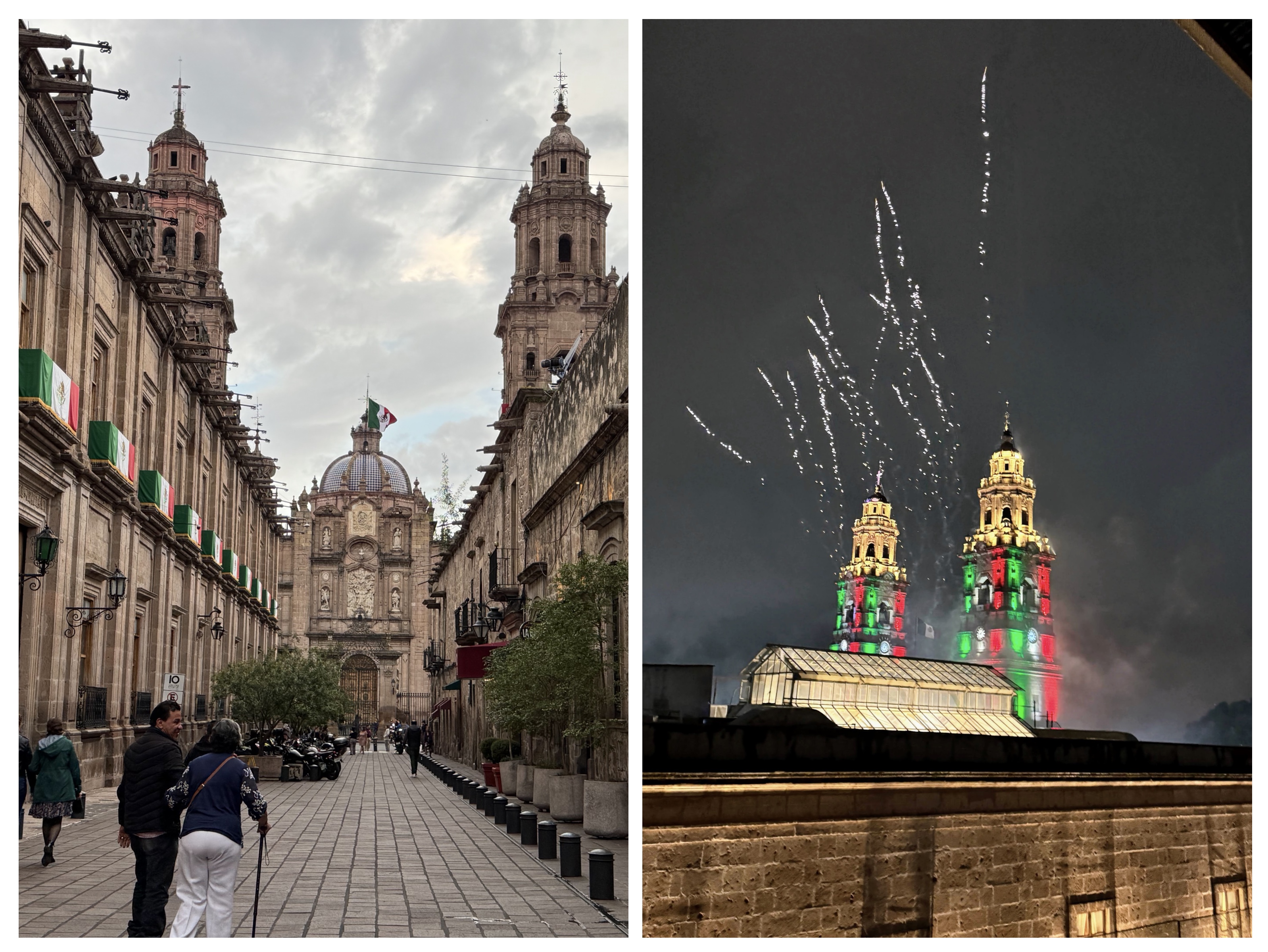
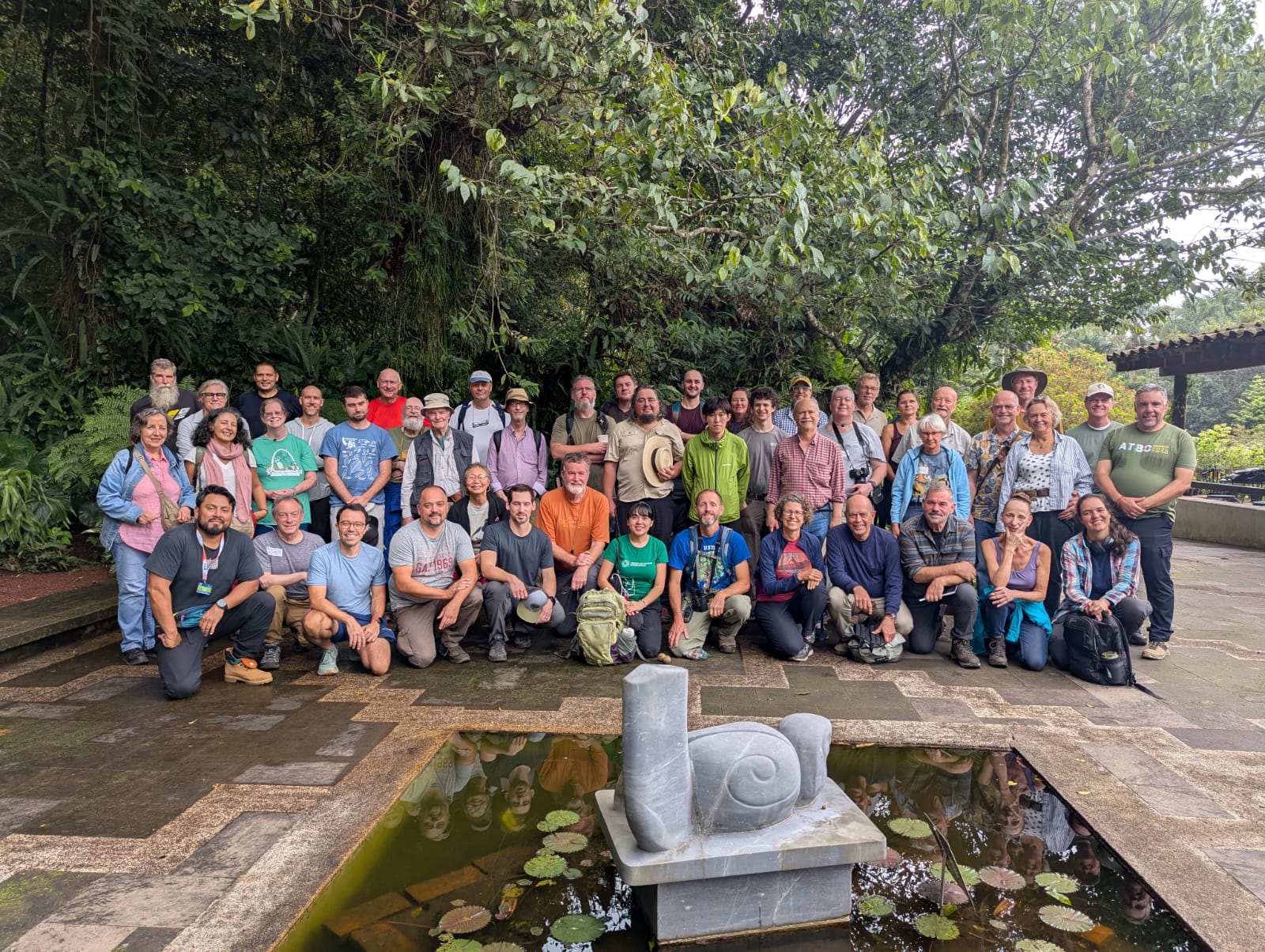
Morelia welcomed us on our first night with the cathedral lit in patriotic green, white, and red, and the plaza crowded with book fair tents. We gathered for a reception at Centro Cultural Clavijero, where the air buzzed with the reunion of longtime members and the excitement of first-timers.
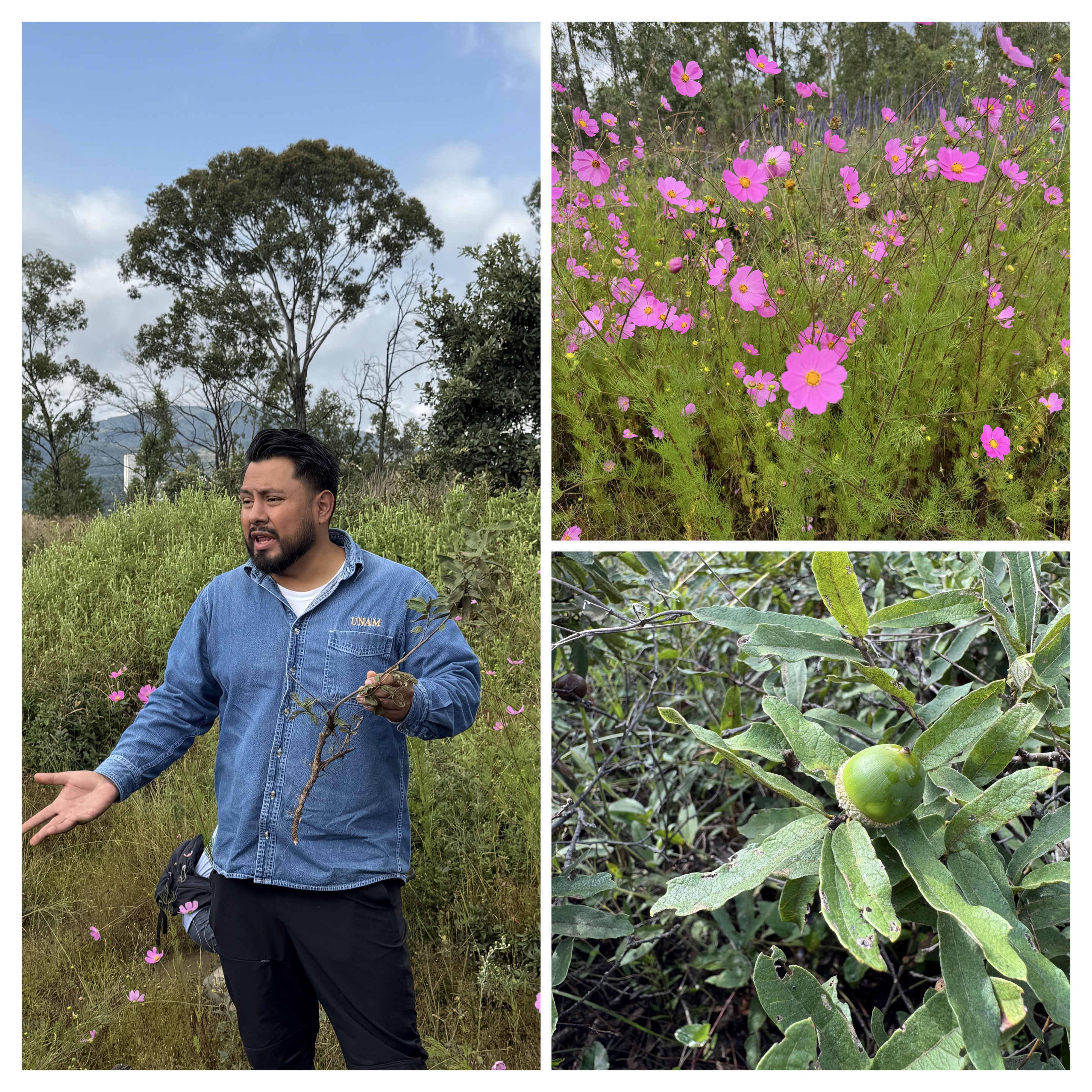
The next morning began in the uplands above the city. Here, Oscar de Luna showed us our first oak of the trip—Quercus purhepecha, a shrub oak he described only last year—running via rhizomes through a field of pink cosmos.
But as our vans wound higher into the mountains, the world faded to gray. Rain streaked the windows and conversation died down. We had left the sun behind; in a clearing, a donkey tied to a tree watched our trio of vans climbing into the cloud layer.
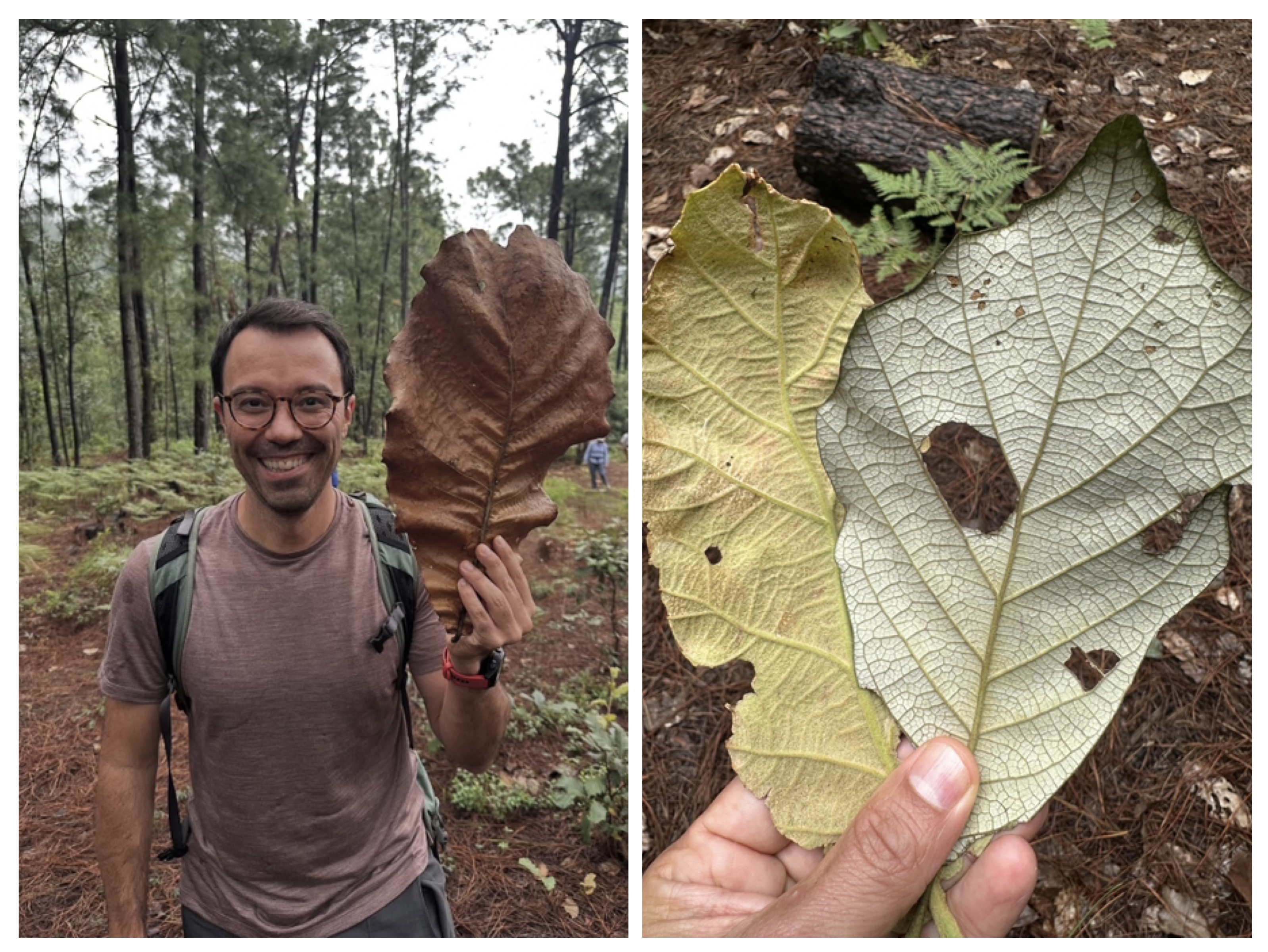
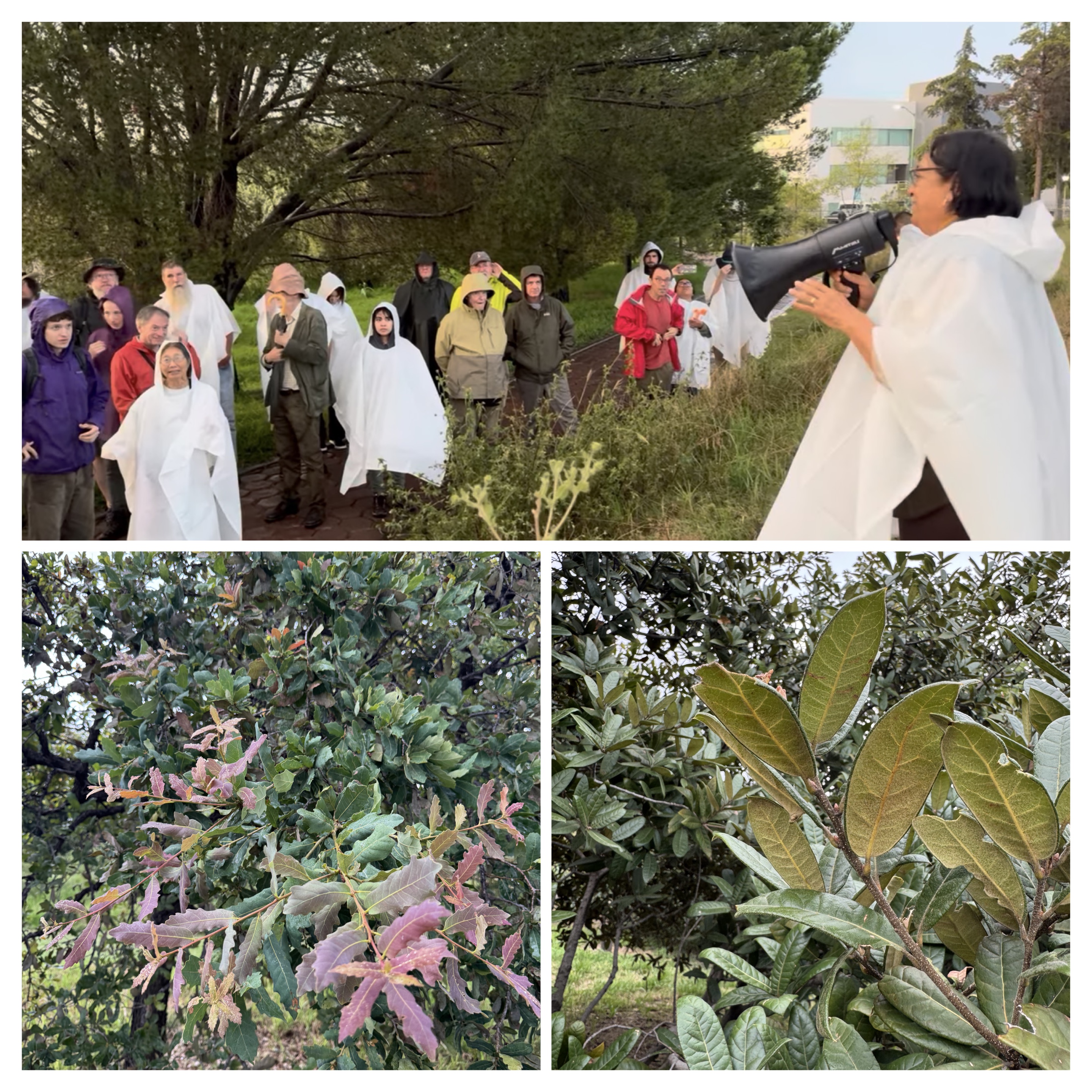
Then, the first oak leaves appeared in the dark under the pines—thick, leathery blades. "Quercus crassifolia," I whispered, half questioning.
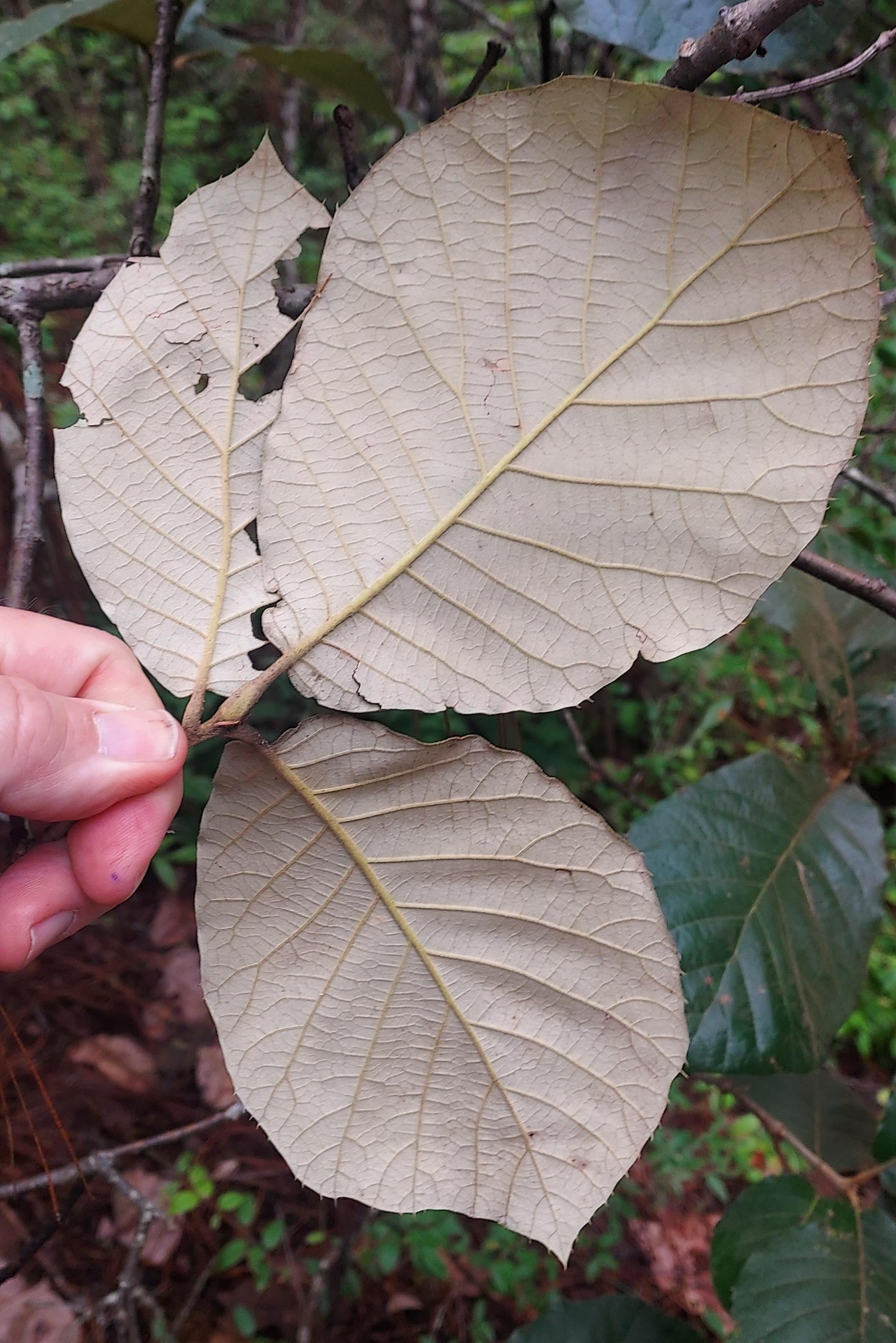
Further up the mountain, we poured out of the vans where the road widened. The ground was soft, the air smelling of wet earth. Quercus resinosa amazed us with massive leaves; Q. crassifolia revealed gold beneath; Q. scytophylla showed white. At the next stop, a hike down a muddy trail past a waterfall revealed Q. calophylla, sporting large leaves with an even starker white beneath. It was a scene that would repeat in variations all week: the sliding door, the rush of air, and a fresh cast of oaks waiting to be found.
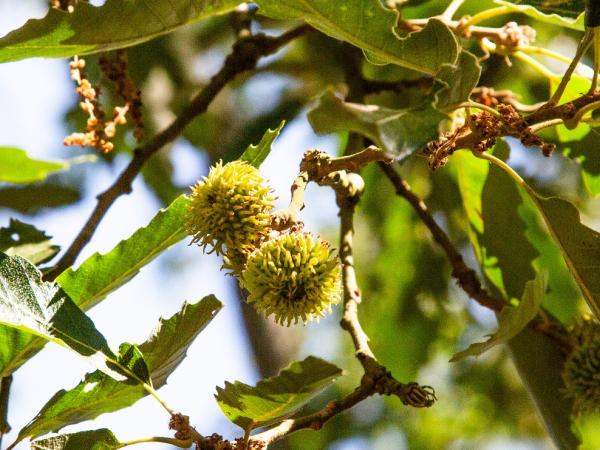
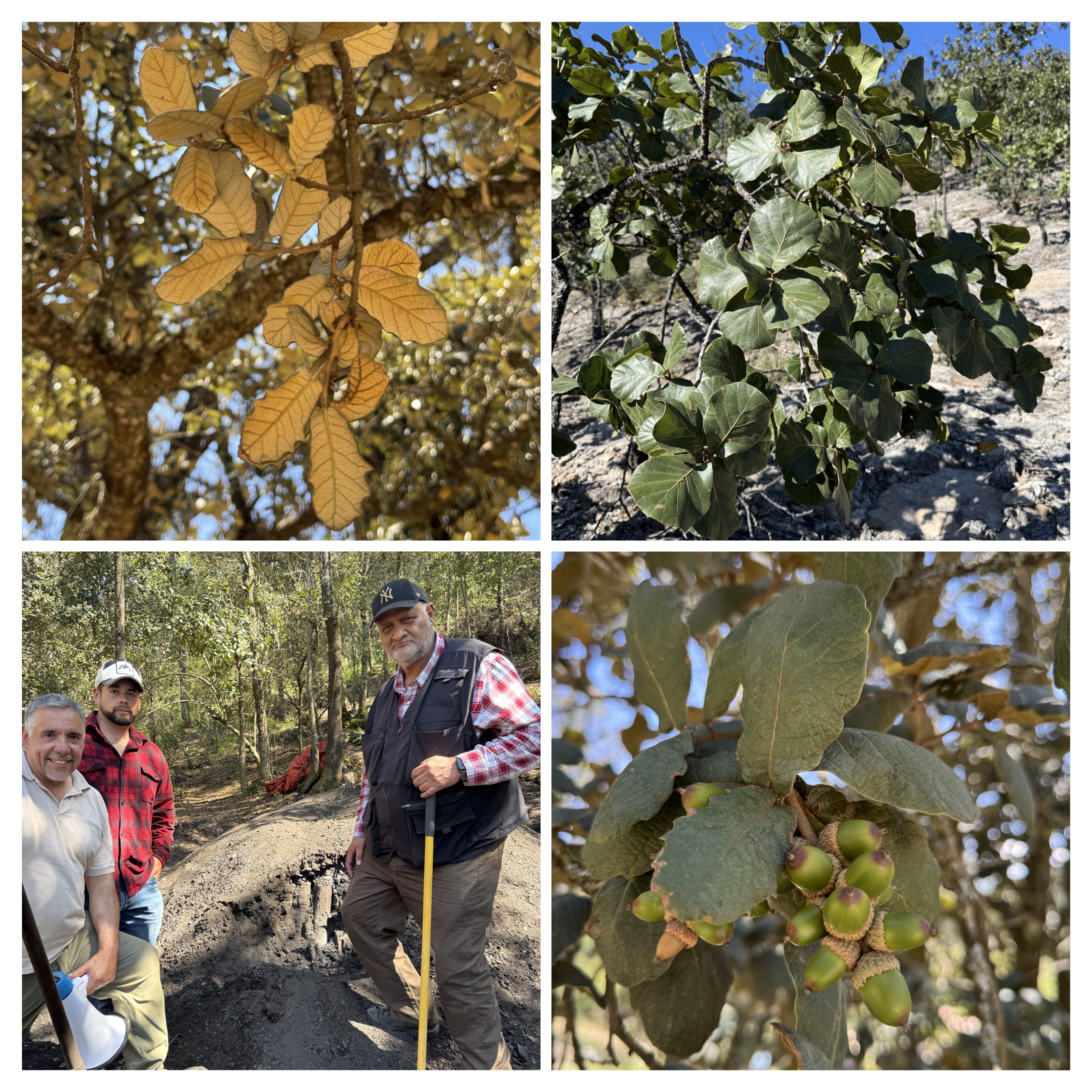
Crossing the Trans-Mexican Volcanic Belt into the Sierra de Santa Rosa, the landscape shifted: the air turned dry. The diversity was spectacular. On a long meander to a demonstration of sustainable oak charcoal production (a study of this work was funded by an IOS grant), we added Q. sideroxyla, Q. microphylla, and Q. eduardi to our lists. Nearby, the branches of Q. rugosa hung heavy with grape-like clusters of acorns.
We walked across fields of ancient volcanic ash welded into stone, finding water trickling into depressions filled with wild marigolds and cacti. The star here was Q. jonesii (or Q. coccolobifolia, for the nostalgia-prone), growing directly out of the rock, its round leaves clustered like a Ficus.
By the time we reached Puebla, the weather decided to test our waterproof gear. During a tour of the Puebla Botanic Garden, the clouds let loose, forcing us to shelter under the evergreen branches of Q. rysophylla and Q. glaucoides until the deluge eased.
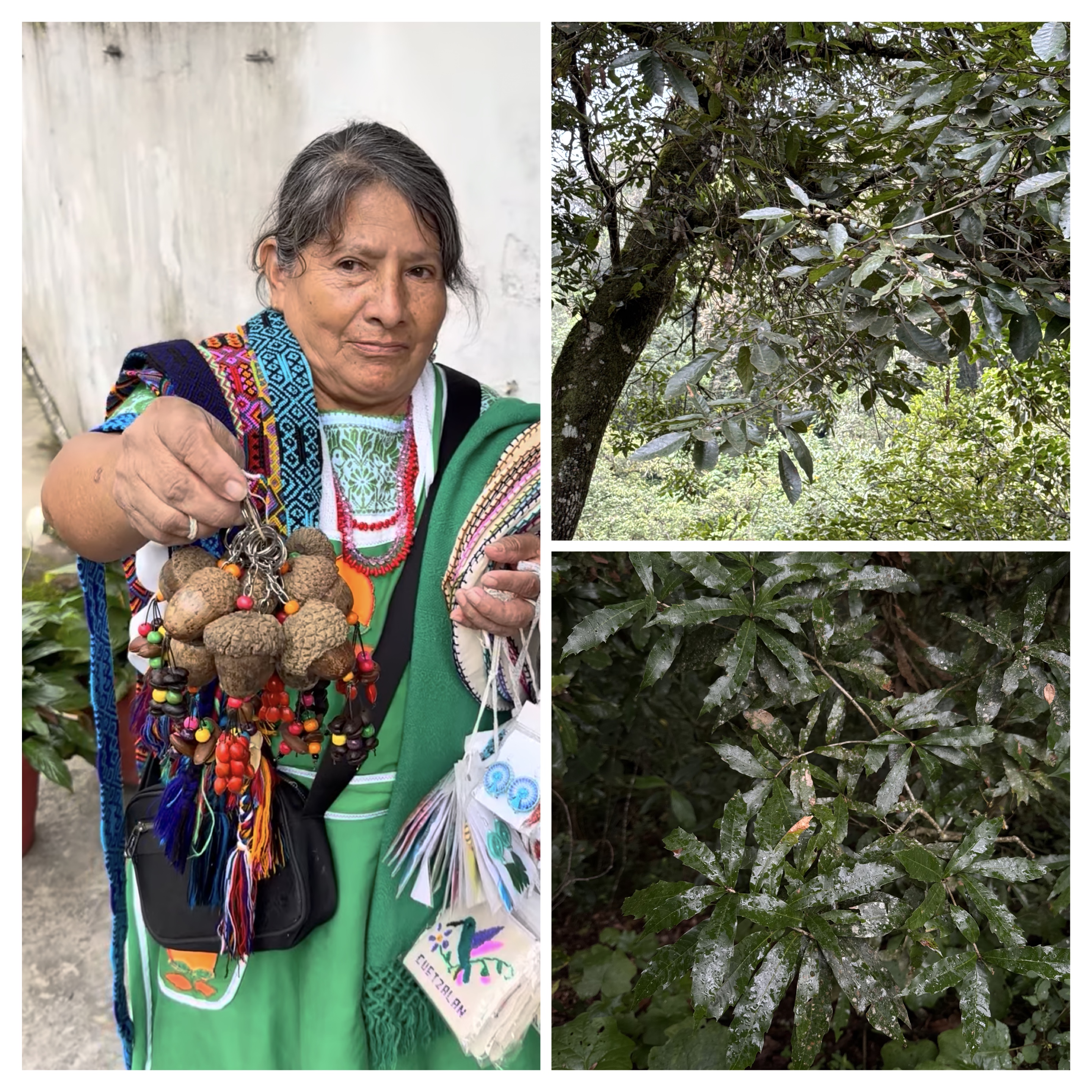
The next day, we entered a true cloud forest near Apulco. We met a woman selling keychains made from what we believe were the giant acorns of Q. corrugata, before a trail led us into the mist among immense Q. sartorii and Q. lancifolia.
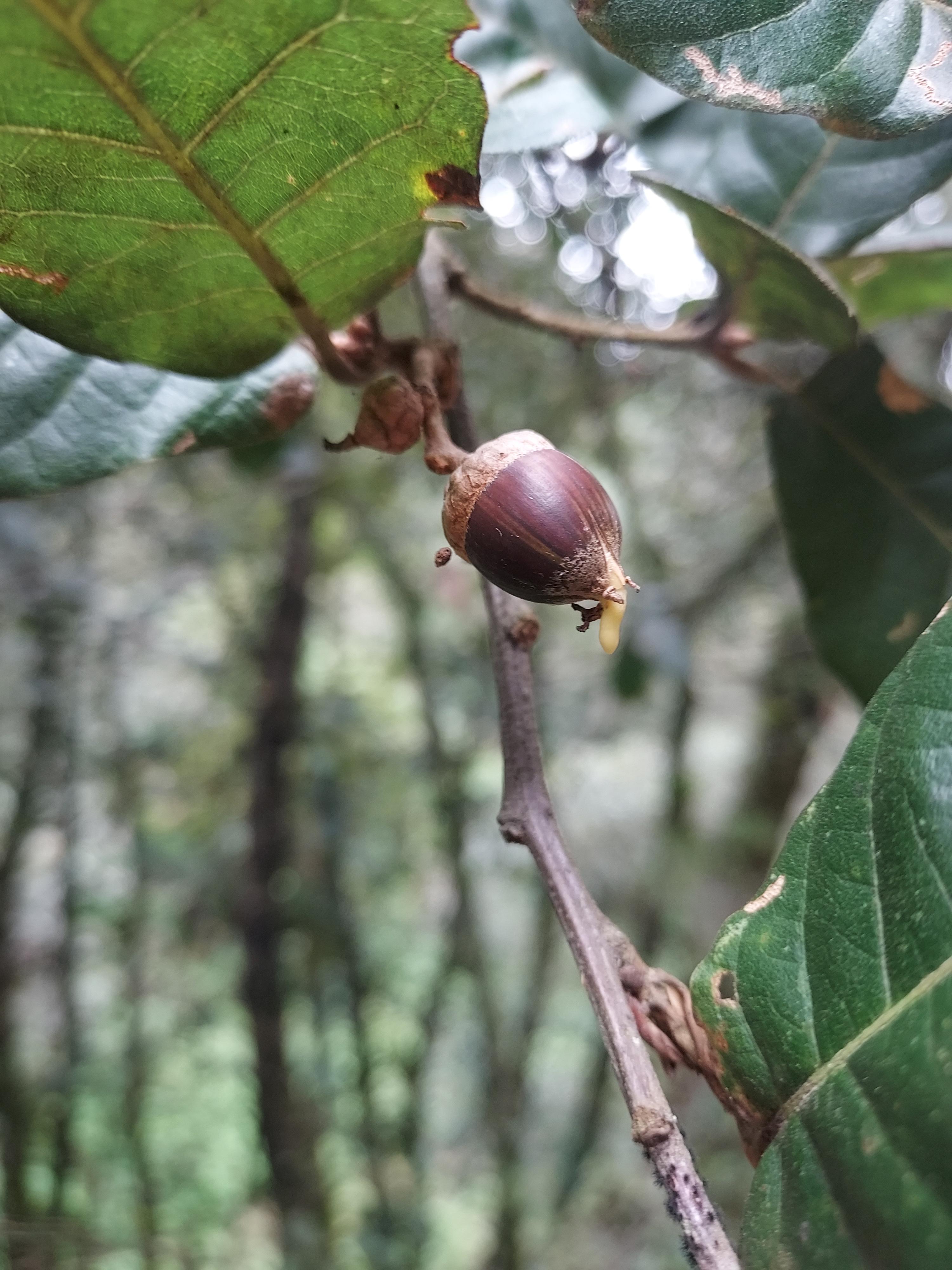
Farther up the road near Zacapoaxtla, we inspected the endangered Q. hirtifolia, finding some acorns germinating right on the trees. The rain held off just long enough for us to film an Instagram update. Roderick Cameron and I scrambled up a steep bank to reach the knee-high Q. repanda growing above the road, while the rest of the group watched from below.
I tried to frame a shot capturing the contrast between the tall forest and the shrub oak, stepping backwards near the drop-off. I found the frame, but nearly lost my footing on the ridge edge. A few frantic, careful steps forward saved me from tumbling down to the road—and provided a little unscripted entertainment for the audience below. We recomposed ourselves and nailed the second take.
By the time we retreated to a long dining hall nearby, the skies had opened up. But inside, the mood was bright. We sat in long rows, picking clean the bones of fried or steamed trout (often with our hands) and shouting over the rain to pass the salsa—the specific contentment of a good meal shared among fellow quercophiles.
Xalapa, Veracruz
As we walked down to breakfast in Xalapa, the snow-capped peak of Pico de Orizaba dominated the horizon above the colorful cityscape.
Near town, at the Santuario del Bosque de Niebla, a trail littered with acorns introduced us to Q. xalapensis, Q. paxtalensis, Q. germana, and Q. pinnativenulosa.
That evening, we celebrated a very special birthday for our own Béatrice Chassé at Finca La Niebla, complete with live harp music and an operatic rendition of "Las Mañanitas."
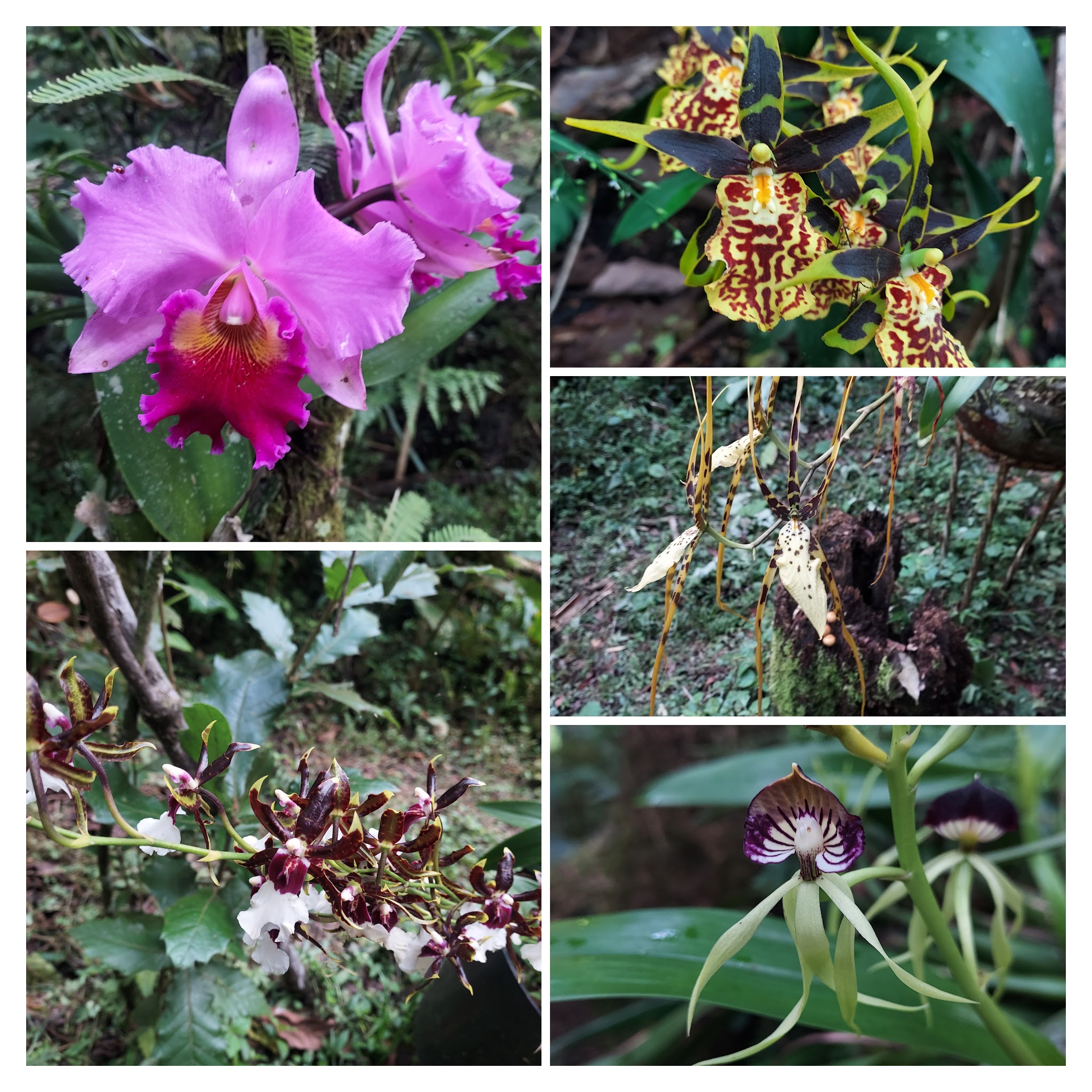
We took an after-dinner walk through the grounds, winding down a trail lined with an impressive orchid collection and fantastical sculptures amongst the forest.
Las Cañadas
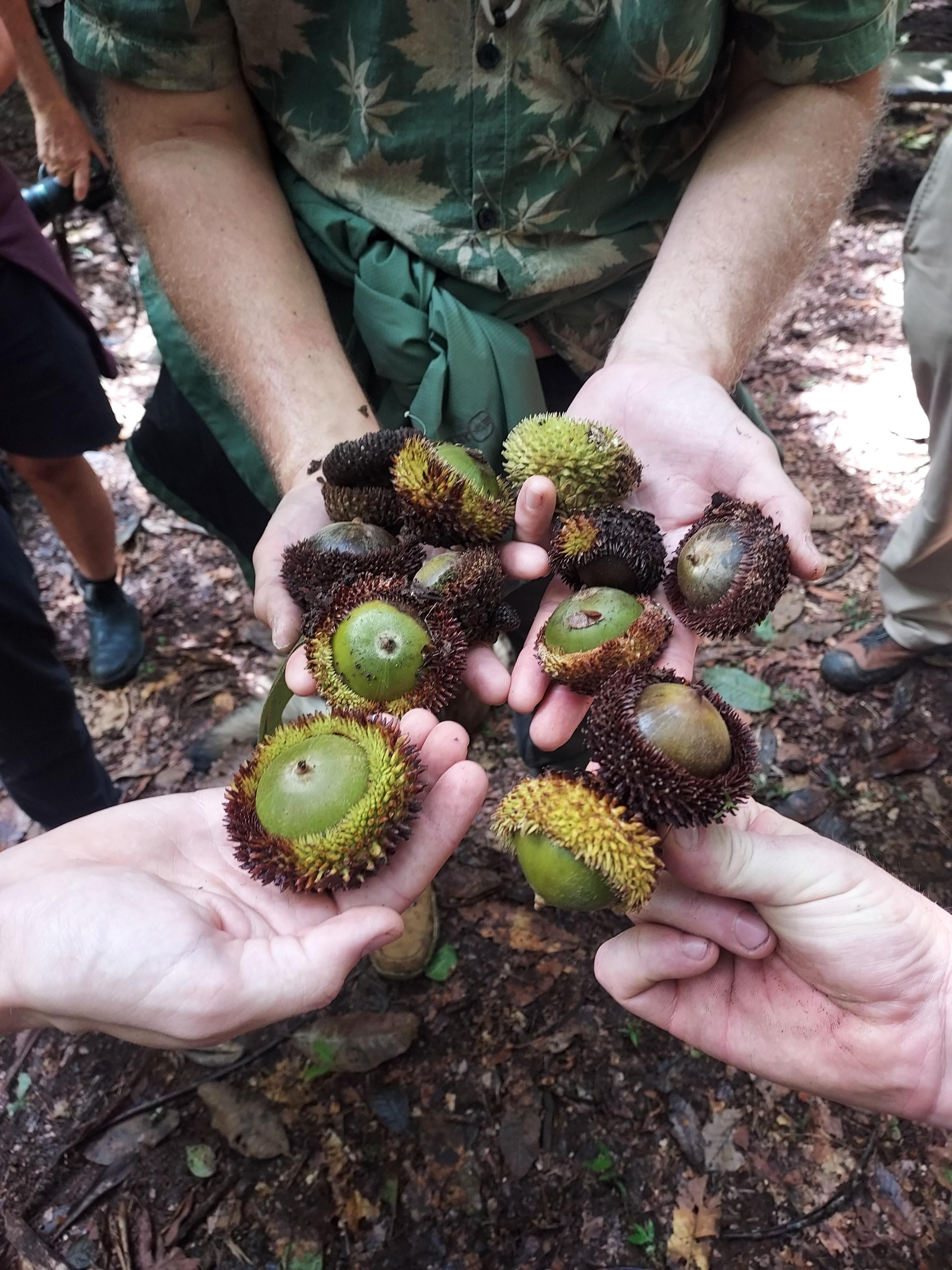
The trip culminated in Las Cañadas. We traded vans for pickup trucks that carried us deep into a forest of magnificent tree ferns. We waded across rocky rivers, pants rolled and boots tied to packs. Many hiked barefoot through the mud, stepping carefully around fallen fronds, wary of the sharp spines lining the stalks. In the heart of this forest, we stood beneath towering Q. insignis. The massive acorns scattered on the steep slopes were as amazing as I had imagined—the largest filling a human palm.
I had read Andrew Hipp’s Oak Origins before the trip, absorbing the theory of how oaks migrate and specialize. Here we saw an engine of that diversity in high gear: throw the genus against Mexico’s volcanoes, ridges, and microclimates, and it splits and specializes. We saw theory turned into leaves in our hands, tucking them into seatback pockets to compare at the next stop.
We tallied about 23 species in a week. Mexico holds somewhere around 179.
Days later, I carefully removed a spine from my heel—a souvenir from a tree fern on that final hike. I didn’t mind. It was a reminder of where we had been: in the mud, in the clouds, and entirely happy among the oaks.