Editor's Picks
Images and insights from Ezra Barnea’s journey to Cyprus’s...
Ezra Barnea
|
Jun 13, 2026
Endangered oak Quercus hinckleyi shows strong genetic...
Website Editor
|
Jun 09, 2026
New paper should significantly change our approach to...
Steve Potter
|
Jun 09, 2026
Plant Focus
Roderick Cameron and Carlos Vila-Viçosa give an account of this intriguing species from northwestern Iberia with a complex taxonomic and...
After Gredington, we drove south to Hurley, just east of Birmingham, to visit David and Carol Gooder and their oak collection. David started to collect oaks in 2007. The Gooders have a garden that surrounds their home. Additionally, they bought some lands a couple of miles away and carved out six hectares to establish the bulk of the oak collection.
We had a look at the garden first and saw some interesting trees, among which Quercus miquihuanensis and a good specimen of Q. ×hispanica ‘Diversifolia’. I will not list here all trees seen. Visit my photo gallery of Heanley Farm on Smugmug instead.
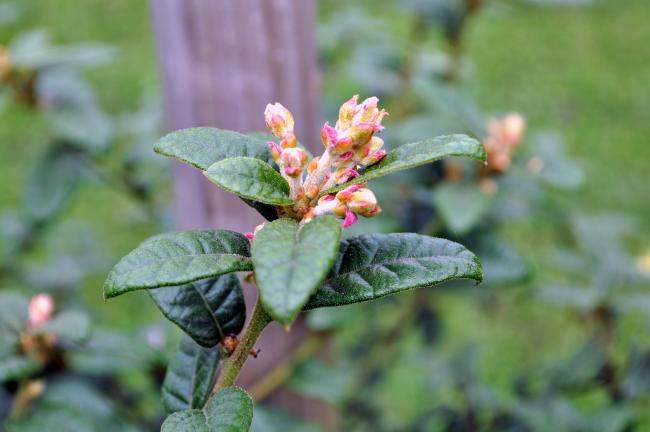 |
| Quercus miquihuanensis (from Pan Global Plants) |
After lunch, we went to the arboretum. The advantage of young trees is that you can easily examine their leaves (and their acorns when they are present). It is not always so easy with mature oaks that often no longer have branches within reach. Note that there is still time before David’s trees get out of reach.
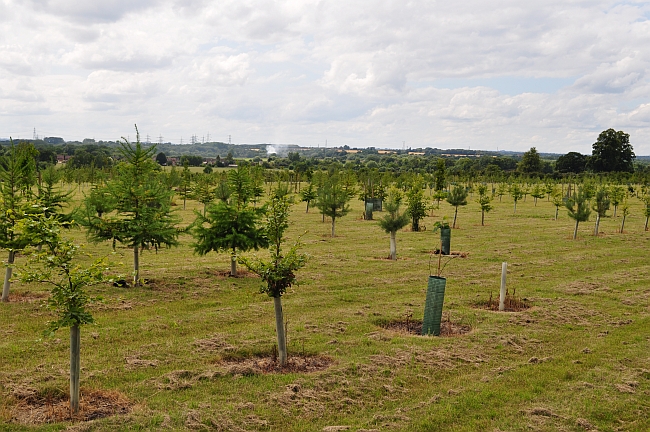 |
| Larch, birch, beech and pine are used fo fill the space until thinning is needed to leave the space to the oaks |
Most trees look very healthy and well established.
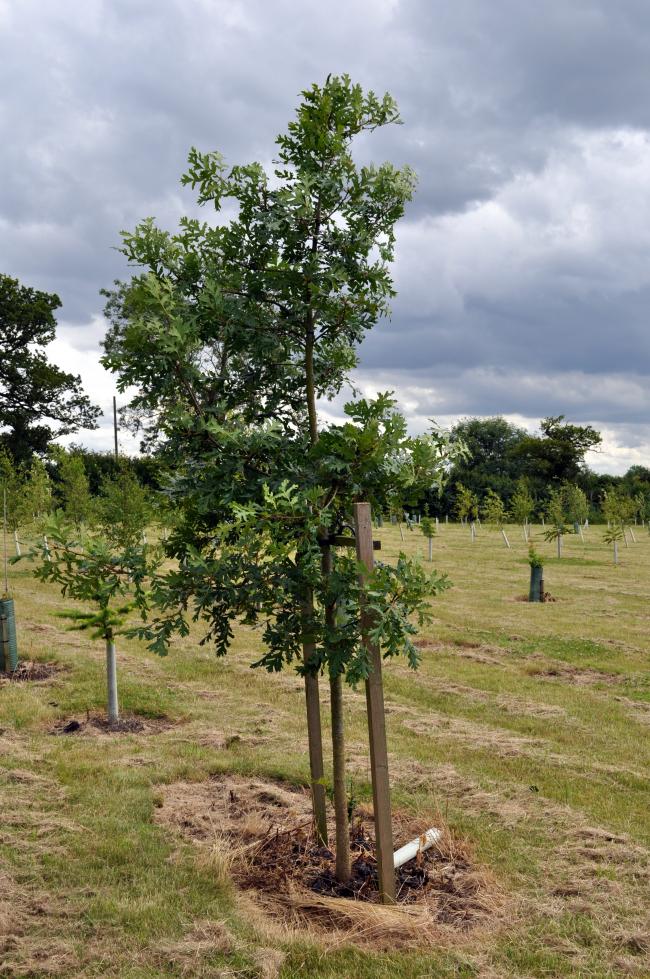 |
| A beautiful specimen of Quercus vulcanica (Pavia Nurseries) |
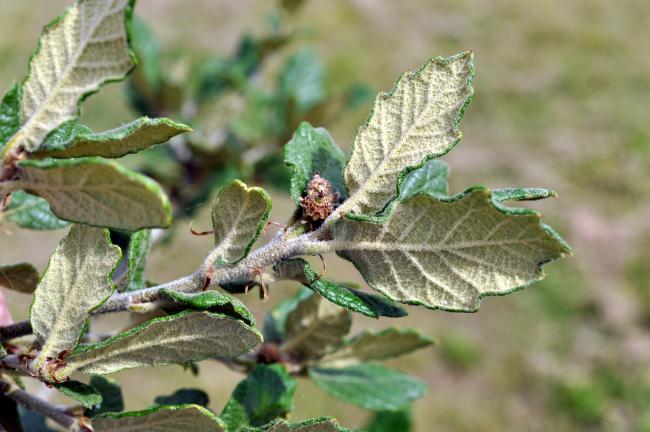 |
| Quercus greggii (from John Gammon) |
The arboretum contains 2,500 trees on six hectares. 400 are oaks and a few other specimen trees such as Crataegus spp. 2,100 are “disposable” trees, mainly larches and birches, that will be removed as the oaks grow. David has planted his trees in straight rows, probably because the trees are not individually labeled and can be identified by their position in a row. It looks a bit too symmetrical at present, but as the disposable trees are removed, I guess it will look less so.
2,500 trees on six hectares is not really dense: it leaves 24 square meters per tree and no thinning will be needed for years. Likewise, the number of oaks could probably be increased as not all oaks need the same space as a mature spreading Quercus robur. David is also developing an interest in other genera (including Sorbus, a genus in which I am especially interested too) that might also find a place in the arboretum.
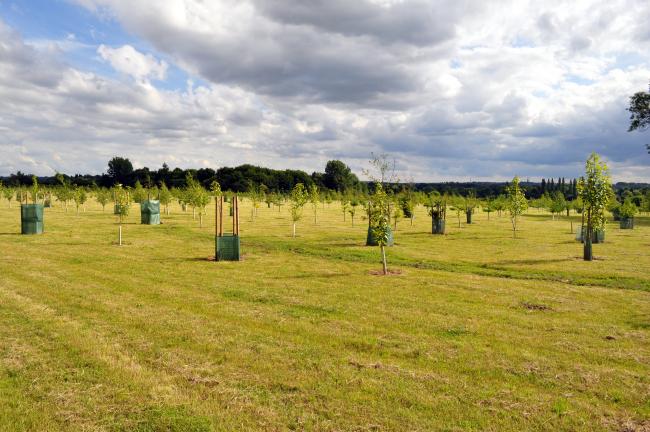 |
| Is there space for more oaks in the arboretum? |
Like Gredington, Heanley Farm is also a destination for a future Oak Open Day.
Content by the Same Author
The International Oak Society acknowledges the generous support of the following institutions:
Supporting Institutional Members




Standard Institutional Members