Editor's Picks
While working on a list of synonyms of European White Oaks...
Roderick Cameron
|
Aug 24, 2026
Report led by The Morton Arboretum will help prioritize oak...
Website Editor
|
Aug 06, 2026
Motivation
I live in the village of Dolné Dubové...
Jozef Čapkovič
|
Jul 20, 2026
Plant Focus
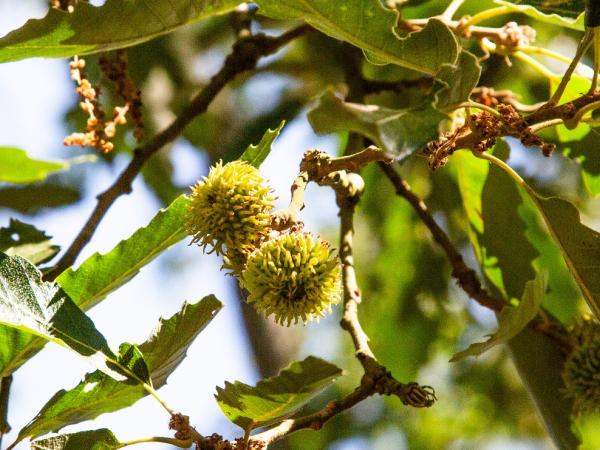
The only oak species endemic to Africa is rare in cultivation. It shouldn't be.
Poster presented at the XX International Botanical Conference, Madrid, Spain, July 21–27, 2024.
Authors:
David A. Oropesa-Olmedo1, Lucía Cano1, Enrique Andivia1, Raúl Bonal1
Affiliations:
1. Department of Biodiversity, Ecology & Evolution, Complutense University of Madrid, Madrid, Spain.
Abstract:
The relationship between weight and size of the acorns can be an important factor in the loss of moisture and therefore affect the germination rate of Quercus acorns. The acorns of Mediterranean oaks are considered to be recalcitrant seeds, so biological and climatic processes are important to maintain a constant moisture content in the seeds, as a drop in moisture content of up to 25-30% can affect their viability. This study hypothesises that the more elongated and narrower seeds lose moisture more easily and are therefore more sensitive to germination rate during periods of desiccation. The aim of this study is to find out whether the morphological traits of the acorns, mainly width and length are variables that might influence seed desiccation and thus limit the germination rate. For this purpose, seeds of different shape and size from different Quercus species (Q. ilex, Q. pyrenaica, Q. faginea, Q. suber and Q. coccifera) are exposed to different drying times and subsequently germinated under constant humidity conditions. In this way, the amount of moisture lost by the acorns as a function of time exposed to dryness, their length and width are recorded and related to germination capacity.

The International Oak Society acknowledges the generous support of the following institutions:
Supporting Institutional Members




Standard Institutional Members