Editor's Picks

While working on a list of synonyms of European White Oaks...
Roderick Cameron
|
Aug 24, 2026
Report led by The Morton Arboretum will help prioritize oak...
Website Editor
|
Aug 06, 2026
Motivation
I live in the village of Dolné Dubové...
Jozef Čapkovič
|
Jul 20, 2026
Plant Focus
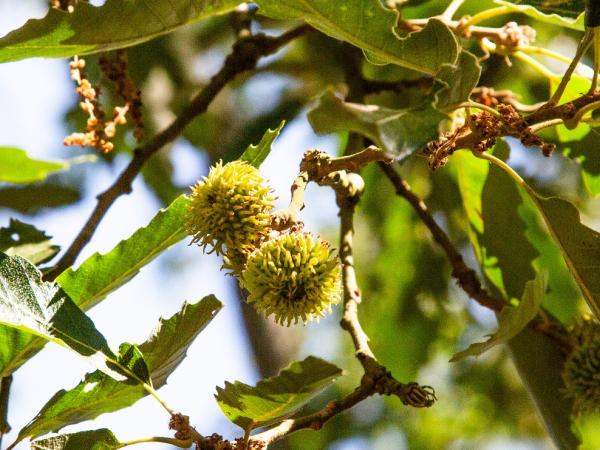
The only oak species endemic to Africa is rare in cultivation. It shouldn't be.
The IOS has been approved again as the International Cultivar Registration Authority (ICRA) for Quercus. The registrar duties have been divided between Ryan Russell who will take care of selections found in the Americas, and Eike Jablonski who will take care of selections found outside of the Americas. This will help ease the individual workload and has been approved by International Society for Horticultural Science (ISHS).
The new registration form is now available. There were several needed updates and those have been addressed. The new form is formatted as an editable PDF allowing registrant’s to fill out the form online, and email directly to the registrars. This makes the process easier for both registrant and registrar. The new form can be found here: http://www.internationaloaksociety.org/content/cultivar-registration-form-guideline-english. The registration help page has also been updated to reflect changes in the registration form. These changes were mostly minor, but it is recommended to use this guide as you fill out your registration form. This form can be found at the same location.
Each new form should also include at least one photo (high resolution digital is preferred) of the plant that is being proposed as a new cultivar. The registrars would also ask that this is accompanied by two sets of herbarium samples. These samples will be used as the standard for the new cultivar and will be housed at two separate herbariums. The registrant will have to mail these to one of the registrars, depending on where the selection has originated, but initially, the form and photo will be used in the registration process. Questions can be directed to registrar@internationaloaksociety.org.
Content by the Same Author
The International Oak Society acknowledges the generous support of the following institutions:
Supporting Institutional Members



Standard Institutional Members