Editor's Picks

While working on a list of synonyms of European White...
Roderick Cameron
|
Aug 24, 2026
Report led by The Morton Arboretum will help prioritize oak...
Website Editor
|
Aug 06, 2026
Motivation
I live in the village of Dolné Dubové...
Jozef Čapkovič
|
Jul 20, 2026
Plant Focus
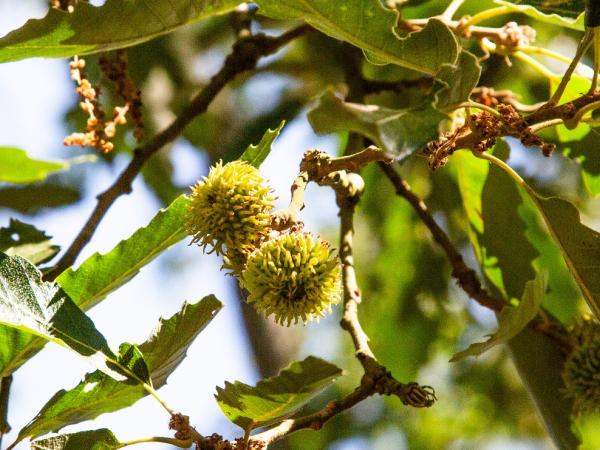
The only oak species endemic to Africa is rare in cultivation. It shouldn't be.
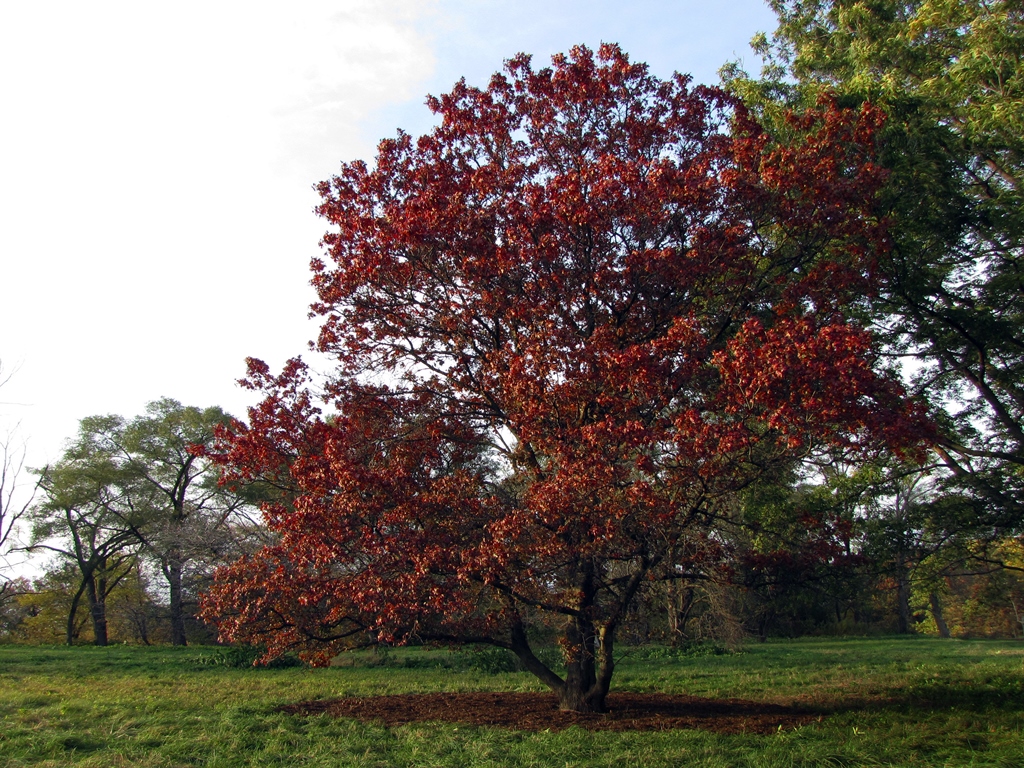 |
| Quercus acerifolia, endangered in its natural habitat according to The Red List of Oaks, thrives in The Morton Arboretum. Photo: G. Sternberg. |
The Economist recently published an article that caught my interest: "A modern ark: To save endangered species, move them to more congenial places." It proposes the idea that in order to save species from the threat of global warming, it may be necessary to artificially relocate them to cooler conditions, because they would not be able to overcome physical barriers on their own. Conservation was one of the main themes of the recent IOS Conference, but I don't think such a radical idea was mentioned. IOS members are familiar with the notion of growing oak species in gardens and collections far from the plants' natural habitat (indeed, some even go as far as planting them in the Southern Hemisphere!), but perhaps in the future this type of radical ex situ conservation or relocation will be of key importance. As the article states, "In future the question will no longer be how to preserve species in particular places but how to move them around to ensure their survival." Of course, it is a highly polemic suggestion (read the comments below the article to get a feel for the controversy), but it is interesting that the International Union for Conservation of Nature (IUCN), whose Red List workshop for oaks was held at the Morton prior to the Conference, has apparently "given a slight nod to such relocations." The article can be read here.
Content by the Same Author
The International Oak Society acknowledges the generous support of the following institutions:
Supporting Institutional Members




Standard Institutional Members