Editor's Picks
While working on a list of synonyms of European White...
Roderick Cameron
|
Aug 24, 2026
Report led by The Morton Arboretum will help prioritize oak...
Website Editor
|
Aug 06, 2026
Motivation
I live in the village of Dolné Dubové...
Jozef Čapkovič
|
Jul 20, 2026
Plant Focus
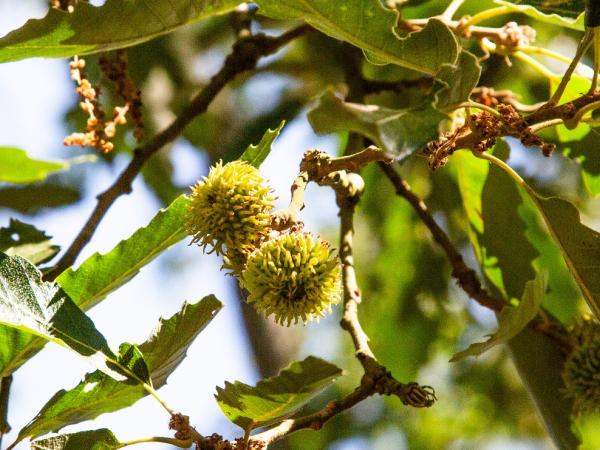
The only oak species endemic to Africa is rare in cultivation. It shouldn't be.
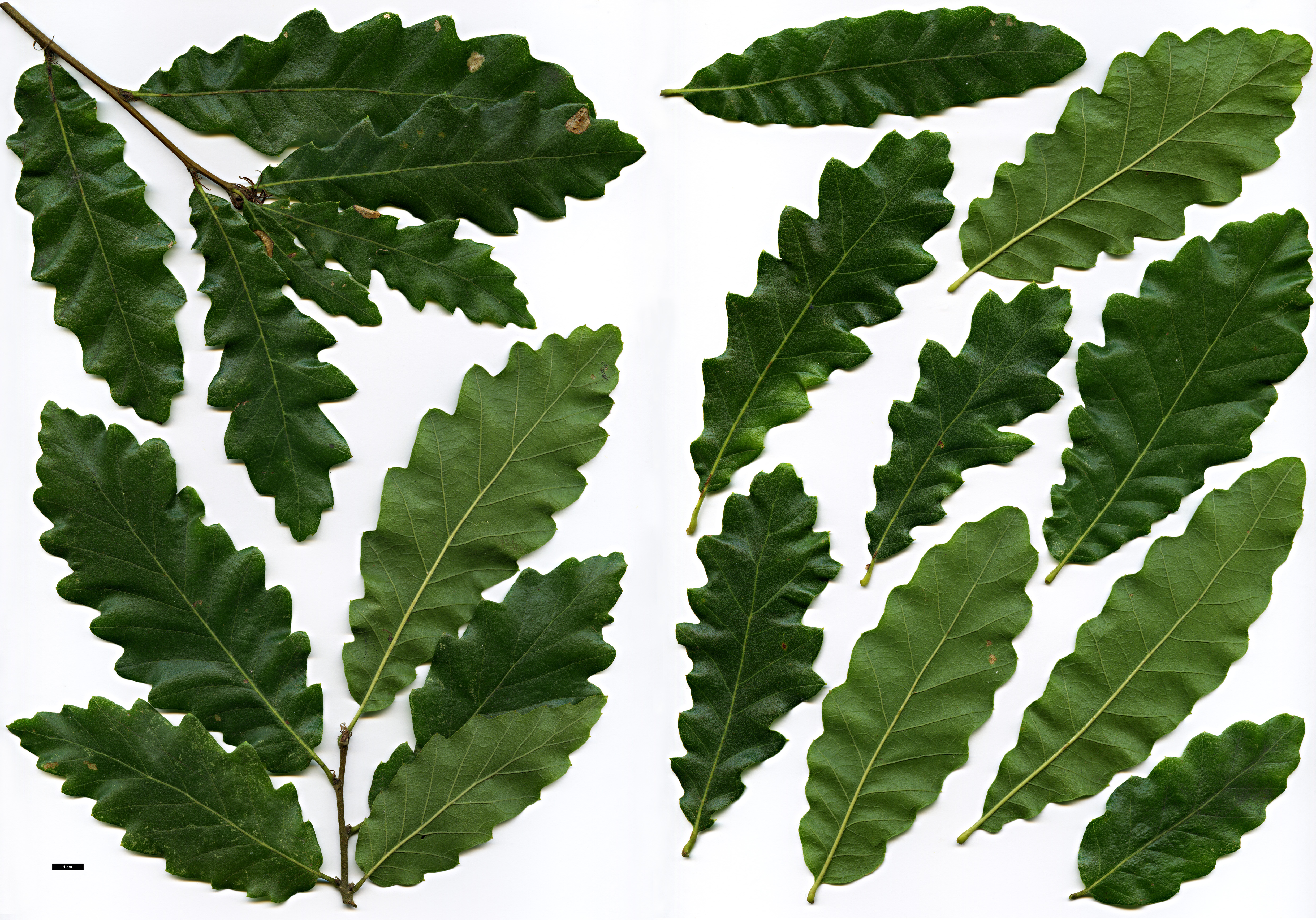
6th of July 2014 - On the evening of the afternoon spent at Congrove, IOS member and current "chairman" of the IDS, Harriet Tupper had invited the attendees at her home, Leigh Delamere House, for a "wine and trees." Harriet has several trees in her gardens that come from seed she collected during her many trips with the IDS. She has, among other plants, three oaks collected in Iran in 2002 from a wild population of Quercus castaneifolia. One of these especially drew our attention because it displayed some similarities with Q. cerris and initially we thought it could be a natural hybrid between Q. castaneifolia and Q. cerris. Similar forms were introduced by Roy Lancaster from N Iran and are represented at Kew and Hillier Gardens.


According to the IOS oaknames database, the taxon Quercus castaneifolia C. A. Mey. × Q. cerris L. also grows at Hillier Gardens and at Hackfalls Arboretum in New Zealand. But these hybrids are of garden origin. The leaves of the plant at Hillier's do not look exactly like the plant at Leigh Delamere House as can be seen in the digital herbarium specimen available in our database.


The IOS Taxonomy Committee concluded: "As we believe that the distributions of Q. castaneifolia do not overlap, we regard this tree as Q. castaneifolia, a form with more deeply cut leaves than commonly seen in cultivation."
In any case, a fine tree. A sunny late afternoon. It all ended in a local pub for a friendly dinner.
Note: This post was updated in March 2015
Content by the Same Author
The International Oak Society acknowledges the generous support of the following institutions:
Supporting Institutional Members




Standard Institutional Members