Editor's Picks

While working on a list of synonyms of European White Oaks...
Roderick Cameron
|
Aug 24, 2026
Report led by The Morton Arboretum will help prioritize oak...
Website Editor
|
Aug 06, 2026
Motivation
I live in the village of Dolné Dubové...
Jozef Čapkovič
|
Jul 20, 2026
Plant Focus
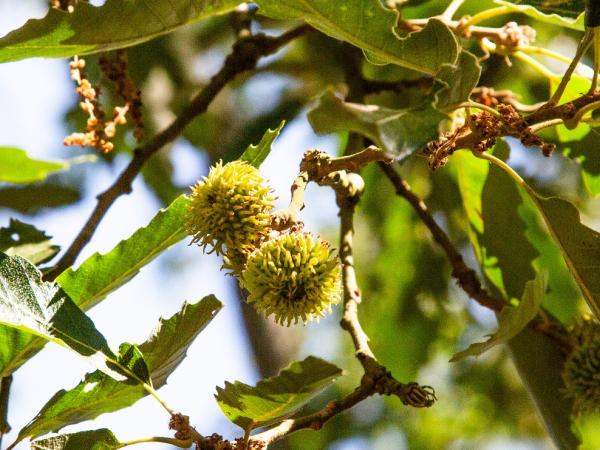
The only oak species endemic to Africa is rare in cultivation. It shouldn't be.
 |
| The shrubby Quercus depressa thrives at Arboretum des Pouyouleix © Béatrice Chassé |
I have recently been asked to write or update the oak entries for Trees and Shrubs Online. This is a project to create a truly modern reference to temperate trees and shrubs. Currently there are articles for some 730 genera and 4,500 species, with each species article describing subspecies, forms and cultivars. The project was conceived by and is supported by the International Dendrology Society. See www.treesandshrubsonline.org
Currently, the bulk of the text is derived from two sources: New Trees by John Grimshaw and Ross Bayton, commissioned by the International Dendrology Society and published by Kew Publishing in 2009, and W J Bean’s Trees and Shrubs Hardy in the British Isles, first published in 1914. The ‘Bean’ text is from the Eighth Edition, the last to be published, which appeared in four volumes during the 1970s, along with the Supplement by Desmond Clarke, published in 1988.
The area covered is temperate Europe and North America north of San Francisco in the west and north of South Carolina. As I would like to mention notable trees, either rare, particularly large, growing out of their "comfort zone", etc. I would welcome comments from anyone who would like to see their tree(s) included. Anyone interested can browse www.treesandshrubsonline.org and comment on anything missing that you have in cultivation, any notable specimens that should be mentioned or anything else you think should be included. In most cases, size (height × diam.) and introduction details will be needed. The discovery of the golden-haired Q. wislizeni mentioned in Oak News & Notes Vol. 22. No. 2 is the sort of interesting fact that I will use. All those supplying information will be mentioned in the text.
To contact me by e-mail please click here.
Content by the Same Author
The International Oak Society acknowledges the generous support of the following institutions:
Supporting Institutional Members



Standard Institutional Members